
A mining-duty fire alarm control panel (FACP) is specified against five non-negotiables: addressable loop capacity of at least 250 devices per loop, IP54 or higher enclosure ingress, EN 54-2/4 or IEC 60092-504 third-party approval, gas-zone detector isolation circuitry, and 24 VDC notification appliance circuits (NACs) rated 1,000–3,000 mA, with primary supply acceptance of 90–270 VAC at 50/60 Hz [S1][S3].
Underground coal, metal-mine and tunnelling sites add methane and diesel-particulate hazards that the panel must interface to, alongside conveyor galleries, refuge chambers, substation rooms and crusher houses, each of which imposes a different detection zoning and silencing logic [S2][S7].
Why Conventional Panels Fail in Large Mining Floors
Conventional panels hard-wire each zone on a dedicated pair back to the FACP, so a 4-, 8-, 16- or 32-zone unit is sized by physical zone count rather than device count, which is the wrong unit of measure once a mine exceeds roughly 1,000 m² of combined floor plate [S3]. Addressable loops put 100-200+ devices on a single twisted pair with each device carrying a unique address, and the panel polls loop loading instead of counting zones, which is the topology that mines actually need [S3]. A 10-loop addressable panel is sold specifically as a multi-loop unit for next-generation intelligent fire systems with multiple loop connections and a wide array of intelligent detectors, modules, and alarm devices [S5].
The reference AFP901 addressable panel accepts up to 250 addressable devices per loop, with a load resistance budget of 50 Ω max and load capacitance of 300 pF max on the loop cabling, which is the engineering budget to plan against when laying twisted-pair cable down a mine drift [S1]. For context, conventional-zone FACPs in the Chinese small-fire retail band list at roughly ¥1,720 (~$240) per unit, while addressable units for floor plates above 1,000 m² are the procurement default in offices, hospitals, and data centres [S3]. The same logic applies a fortiori to mining, where the labour cost of tracing a single conventional zone in alarm is even higher because access is via shaft or decline.
Approval Pack: EN 54-2/4, IEC 60092-504, and CE-CPR
Every panel that lands on a regulated site has to carry a third-party approval matching the jurisdiction: EN 54-2 (control and indicating equipment) and EN 54-4 (power supply) inside the EU, UL 864 9th edition for North American commercial fire, FM Approval for FM-insured properties, and CE-CPR (305/2011) marking for any panel installed under the Construction Products Regulation, while marine panels additionally carry IEC 60092-504 type approval and class-society type approval from DNV, Lloyd's, CCS, or ABS [S3]. Underground mines with diesel-powered equipment frequently cross-classify parts of the installation as "marine-equivalent" because of the salt-water, confined-space, and fixed-suppression-release profile, so a panel procured for a metalliferous mine may be built to IEC 60092-504 even though it never leaves the shaft [S3].
The hard spec rule on a mine: never accept a panel that ships with only a CE declaration and no EN 54-2/4 test certificate, and never accept a methane-rated cabinet without an ATEX/IECEx certificate number printed on the nameplate, because methane is the binding ignition risk, not fire alone [S3]. A standard IP30 enclosure, as carried by the Siemens FC121-ZA conventional panel, covers solid objects above 2.5 mm but offers zero water protection and is an indoor-only rating, so plant rooms, car parks, conveyor decks, and mine portals require a step up to IP54 or IP65 [S3]. Dust-laden and water-sprayed headings effectively force IP65 minimum.
Loop Capacity, Device Count, and Cable Budget
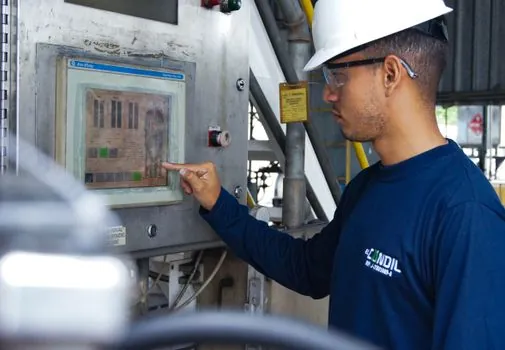
An addressable loop is sized by three constraints: the panel's loop-driver card limit, the per-loop current budget, and the cable resistance budget, with most panels holding loop resistance under roughly 40-50 Ω total and 400-500 mA of loop current, while conventional zones run at 24 VDC nominal with an end-of-line resistor typically 4.7 kΩ and a zone-current threshold in the tens of milliamps [S3]. The AFP901 specifies loop load resistance of 50 Ω max, load capacitance of 300 pF max, detection loop standby current of 85 mA max with 250 loop devices connected, and accepts 10-18 AWG twisted pair cable (2.5 mm² to 1.0 mm²) [S1].
Primary AC acceptance of 90-270 VAC at 50/60 Hz on the AFP901 covers every common mine-site supply, including poor-quality diesel-genset output in remote camps [S1]. Standby current is 50 mA at 220 VAC no-load and 60 mA at 220 VAC full load, while alarm current is 80 mA at 220 VAC max, and the main fuse is rated 2 A at 250 VAC [S1]. The power supply is rated 3 A at 24 VDC with battery charging at up to 0.9 A at 27 VDC, supporting 2 × 12 V/4.5 Ah sealed lead-acid batteries, which is the minimum standby to ride out a shift change or a ventilation-trip event [S1][S6].
Detector Selection in Methane-Classified Zones
Mining FACPs must drive a mixed detector population: optical smoke, heat, and flame detectors for the conveyor and crusher areas, plus catalytic-bead or infrared point gas detectors tied to the mine's gas alarm controller for methane, and linear heat detection (LHD) fibre on cable trays and conveyor belts [S2][S7]. A typical mining-side detector spec passes 24 VDC at 0.5–2.0 mA quiescent per point, with alarm currents in the 10-30 mA range, and the panel's free-voltage relay output of 28 V at 1,000 mA on the AFP901 is the budget to plan against for HVAC and ventilation damper shutdown [S1].
Heat detectors in confined spaces such as refuge chambers, battery-charging bays, and transformer rooms run a class A1S (setpoint 60 °C, max ceiling 50 °C) or class BS (setpoint 70 °C) depending on ambient, and the heat-detector spec map for confined space entry sets out the class-by-class decision logic. For chemical-plant procurement parallels, the same isolation-discipline questions apply to detector zoning, which is why a fire alarm control panel spec map for chemical plants is a useful comparator on gas-zone integration even though mining has its own methane gas detection layer.
NAC Sizing, Notification Appliances, and Suppression Release
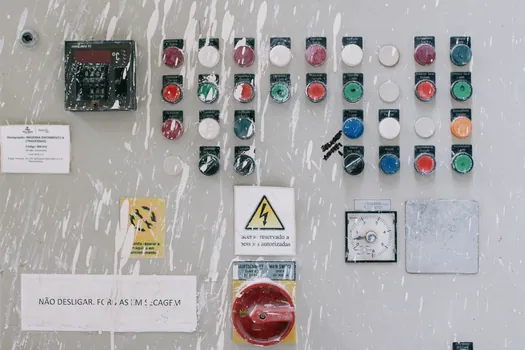
Notification appliance circuits power horns, strobes, and speakers, with the panel typically outputting 24 VDC at the current budget that the mine's notification count and suppression-release solenoids draw, and the AFP901 specifies 28 V at 1,000 mA self-resettable fuse on its free-voltage output, which is the budget to plan against for an underground paging horn and strobe layout [S1][S8]. A mine with 80 horns at 25 mA each plus 40 strobes at 75 mA each draws roughly 5,000 mA in alarm, which is well above the AFP901's 1,000 mA free-voltage output and forces either a multi-NAC panel or external booster supplies, so NAC count is a procurement gate, not an afterthought [S8].
MCB protection for the FACP supply must be selected for the inrush profile, and Type C MCBs trip between 5 and 10 times their rated current, making them suitable for inductive loads with moderate inrush, including the transformers found in many fire alarm panels, while Type D MCBs trip at 10-20 times rated current and are reserved for welding equipment and X-ray machines [S6]. For a mine's FACP, Type C is the practical default. Suppression-release on the AFP901 is via dedicated extinguishant control panels in the same OEM family, the CM1004 and CM1004B models, which are listed alongside the AFP901 in the addressable-detection product tree [S1].
Power, Batteries, and Mining Shift Resilience
Mining panels must hold the loop through shift-end ventilation trips, brief feeder faults, and the underground battery-discharge cycles that follow a fan stoppage, so the battery branch is the binding spec, not the panel's headline [S1][S6]. The AFP901's 2 × 12 V/4.5 Ah sealed lead-acid battery pair delivers roughly 18 Wh of usable standby after derating, and at 60 mA full-load standby that gives a theoretical 30-minute bridge, but with battery derating to 80% capacity and a 25% safety margin the realistic bridge is closer to 22-24 minutes, which is the number to plan around when sizing a generator cut-in [S1].
Primary AC 90-270 VAC at 50/60 Hz on the AFP901 means the panel survives the worst diesel-genset output without an external UPS, and the 27 VDC battery charging rail at 0.9 A max supports a 4.5 Ah recharge in roughly 6-7 hours from full depletion [S1]. For chemical and process-plant parallels, the same shift-resilience math drives the fire alarm control panel spec gates for construction sites, which sets out battery-sizing rules for temporary-power sites that map directly to remote-mine temporary panels.
Build vs Buy: Conventional vs Addressable vs Marine
For floor plates above roughly 1,000 m², mixed-tenant offices, hospitals, and data centres, addressable is the default, since labour saving on the loop alone offsets the higher panel cost and you can pinpoint the device in alarm, which is the same logic that forces addressable into every mine portal and conveyor gallery [S3]. Marine and offshore is a separate procurement track: the panel must be supplied as part of a detection-and-control package, not a stand-alone FACP, with watertight enclosures, salt-fog PCB conformal coating, and class-society type approval layered on the base EN 54 or equivalent functional standard [S3].
For comparison: a 4-zone conventional panel sits in the $50-300 retail band, the AFP901-class addressable unit supports 250 devices per loop with up to 10 loops available in the multi-loop class, and a marine-bundled panel adds the IEC 60092-504 envelope and a class-society certificate, which roughly doubles to triples the price depending on the number of loops and the suppression-release integration [S1][S3][S5]. For procurement, the decision tree is: site size and zoning count → loop topology → approval pack → enclosure ingress → NAC and suppression-release integration, in that order.
Common Failure Modes and Procurement Pitfalls
Three failure modes hit mining FACPs in the field: water-ingress into IP30 panels mounted near dewatering pump rooms, methane detector isolation circuitry bypassed during commissioning (which defeats the gas-trip logic that is supposed to cut power before a flame event), and 24 VDC NACs overloaded when additional strobes are wired in without a current budget check, which is why Type C MCBs and the 1,000 mA free-voltage output limit must be checked at every loop-extension [S1][S3][S6]. The AFP901 specifies IP30-class enclosure dimensions of 315 mm (L) × 400 mm (H) × 92 mm (W) and 5 kg net weight without batteries, which is a surface-mount form factor suitable for an underground dispatch room, not a wet heading [S1].
Spec gates to lock before purchase: confirm the panel's loop resistance budget (50 Ω max on the AFP901, 40-50 Ω typical industry-wide) against the longest cable run in the heading, confirm the loop-driver card limit (159, 126, or 252 address points depending on OEM) and how it scales to the multi-loop class, confirm NAC current at 24 VDC against the worst-case notification count, and confirm the battery branch with 25% derating rather than the headline Ah rating [S1][S3][S6]. For chemical and process-side procurement parallels that share the same isolation-discipline logic, the fire alarm control panel spec map for chemical plants is a directly comparable read.
Trackable signals: panel OEM nameplate marking of EN 54-2/4 test certificate number and IEC 60092-504 certificate number, the loop-driver card model and its per-loop device limit on the bill of materials, and the NAC current budget shown on the panel's as-built drawing, which together confirm whether the unit as shipped matches the mine's zone and detector count.
For the relevant spec sheets and selection criteria, see fire alarm control panel, mining dump truck, and control panel component.