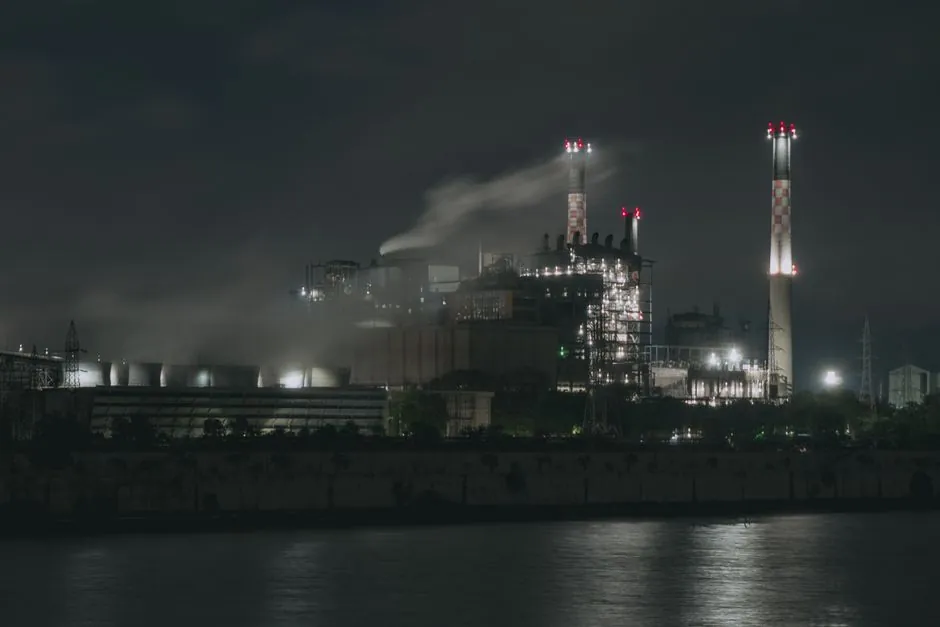
Addressable fire alarm control panels (FACPs) with 1-10 signaling line circuits (SLCs) and 254 nodes per loop are the default spec for new chemical-plant builds, replacing conventional zoned panels in any installation covering more than roughly 2,000 m² [S1][S6][S8].
A chemical plant's fire risk profile is not the same as an office tower: flammable liquids, combustible dust, reactive chemistries, and classified electrical areas (Zone 1/Zone 2 in IEC terms, Class I Div 1/2 in NEC terms) drive the panel choice far more than square footage alone [S4][S5]. For an experienced process engineer, the right FACP is the one that talks to the right field devices, survives the environment, and gives the fire brigade a single, unambiguous picture in the first 60 seconds.
What an FACP Must Do in a Chemical Plant
The FACP is the decision-making node of the fire protection system: it does not discharge water or agent, but it triggers the devices that do [S2]. In a chemical plant, that means linking detector inputs (flame, smoke, heat, linear heat cable, gas detectors) to outputs that include deluge valves, foam proportioners, CO₂ or water-mist release, HVAC shutdown, fire-damper closure, emergency ventilation start, elevator recall, and process isolation [S2][S3][S5].
Industrial-grade panels carry 24/7 monitoring of device sensitivity, dirt accumulation and open-circuit faults, and they log up to 2,048 events for post-incident review [S1][S6]. A typical addressable loop runs on DC 24 V (some panels accept 12-48 V DC working voltage) with two-wire bus topology, allowing 254 addressable devices per loop on Class B wiring and roughly twice that on Class A [S6]. Main power is wide-range AC 90-240 V at 50/60 Hz, backed by two 12 V/5 Ah sealed lead-acid batteries, giving roughly 24 hours of standby plus 15 minutes of full alarm on most mid-size panels [S6].
Conventional vs Addressable vs Multi-Loop Addressable
Conventional panels read groups of devices as a single zone, so an alarm only tells you "Zone 7, somewhere." Addressable panels assign each detector or module a unique serial number, so the same event reads as "Loop 2, Device 147, Photo/Heat detector, Reactor Bay 3" [S1][S4]. For a chemical plant with hundreds of detectors spread across process units, tank farms, loading racks and laboratories, addressable is effectively mandatory; conventional panels only remain defensible in a small detached warehouse under 500 m² with no integrated suppression [S2][S7].
Multi-loop addressable panels scale this further: up to 10 SLCs, each supporting hundreds of points, networked across a campus with peer-to-peer or master-slave topology, and a 480 × 272 or larger back-lit LCD for first responders [S1][S8]. The decision criteria below line the three options up against the factors that actually drive a chemical-plant purchase:
Conventional panel: 8-32 zones, low unit cost (often 1/3 to 1/2 the price of an addressable unit), no individual device identity, no pre-alarm or sensitivity drift data, no native BMS integration. Addressable single-loop: 1 SLC, up to 254 points, individual identification, sensitivity monitoring, BMS/BACnet/Modbus gateway options, suitable for a single process unit up to roughly 5,000 m². Multi-loop addressable: 2-10 SLCs, 500-3,000+ points, full peer-to-peer networking, voice evacuation and digital audio options, suitable for a full plant or multi-building site [S1][S4][S8]. For chemical-plant work, anything below addressable single-loop is a spec error.
Integration: Detectors, Suppression and Building Systems
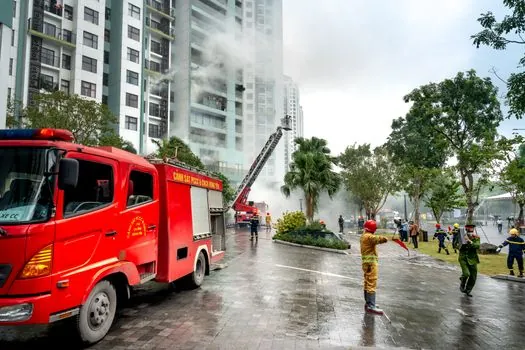
An FACP that does not interface with the plant's flame and gas detection is incomplete. A typical integration list includes: addressable smoke/heat/multi-criteria detectors on every loop, manual call points at exits, linear heat-detection cable on cable trays and conveyors, IR/UV flame detectors at hydrocarbon handling points, and dedicated gas detectors wired through addressable input modules [S1][S5]. Output modules then drive solenoid valves on CO₂ or water-mist cylinders, fire-pump starters, HVAC shutdown contactors, fire-damper actuators and access-control maglocks [S3][S5].
Communication protocols for BMS/PLC/SCADA integration commonly include BACnet and Modbus, with proprietary Ethernet and 4G add-on modules for remote monitoring on some Chinese-supplied panels [S4][S6]. For an in-depth look at how a FACP's output modules sit inside a wider control architecture, see the control panel component reference. The chemical-plant specific twist is that detection has to be cross-zoned: a single detector alarm should pre-alarm, two coincident detectors (one flame, one heat, for example) should release suppression, to avoid agent release on a single false-positive in a high-consequence area [S3].
Hazardous Area, Enclosure and Power Resilience
Where the FACP itself is sited matters as much as where the detectors go. The panel should be located in a non-hazardous control room or a pressurised instrument room; if it has to be inside Zone 1/2, the panel enclosure must be Ex d or Ex e certified to IEC 60079-1 / IEC 60079-7, and the loop wiring must use IS barriers or Ex i-rated addressable devices per IEC 60079-11 [S4]. For perimeter-line crossings into classified areas, the perimeter alarm topic covers detector selection in similar outdoor/classified zones.
Enclosure rating for an indoor plant utility room is typically IP54 (dust-protected and splash-proof), with NEMA 4 equivalent available for outdoor or wash-down locations [S1]. Backup power is sealed lead-acid as standard, but lithium-iron-phosphate (LiFePO4) is now specified for higher temperature tolerance inside hot process buildings. Surge protection on the AC input and on every SLC is not optional in a plant with large VFD-driven motors; a single switching transient can lock up an entire loop.
Standards, Certifications and Maintenance Reality
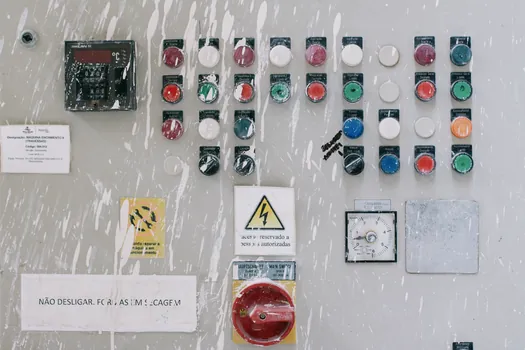
For North American chemical plants, the FACP and its connected devices must be UL 864 listed (control units) and UL 268 / UL 521 / UL 268A listed (detectors), with FM Approval commonly required by insurance carriers. For European plants, EN 54-2 (control and indicating equipment) and EN 54-4 (power supplies) are the baseline, with ATEX 2014/34/EU governing any device installed inside Zone 1/2. For Chinese chemical projects, CCCF certification from the China Certification Center for Fire Products is mandatory, and FM/UL dual-listing is a frequent spec to satisfy both local fire-bureau acceptance and the HQE team's insurance requirements [S2][S4].
Maintenance is where most panels fail the audit. A practical schedule is monthly indicator lamp and buzzer tests, quarterly battery capacity discharge tests, semi-annual detector sensitivity calibration checks, and annual full-load integration test with all suppression outputs [S2]. In humid or coastal chemical sites, dust and moisture inside the enclosure drive false-alarm rates above 1 per 1,000 device-years, which is the threshold most plants treat as a maintenance signal rather than a hardware fault [S2].
Selection Checklist for the Procurement Engineer
The cheapest compliant panel that meets the above is rarely the lowest-cost installed system, because serviceability, peer-to-peer networking, and pre-alarm algorithms cut false-alarm-driven evacuation costs over a 10-year life. For plants looking to standardise across multiple sites, multi-loop addressable panels with 10-loop capacity and at least 254 nodes per loop, in a NEMA 4/IP54 enclosure, with FM/UL/EN 54/CCCF listings as needed, are the current engineering baseline [S1][S8]. Adjacent reference reading on enclosure and structural choice for industrial buildings is covered in polyurethane insulation selection for commercial buildings: spec map 2026, and a useful cross-industry procurement view is in EPS board selection for high-rise buildings: density, fire class, and panel thickness.
For a chemical plant project in the next 12 months, two signals are worth tracking: (1) the 2026 update of EN 54-2 revision notes, which several notified bodies flagged in early 2026 as including new cybersecurity clauses for networkable FACPs, and (2) the spread of integrated voice evacuation and digital audio as standard on mid-tier addressable panels, which is moving the price-per-point down for plant-scale installations. Get the loop count, node count and suppression-release logic right on day one, and the panel will be the least of your fire-protection problems.
For the relevant spec sheets and selection criteria, see fire alarm control panel.