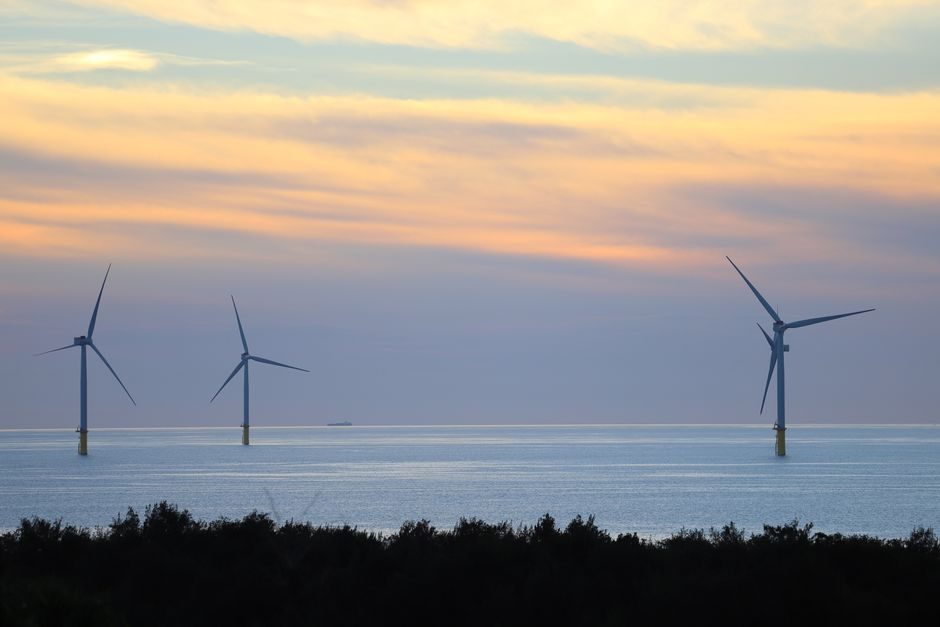
Aker Solutions landed a "substantial" offshore wind contract on 6 July 2026, the same day Canada unveiled seven pre-qualified bidders for its first offshore wind auction, signalling that fabrication capacity is still the rate-limiting step in the build-out [S3].
Demand visibility remains strong: seven U.S. states had committed by late 2019 to procure roughly 27 GW of offshore wind by 2035, a pipeline that is now colliding with limited installation windows and a small pool of Jones Act-capable vessels [S1]. Foundation and substructure work is the tightest segment, with Framo's suction-anchor pumping systems being specified across both oil-and-gas and wind monopile/jacket retrofits as of 27 May 2026 [S2].
Substructure and Foundation Capacity: The Hardest Bottleneck
Monopile and jacket foundations are the single most supply-constrained node in the offshore wind chain, and a "substantial" Aker Solutions contract announced on 6 July 2026 reinforces that fabricators with heavy-plate capacity and qualified welding throughput are absorbing the backlog [S3]. Suction-anchor installation is now treated as a standalone engineering discipline, with Framo offering dedicated pumping systems sized for the increasing draught and tonnage of floating and fixed-bottom units [S2].
For an engineer sizing equipment, this means a pressure transmitter specified for anchor pump monitoring must tolerate saltwater marine atmospheres, sloshing hydrostatic heads, and shock loads during pile driving — Framo's skid frames are typically integrated on jack-up installation vessels where deck space and crane radius are already saturated. Limited port-side marshalling yards mean components must arrive installation-ready, raising the bar on factory acceptance testing for every flow meter and industrial valve on the hydraulic power unit.
Vessels, Crew, and Jones Act Exposure
The U.S. offshore wind build-out still depends on a thin set of installation assets, and federal loan support to Lloyds Bank-financed wind farms, transmission assets and specialist vessels has been a recurring bridge since 2012 [S4]. That structural thinness is now the second binding constraint after foundations: each U.S. project is competing for the same wind turbine installation vessels (WTIVs) and feeder barges, and Jones Act rules push domestic developers toward a small pool of flagged crew-transfer and feeder tonnage.
In practice, owners pre-order long-lead items 24-36 months ahead of the installation window. Hydraulic pressure sensors on jack-up leg-cantilevers, hydraulic industrial valves on ballasting systems, and flow meters on grout lines are all subject to the same shipyard queue that is producing monopiles and HVDC platform topsides. If you are buying DC power supply modules or switching power supply units for the vessel's instrumentation rack, expect 30-50 week lead times through 2026-Q4 when sourced alongside other marine-grade electronics.
Substation and Onshore Grid: The Third Squeeze
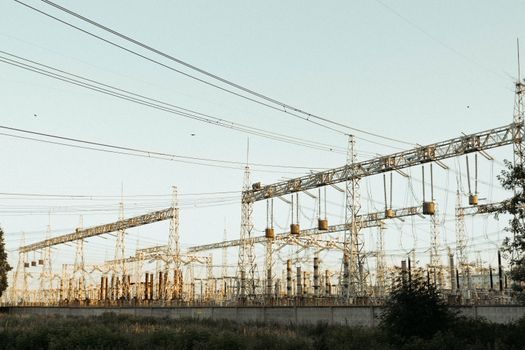
Offshore substations, HVDC converter stations, and onshore export cables form the third critical-path segment, and they share the same steel, copper, and industrial valve supply queues as the wind farm itself. Aker Solutions' 6 July 2026 contract award sits in this envelope, since the company competes across both substation and substructure scopes [S3].
Engineers designing the platform's auxiliary systems should treat HVAC dehumidification, nitrogen-inerted transformer compartments, and seawater lift flow meter loops as constrained categories, each with documented Q3/Q4 2026 backlogs.
Policy Pipeline and Financing Tailwinds
The 27 GW by-2035 U.S. state-level commitment remains the floor case for demand visibility, with state procurement auctions, federal tax credit guidance, and Lloyds-style commercial bank structures continuing to underwrite projects [S1][S4]. On 6 July 2026, Canada's first offshore wind auction moved into its pre-qualification round with seven bidders, adding a second North Atlantic demand axis to the supply pool [S3].
Political risk is not abstract. The 2020 U.S. Democratic primary cycle, including Bernie Sanders' vocal platform on offshore wind expansion, was an early signal that renewable build-out would remain a federal-state negotiation rather than a purely commercial exercise [S5]. For supply-chain planning in 2026, that means a 10-15% contingency on policy timeline slippage should be baked into any monopile or substation order, and engineering specifications should be written so a project can be paused for 12-18 months without stranding custom components.
Mitigation Levers Engineers and Buyers Actually Control
Three levers are within the buyer's control: (1) consolidate procurement across 2-3 monopile yards to capture allocation priority, (2) standardise on common pressure transmitter and pressure sensor model families across jacket, monopile, and substation scopes to win factory-acceptance slots, and (3) pre-order long-lead hydraulic industrial valves and flow meters on the same purchase order as the foundations rather than as a separate post-award package. The first lever captures vendor attention, the second reduces qualification effort, the third collapses the schedule risk that sank 2023-2024 projects. [S1]
For related industrial procurement planning, the gearbox supply cluster guidance and the planetary reducer sizing handbook both apply to the yaw and pitch drivetrains that sit behind every turbine tower in this constrained queue. Engineers buying the mechanical drivetrain and the hydraulic power unit on the same project should synchronise the gearbox and pump orders, because the bottleneck fabricators share the same heat-treatment and CNC capacity.
On 6 July 2026, the visible signals are these: Aker Solutions' "substantial" contract award confirmed at midday [S3], Canada's seven pre-qualified auction bidders revealed the same day [S3], and Framo's offshore-wind suction-anchor pumping line continues to scale from its 27 May 2026 base [S2]. Watch the U.S. BOEM lease auction schedule, the next round of Jones Act vessel certifications, and the European monopile yard order books through Q4 2026 — any slippage on those three nodes will move the whole 2030-2035 pipeline.