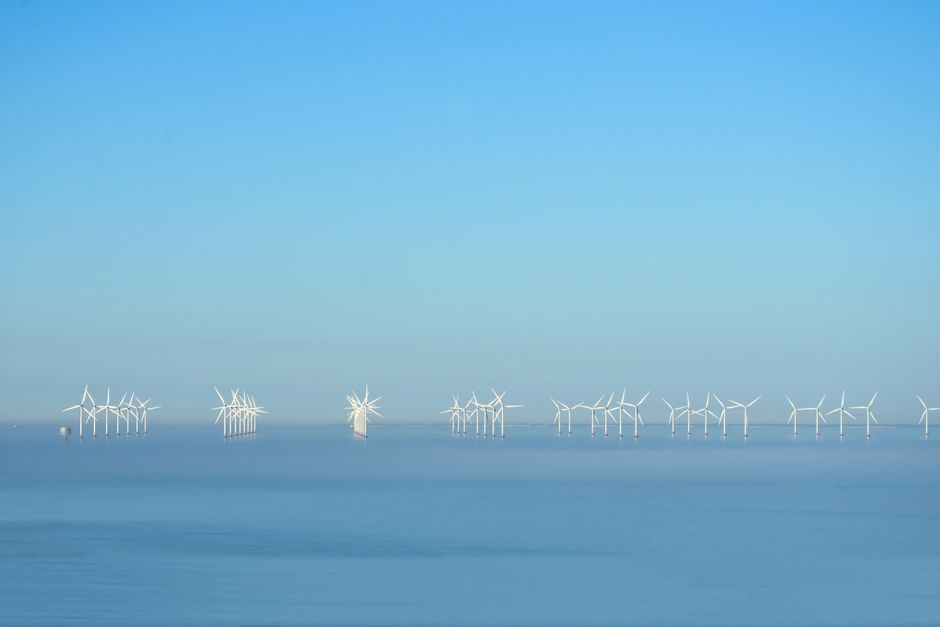
Offshore wind foundation procurement in 2026 is converging on a three-type decision tree — monopile, jacket, and floating semi-submersible — with foundation diameter, steel grade and serial-fabrication throughput replacing turbine nameplate as the binding constraint on new North Sea and US East Coast awards [S1][S3].
The 2026 build pipeline is being shaped by two parallel tracks: a fixed-bottom push into deeper North Sea sites that drives monopile diameters above 10 m and transition-piece wall thicknesses past 150 mm, and a floating-wind ramp where semi-submersible steel substructures are moving from one-off prototypes toward yard-serial production in France, Norway and the UK [S1][S2][S10].
Market Size and 2026 Demand Pull
Global installed offshore wind capacity sits around 30,000 MW as of the 2026 outlook brief, with the forward market framed as a trillion-dollar build-out across roughly two decades — a base scale that underwrites the serial-fabrication investments now sitting on the order books of monopile and jacket yards [S4].
The North Sea remains the highest-density demand pool for fixed-bottom foundations, and a 2026 yield study highlighted in industry coverage shows the basin can deliver materially more energy at lower lifetime cost when foundation spacing, wake steering and larger rotors are co-optimised — directly increasing the per-turbine foundation load envelope that suppliers must bid into [S1][S2].
Floating-wind demand is no longer pilot-scale: the first floating farm offshore France reached full power in mid-2026, validating the semi-submersible steel layout as a bankable geometry and pulling orders toward yards that can replicate it [S1][S2].
Foundation Type Comparison: Monopile vs Jacket vs Floating Semi
For seabed conditions shallower than roughly 40 m, monopiles remain the lowest-cost-per-MW foundation, with 2026 production runs now standardised in the 8–10 m diameter, up to ~120 m length, S355–S460 steel grade envelope and single-piece weights pushing past 1,500 t at the heavy end [S1][S3]. For water depths of 40–60 m and weaker seabeds, lattice jackets — typically a four-legged tubular steel frame pinned by pin-piles — win on stiffness and fatigue life, but require multi-piece assembly and more vessel-time at sea [S3].
Floating semi-submersibles (steel) are the 2026 default for sites beyond roughly 60 m depth, with a three- or four-column pontoon layout, distributed ballast compartments and chain or taut-polyester mooring; concrete semi-submersibles remain a parallel track but are not the spec-driving geometry in current European tenders [S1][S2].
A practical 2026 bid-side decision is built on four criteria:
1) Water depth and seabed: monopile ≤40 m competent soil; jacket 40–60 m or weaker soil; floating semi-submersible >60 m regardless of seabed. 3) Fabrication yard fit: monopiles need heavy-plate rolling and one-piece handling; jackets need tubular welding capacity; floating semis need dry-dock or graving-dock assembly with ballast-system outfitting. 4) Installation vessel: monopile and jacket installs remain dominated by jack-up heavy-lift vessels; floating semis need wet-tow and upend spread, with 2026 vessel availability still acting as a hard gate on award timing [S1][S3][S10].
Suppliers, Yards and Serial-Fabrication Capacity
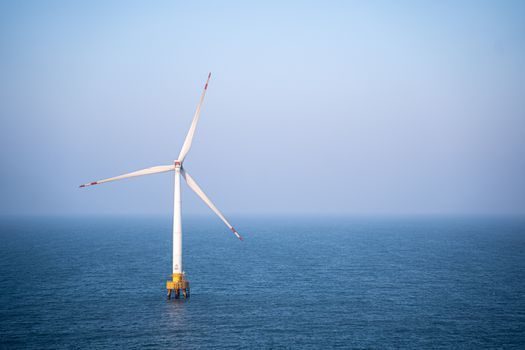
Monopile supply is concentrated in a handful of European yards running thick-plate rolling mills capable of 8–10 m diameter single-piece cans, and the 2026 order book shows these mills allocated through 2027–2028 on firm North Sea framework agreements [S1][S10].
Jacket fabrication is more geographically distributed, with yards in Spain, the UK, Germany and the US Gulf running parallel capacity for both oil-and-gas and offshore-wind tubular structures; the cross-over skill set means O&G backlog directly affects offshore-wind jacket lead times in 2026 [S3].
Floating semi-submersible serial production is the most visible 2026 capacity build, with yards such as CS Wind Offshore (Aalborg) hosting top-management visits in late May 2026 specifically tied to floating foundation and tower programs, alongside the French yard cluster that delivered the first full-power floating array [S1][S10].
Standards, Materials and Welding Discipline
Fixed-bottom monopile and jacket fabrication defaults to DNVGL-ST-0126 (or its 2026 DNV successor) for the support structure, with welding procedure qualification to ISO 3834-2 and NDT scope typically 100% ultrasonic on main can seams and magnetic-particle on node welds; the fatigue hot-spot remains the transition-piece-to-monopile and the leg-to-brace node on jackets [S3].
Corrosion protection in the splash and submerged zones is built on a 25-year design life, with cathodic-protection retrofits specified to DNV-RP-B401 and an epoxy/glass-flake or thermally sprayed aluminium top-coat system on the atmospheric zone; this drives a recurring retro-fit demand signal in 2026 for flow-meter-grade CP monitoring brackets and instrumentation ports on the transition piece [S3].
Floating semis additionally call for mooring-line spec to API 2SK (chain) or API 17J (polyester) and classed dynamic-positioning interface work where installation vessels connect — meaning procurement teams now have to read both offshore-wind and offshore-oil-and-gas standard sets on a single bid [S3].
Instrumentation, Controls and the Grid-Side Handoff
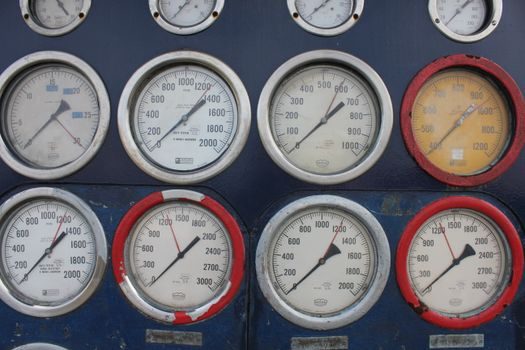
Each 2026 foundation ships with a tower-base instrumented enclosure carrying the pressure transmitter array for yaw hydraulic pressure, oil-level and coolant loop monitoring, plus the pressure sensor chain on the pitch and brake hydraulic packs. Signal backhaul from the foundation up the tower is HART-modulated on a 4–20 mA loop for hard real-time tags, with a parallel Ethernet-APL trunk for non-critical condition-monitoring vibration and strain data [S1][S3].
At the offshore substation level, the array-string MV switchgear interfaces with the wind farm SCADA through PLC controllers handling pitch, yaw and foundation health data, with servo-motor drives on the yaw and pitch actuators consuming the motion commands; HART is the field tag, PROFIBUS PA or Foundation Fieldbus is the digital control layer, and the two are not interchangeable on the same physical wire [S1][S3].
HV-side power takes over at the array cables — 66 kV remains the workhorse for 2026 string design, with 132 kV export from the offshore substation now standard for new North Sea fields in the >1 GW class [S1][S2].
2026 Risks, Lead Times and Trackable Indicators
Three risks dominate 2026 foundation bid risk registers: (1) heavy-lift vessel slots, with jack-up availability still rationed across North Sea and US East Coast campaigns; (2) thick-plate steel price and lead time, with S355–S460 heavy plate allocations stretching past 12 months at the largest mills; (3) consenting and supply-chain coordination gaps flagged at the February 2026 NOWRDC Technical Symposium in New York as the main near-term brake on US deployment velocity, even as global installed capacity keeps compounding [S3].
Two trackable signals a procurement or engineering team can monitor through the second half of 2026: first, the order-intake announcements from the Aalborg / French / UK monopile and floating-semi yard cluster — CS Wind Offshore's late-May 2026 top-management visit to Aalborg is a leading indicator of how that capacity is being routed [S10]; second, the count of full-power floating arrays coming online in 2026–2027, starting with the France array that reached full power in 2026 and the next North Sea and Iberian pilot projects queued behind it [S1][S2].
Buyers should also watch the industrial valve order book at foundation-yard hubs — ballast, sea-water cooling and bilge valve demand scales linearly with floating-semi output, and a sustained valve-order uptick into Aalborg, Saint-Nazaire and the UK cluster is a useful 2026 confirmation signal that floating serial production is converting from press release to purchase order [S10].
See also our earlier report, V-Ribbed Belt Suppliers and Manufacturers: 2026 Sourcing Map.