Industry News

Industry News · Page 416

ELECTRICAL & AUTOMATION5 min read

Protocol gateway selection criteria for brownfield PLC upgrades

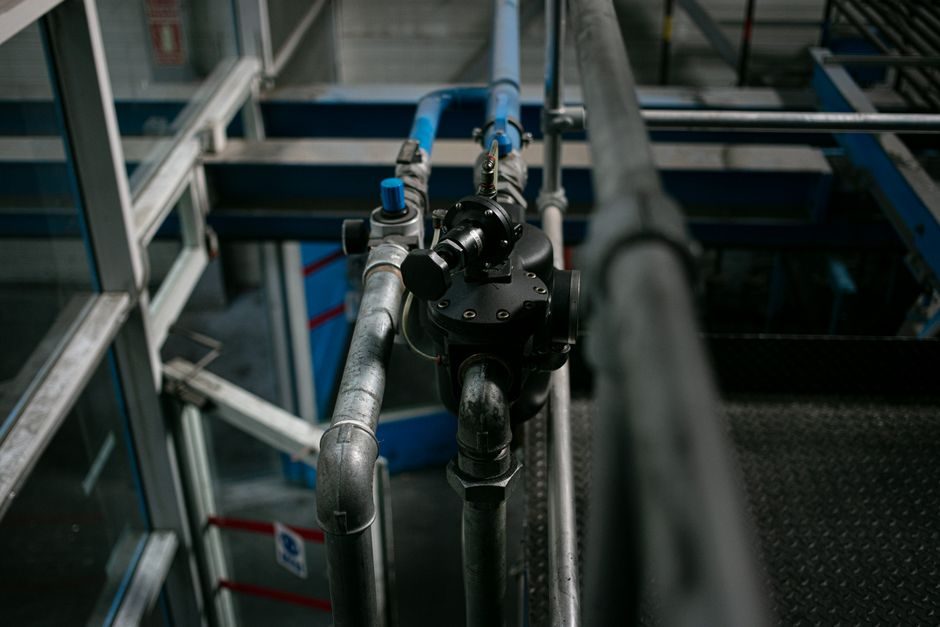
For brownfield PLC upgrades, a protocol gateway is required whenever legacy field equipment uses a protocol the new controller cannot natively speak, and selection hinges on five criteria: device-count sizing, legacy-protocol coverage, network readiness, translation-to-OPC UA or MQTT, and physical f

Read →

Specifying magnetic sensors for robotic workcells: 7 axes

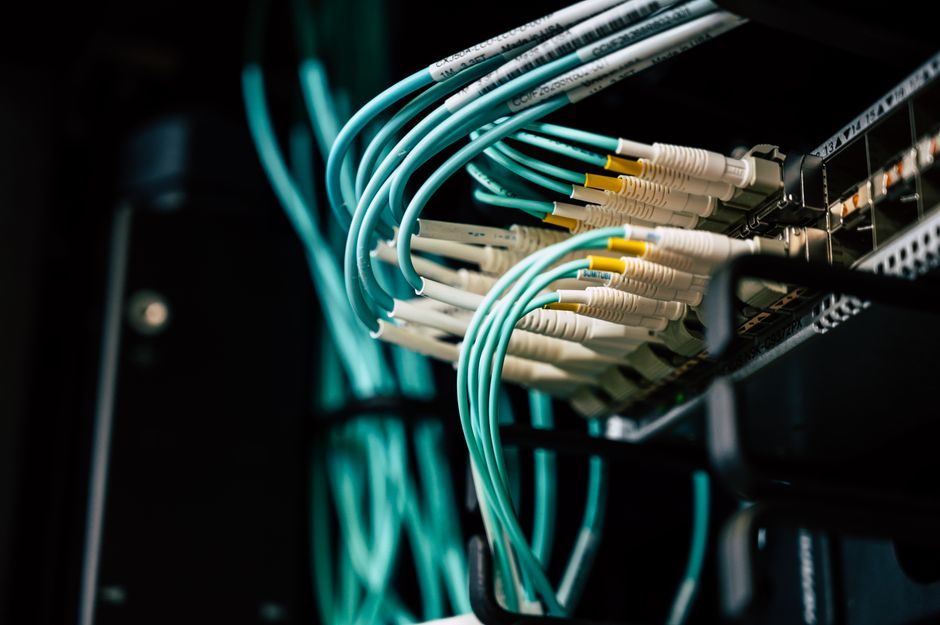
Robotic workcell magnetic sensor selection runs on seven engineering axes: transduction, tolerance, stray-field immunity, EMI rejection, commutation bandwidth, servo feedback, PLC protocol fit.

· ELECTRICAL & AUTOMATION · 6 min read

Fiber optic vs capacitive sensors: EMC immunity decision rules

Fiber optic sensors encode measurements in light, gaining intrinsic immunity to electromagnetic interference; capacitive sensors must clear IEC 61000-4-x surge and dip tests to survive the same environment. Field strength and budget drive the pick.

· ELECTRICAL & AUTOMATION · 4 min read

Selecting PT100 RTDs for Bearing Temperature Alarm Loops

PT100 Class A RTDs with 3- or 4-wire lead configurations remain the default bearing temperature alarm element, with IEC 60751 Class A accuracy of ±(0.15+0.002·|t|) °C and standard alarm/trip setpoints of 80 °C/100 °C for grease-lubricated bearings and 95 °C/100 °C for oil-bath designs.

· MEASUREMENT & TEST · 7 min read

UV Radiometer Selection Criteria for Outdoor Enclosure Build

UV radiometer selection for electrical enclosure qualification rests on four traits: spectral match to the damaging UV band, cosine-corrected input optics, dose integration over weathering cycles, and traceable calibration with drift history.

· MEASUREMENT & TEST · 7 min read

Data logger vs LCR meter for mechanical strength testing

Data loggers with accelerometers capture acceleration, shock, and vibration that govern in-service strength margins, while LCR meters measure only L, C, and R — they do not output force, strain, or stress data.

· MEASUREMENT & TEST · 7 min read

High voltage tester vs micro-ohmmeter: which one belongs on a traceable certificate

High voltage testers (hipot/megohmmeter, 500 V–30 kV) verify insulation integrity while micro-ohmmeters (10 A–600 A DC) measure sub-ohm contact resistance — the two instruments are not interchangeable, and choosing the wrong one invalidates certificate traceability for either an insulation record or

· MEASUREMENT & TEST · 7 min read

Clamp Meter vs Ground Tester in Corroded Electrode Networks

A standard clamp meter measures current on a live conductor; a clamp-on ground resistance tester injects a 4.5 kHz test signal to read loop resistance without disconnecting the electrode. For corrosion-affected grounding networks, only the ground tester delivers bonding data.

· MEASUREMENT & TEST · 7 min read

Hopper scale vs force gauge: how to set the right replacement cycle

A hopper scale replacement cycle is driven by load-cell wear, electrical surge damage, and mechanical misalignment (per 2026 maintenance note), while a force gauge is a portable compression/tension/shear instrument with its own shorter calibration loop — not a drop-in substitute for in-process

· MEASUREMENT & TEST · 6 min read

Confocal displacement sensor selection for MCC panels

Confocal displacement sensors with 15–50 mm standoff and sub-micron linearity are specified for MCC panel assembly verification and contactor travel, replacing laser triangulation on mirrored busbars and eddy-current on aluminum enclosures.

· MEASUREMENT & TEST · 6 min read

Electronic Load vs Data Logger for Temperature Limits

A temperature data logger is the right instrument for enforcing a temperature limit on a device under test; an electronic load's internal thermal protection is a hardware backstop, not a calibrated temperature record.

· MEASUREMENT & TEST · 6 min read

Power quality analyzer vs clamp meter: which tool actually protects availability

A power quality analyzer and a clamp meter are not interchangeable: a Class A PQ analyzer is required for 600 V CAT IV / 1000 V CAT III three-phase compliance and disturbance capture, while a clamp meter with a PQ indicator is a screening tool for spot harmonics checks. Availability drops roughly 0.

· MEASUREMENT & TEST · 6 min read

Earth Ground Tester Selection for Outdoor Corrosion Sites

Outdoor corrosion exposure dictates earth ground tester selection: choose 2/3/4-point fall-of-potential or clamp-on units with IP54+ enclosures, ≤2 mA measurement current, FFT/AFC noise rejection, and 0.01–300 kΩ range; for buried electrode corrosion, verify 5 A ground-current trip threshold before

· MEASUREMENT & TEST · 7 min read

Optical comparator selection criteria for shop-floor metrology cells

Optical comparator selection in a 2026 shop-floor metrology cell hinges on four decisions: vertical versus horizontal optical path, screen diameter (12 to 32 in), stage travel in X/Y, and digital readout or CNC software stack.

· MEASUREMENT & TEST · 7 min read

Gauge Block vs Roundness Tester: Calibration Artifact Choice

Gauge blocks set linear length; roundness testers set geometric form. They are different artifact classes — pick by measurand, not by accuracy headline. ISO 3650 specifies gauge block cross-section 30 mm × 9 mm from 0.5–10 mm nominal length.

· MEASUREMENT & TEST · 7 min read

Gauge block vs roundness tester for calibration work

Gauge blocks certify linear length (ISO 3650, ±0.05 µm reference grade); roundness testers map circular form deviation with a stylus-and-spindle instrument. The right artifact is dictated by workload dimension, not by budget.

· MEASUREMENT & TEST · 6 min read

Dial Indicator Selection: 2026 Shop-Floor Metrology Cell

AGD Group 2/3 dial indicators with 2.25"–2.75" bezels remain the 2026 shop-floor default for runout, alignment, and linear displacement checks, with ASME B89.1.10M governing calibration intervals.

· MEASUREMENT & TEST · 5 min read

Pneumatic vs electric valve actuators: choosing the right power source

Pneumatic and electric valve actuators split the market by power source: pneumatic units convert 80 PSIG compressed air into fast, high-torque quarter-turn motion via rack-and-pinion, scotch-yoke, vane, diaphragm, or linear-piston mechanisms, while electric units gear a 12/24/120 V motor for pr

· PUMPS, VALVES & PIPING · 6 min read

Incremental vs absolute encoder selection: 2026 decision framework

Choosing between incremental and absolute encoders hinges on whether position retention through power loss is mandatory. Absolute encoders output a unique code per shaft position and resume without homing; incremental encoders output relative pulses and require a reference move on every restart. The

· ELECTRICAL & AUTOMATION · 5 min read

How to select SIL ratings for safety instrumented functions

SIL rating selection maps each Safety Instrumented Function to a discrete PFD band under IEC 61508 and IEC 61511, with SIL 1 representing modest risk reduction and SIL 4 the most stringent; selection is risk-based, not device-based.

· SAFETY & CERTIFICATION · 6 min read

Control panel busbar sizing: A = I / J, derating, IEC 61439

Busbar sizing for control panels follows the iterative A = I / J formula with copper at 1.0–1.6 A/mm² current density, then verifies ampacity and fault withstand per IEC 61439-1 — not a one-step lookup.

· ELECTRICAL & AUTOMATION · 5 min read

Strain Gauge Installation: The 8-Point Field Data Sheet

A foil strain gauge bonded to a clean, neutral-solvent-wiped surface and ohmmeter-checked for isolation and volume resistance forms the field-installation baseline used by HBM, Vishay, and Micro-Measurements in their published technical notes.

· MEASUREMENT & TEST · 6 min read

Peristaltic Pump Selection: 7 Key Engineering Criteria

Peristaltic pump selection hinges on seven specs — flowrate, pressure, horsepower, power rating, outlet diameter, operating temperature, and tubing Shore A hardness of 50–65 — catalogued in the 2025 industry guide.

· PUMPS, VALVES & PIPING · 6 min read

Pump Shaft Alignment Best Practices: Methods, Tolerances, and Standards

Precision pump shaft alignment reduces bearing fatigue and coupling wear by up to 50% versus misaligned shafts; ANSI/ASA S2.75-2017 sets pipe-strain limits at 50 micrometers. Four sequential stages—pre-checks, rough-in, precision alignment, documentation—must be followed, with vertical corrections c

· PUMPS, VALVES & PIPING · 5 min read

Rotameter vs Electromagnetic Flow Meter Selection Criteria

Rotameters deliver 1.6%–5% accuracy with zero power draw, suitable for clean liquids in small-bore lines under 2 in; electromagnetic flow meters achieve 0.2%–2% accuracy on conductive fluids but require power and grounded piping. The selection hinges on conductivity, viscosity, installation bore, an

· MEASUREMENT & TEST · 4 min read

NFPA 652 Dust Explosion Prevention: DHA Requirements and the NFPA 660 Consolidation

NFPA 652, the Standard on the Fundamentals of Combustible Dust, is the primary US baseline for managing fire, flash fire, and dust explosion hazards in any facility handling combustible particulate solids. The standard mandates a Dust Hazards Analysis (DHA) as its core compliance instrument and refe

· SAFETY & CERTIFICATION · 6 min read

EtherCAT vs PROFINET: Selecting the Right Industrial Ethernet Protocol for Your

EtherCAT achieves cycle times below 100 µs through processing-on-the-fly architecture, outperforming PROFINET IRT in latency-critical motion control applications. PROFINET IRT reserves deterministic time slots, making it preferable for mixed-traffic factory automation environments where standard Eth

· ELECTRICAL & AUTOMATION · 4 min read

Expansion Joint Selection: Engineering Criteria for Piping Systems

Metal bellows expansion joints dominate high-pressure chemical and power piping with pressure ratings to 500+ psig, while rubber joints serve low-pressure HVAC and water systems below 150 psig. Selection hinges on five engineering criteria: movement type (axial/lateral/angular), maximum working pres

· PUMPS, VALVES & PIPING · 5 min read

Weighing Scale Calibration Standards: OIML vs ASTM Tolerance Classes

Non-automatic weighing instruments in legal-for-trade applications must meet OIML R76 or ASTM E617 tolerance classes, with calibration traceable to national standards via OIML E2/F1 weights or NIST Class F equivalents. Internal span calibration using a single test weight at maximum capacity covers r

· MEASUREMENT & TEST · 10 min read

ESD Grounding Requirements for Electronics Manufacturing Workstations

NASA JSC-66552 mandates third-wire AC line ground for all ESD-protective workstations, explicitly prohibiting separate dedicated ESD grounds that create differential ground potential between operators and equipment. Personal grounding via wrist straps with verified resistance values, combined with c

· SAFETY & CERTIFICATION · 4 min read