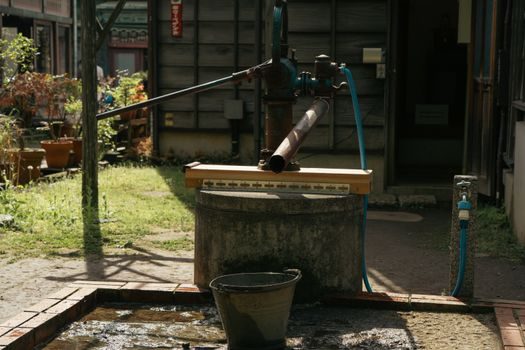
A peristaltic pump is a positive-displacement device that moves fluid by compressing a flexible elastomer tube with a rotor and shoe assembly, isolating the fluid from all wetted metal parts except the tube wall. Flow rates on portable bench-top units sit between roughly 0.1 and 7 L/min against pressures of 20-100 psi (about 0.14-0.7 MPa) [S6].
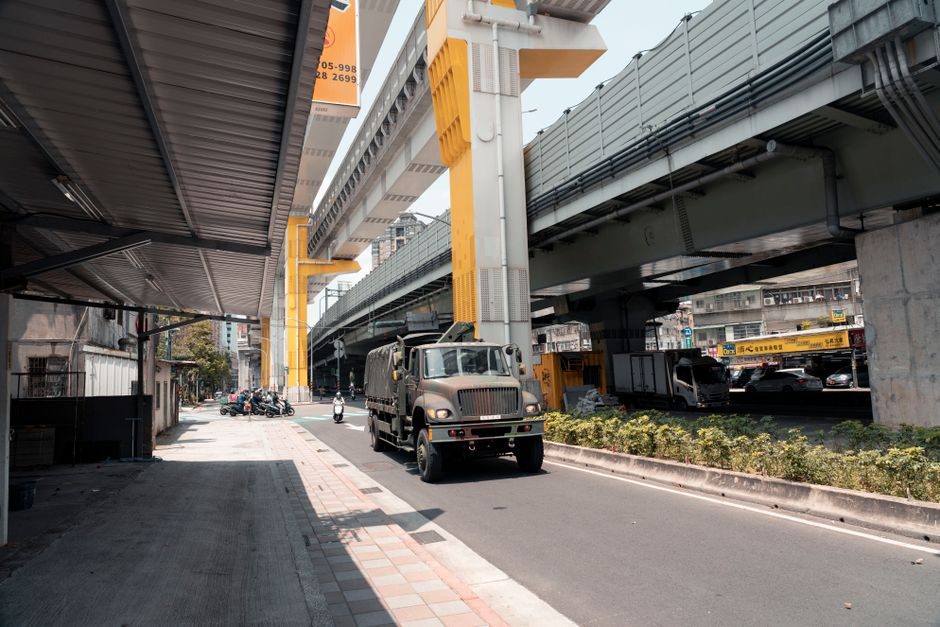
A concrete pump truck is a truck-mounted boom pump built around an S-valve or rock valve, a twin delivery cylinder, and a 4-to-5-section placing boom. Output is 70-140 m³/h in dual high/low pressure mode at 6.4-11.8 MPa, with the boom reaching 26-62 m vertically on a multi-axle chassis weighing 16-47 t [S2][S5][S7]. For a primer on the chassis-mounted variant, see the truck-mounted concrete pump reference, and for the boom-equipped truck variant, the concrete pump truck encyclopedia entry.
Operating Envelope Comparison: Flow, Pressure, and Particle Tolerance
The two machines do not overlap in any meaningful operating band. A peristaltic tube pump is engineered for low flow, low-to-moderate pressure, and clean-to-mildly-abrasive chemistries; the OEM-portable RolaTec line is rated at roughly 7 L/min and 20 psi, with replacement models up to about 0.5 L/min for dispensing duty [S6]. A 26 m concrete pump truck on a 16 t chassis hits 107 m³/h at 5.4 MPa low pressure and 74 m³/h at 8.2 MPa high pressure, with 40 mm maximum aggregate, a 0.45 m³ hopper, and a 78 km/h road speed [S7]. A 40 m-class HB40 truck on a Volvo FM chassis delivers 70/140 m³/h at 11.8/6.38 MPa and a 39.8 m reach, with diesel consumption of about 40 L/100 km on the road [S2]. A 49 m-class ZLJ5413THB125-49 unit lists 120/70 m³/h at 11/7 MPa, a 22 min⁻¹ pumping frequency, and a 12-23 cm slump window [S5]. Side-by-side, the peristaltic pump is four to five orders of magnitude lower in flow and roughly two orders lower in pressure.
Particle handling is the cleanest separator. Peristaltic pumps tolerate only what the tube bore can pass — typically a few millimetres of soft solids or fibrous slurry, never rigid aggregate. Concrete pump trucks are built around a 230 mm delivery cylinder, a 130 mm oil cylinder, and a reversing S-valve, and they are rated for 40 mm crushed-stone aggregate plus a 12-23 cm slump [S5]. Anyone trying to push aggregate through a peristaltic tube will destroy the hose within hours; the equipment classes are mechanically non-substitutable.
Selection Criteria: Duty, Cleanliness, and Service Constraints
Peristaltic pumps earn their slot in three narrow duty windows: sterile or sanitary transfer (pharma, biotech, food) where the fluid contacts only the tubing, abrasive or shear-sensitive slurries (mining reagent dosing, lime/kaolin slurries, wastewater sludge) where the tube is the only wearing part, and metering/dosing where the per-stroke volume is fixed by tube geometry. RolaTec lists portable peristaltic units, chemical-dispensing pumps, and bench-top OEM modules on its commercial line, with the legacy 7.0 LPM/20 PSI unit now under repair-only status and the PM6000 AC listed as the alternate [S6]. The economic case rests on tube replacement cost versus a sealed gear or diaphragm pump that would need a full seal rebuild.
Concrete pump trucks are selected on reach, output, and chassis class. The 26 m class (curb weight 16 t, 78 km/h) fits urban low-rise pours and is a common rental fleet size [S7]. The 40 m class on a 3-axle FM chassis with a 12.8 L Volvo D13 engine (294 kW) targets mid-rise commercial pours, with high/low pressure switching letting one truck serve both slab and high-rise column work [S2]. The 47-49 m class pushes past 100 m³/h and is the workhorse for high-rise cores and infrastructure decks [S5][S9]. Beyond the boom pump, contractors often need a separate concrete mixer truck feed; the two machines are paired on most pour sites. For shorter-reach or shaft work, a dump truck chute pour remains the baseline low-cost option when boom reach is unnecessary.
Hydraulic and Wear-Part Architecture
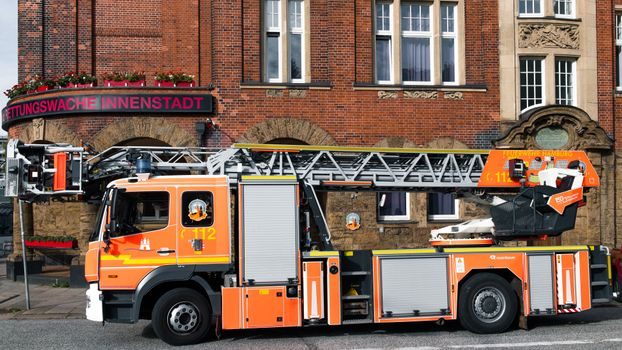
A peristaltic pump has no dynamic seals, no check valves, and no close-clearance metal-on-metal wear surfaces; the elastomer tube is the only consumable, and rotor-to-tube wear is the only mechanical degradation mode. A concrete pump truck is a much larger hydraulic system. The pumping circuit uses a closed-loop variable-displacement hydraulic pump with constant-power takeoff — HB40 marketing claims 3 MPa lower circuit pressure loss and 10% energy savings versus the previous open-loop generation [S2]. Common hydraulic parts cross-referenced across brands include the Rexroth AZPW21022RRR20MBS0593 single gear pump used on Zoomlion boom and trailer pumps, the Rexroth A11VLO130LRDU2 main oil pump on SANY and Zoomlion units, and the A2F032/61L-VAB05 hydraulic boom pump on SANY and Zoomlion [S3]. S-valve and wear-plate assemblies are stocked as shared consumables across SANY, Zoomlion, Putzmeister, Schwing, XCMG, and Hold [S3][S8]. The wear-part economy on a concrete pump truck is therefore parts-and-service heavy, while a peristaltic pump's wear-part economy is essentially a tube inventory problem.
Use-Case Match: Who Should Buy Which
Buy a peristaltic pump if the duty is below 10 L/min, the fluid is sterile / abrasive / shear-sensitive, and the user accepts scheduled tube replacement as the cost of dry-run safety and zero-cross-contamination. The technology is broadly applicable across potable-water dosing, CIP chemical feed, biotech harvest, and mine-tailings reagent lines, with the peristaltic pump reference detailing the rotor-and-shoe geometry. Buy a concrete pump truck if the duty is 40-200 m³/h, the fluid is structural concrete with up to 40 mm aggregate, the pour needs a 26-62 m boom reach, and the site can accept a 16-47 t multi-axle chassis. Buyers should ignore any supplier framing the two as competing — a 7 L/min tube pump cannot move a cubic metre of concrete in any useful cycle time, and a 140 m³/h boom pump cannot dose a reagent at mL/min accuracy. For a closer-form-factor comparison, the diaphragm pump vs concrete pump truck piece covers the displacement-pump side of the same trade-off in more detail. [S1]
Market and Sourcing Signals: Used Inventory and Aftermarket
The 2025-2026 used construction-machinery market is moving fast: Tiejuren Group's Changsha Free Trade Zone remanufacturing base shipped 566 units worth 551 million yuan in a single batch, including a custom mixing boom pump truck to Russia and a 47 m remanufactured Zoomlion pump truck to the Middle East, with Sany, Zoomlion, and Shanhe Intelligent acting as the OEM backbone [S1]. The global used construction-machinery market passed USD 136.8 billion in 2025 and is projected to reach USD 227.3 billion by 2033, with used concrete pump trucks flagged as a core growth category [S1]. On the aftermarket, SANF supplies 15-year-stocked spares across Putzmeister, Schwing, Zoomlion, XCMG, and SANY boom and mixer lines, and the broader supplier network carries the Rexroth and Kawasaki hydraulic-pump SKUs that rebuilders need [S3][S8]. On the peristaltic side, sourcing is more distributed: RolaTec sells direct to qualified distributors with drop-shipment pricing and a US repair-services path for discontinued OEM units [S6]. Buyers running a mixed fleet should keep a cross-brand wear-part list — S-valves, cutting rings, glasses plates, boom-pump cartridges, swing cylinders — sourced from a single aftermarket vendor to consolidate inventory.
Standards, Safety Constraints, and Failure Modes
Concrete pump trucks are governed by chassis-emission rules (Euro IV appears on the 26 m unit's ISM11E4 345 engine; Nation III GBIII on the HB40 Volvo D13), by boom-stability structural rules, and by on-site lifting-and-outrigger practice [S2][S7]. Remote-control range of 150 m is offered on the HB40 to keep the operator clear of the placing hazard zone [S2]. Pumping-pressure interlocks and the boom warning device are standard on newer builds [S2]. Peristaltic pumps are governed mainly by tubing-grade compatibility (USP Class VI, FDA, or chemical-resistance selection for the service), by rotor RPM limits to prevent tube overheating, and by suction-lift/viscosity derating that the OEM datasheet captures. The dominant concrete-pump failure modes — S-valve wear, cutting-ring replacement, hopper blockage from out-of-slump concrete, and boom fatigue — are entirely absent on a peristaltic pump, whose dominant failure is tube burst from chemical attack or from running the pump dry at sustained pressure. Equipment specification, not shared standards, is what governs the choice between these two machines.
Track two signals over the next 6-12 months: the post-2026 wave of remanufactured 47-62 m Zoomlion and SANY boom pumps entering Middle East, Africa, and Russia from the Changsha FTZ base, and the peristaltic aftermarket response as more Chinese-built OEM tubing pumps enter the same distributor channels that currently stock legacy US-built units. [S1][S6]