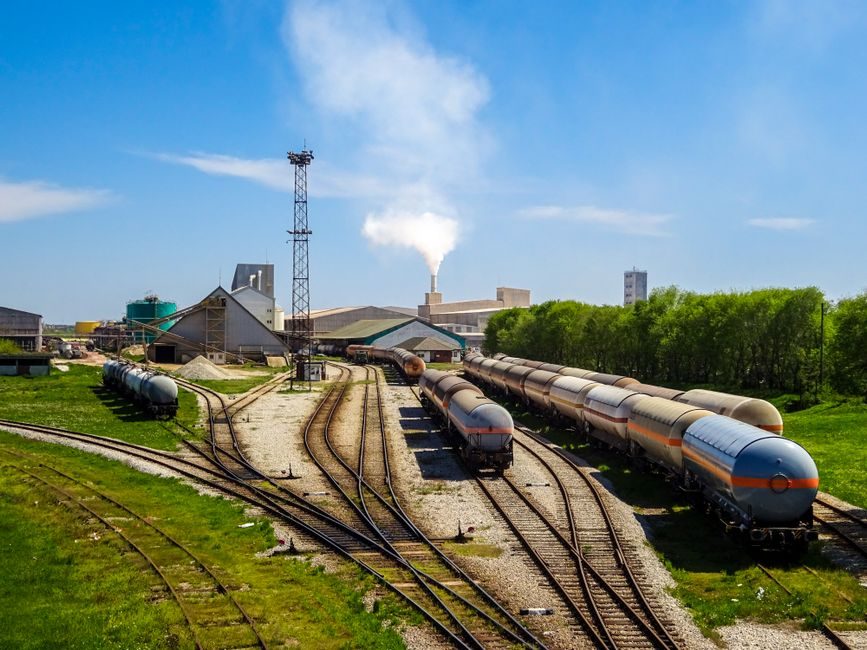
The global petrochemicals market was estimated at USD 641.01 billion in 2024 and is projected to reach USD 973.10 billion by 2030, growing at a 7.3% CAGR over 2025-2030 [S2]. Asia Pacific accounted for 46.9% of 2024 revenue, with China alone at 35.4% — a concentration that defines the supply-side decisions every plant engineer now inherits [S2].
A separate IndustryArc forecast places the market at USD 575.1 billion by 2026, growing at a 4.1% CAGR over 2021-2026, which exposes the wide band between consensus forecasts and the slower 2026 reality being signalled by ICIS and McKinsey [S3][S4][S6]. For the engineer on the ground, that divergence is the story: capacity keeps arriving, demand is no longer keeping pace, and the spec book is being rewritten around that imbalance.
Capacity Wave, Demand Reset: The 2026 Overhang
ICIS's May 2026 insight series flags a "structural reset" of China's petrochemical industry as population growth slows, with the supply pipeline still weighted to ethylene, propylene and aromatics complexes commissioned during 2023-2025 [S6]. Grand View's analyst note ties the same 7.3% CAGR to plastics pull, but ICIS data points to a mismatch: derivative demand is decelerating faster than steam-cracker start-ups [S2][S6]. The practical effect is cracker run-rate discipline, more spot ethylene, and deferred PDH/UOP-licensed propylene projects.
Buyers specifying new pressure transmitters and flow meters into 2026 ethylene and propylene service should expect more frequent turndown — feedstock slates are now heavier on LPG/ethane blends as naphtha economics weaken [S6]. That shifts required turndown ratios and rangeability on custody-transfer Coriolis and ultrasonic meters, and pushes orifice-plate installations toward wider beta ratios with dual-chamber industrial valves for safer depressurising during idle windows [S6].
Decarbonization and the Inspection-Tech Stack
McKinsey's 2026 chemicals outlook, republished by Elsevier, ranks "innovators and green leaders" as the cohort with defensible value creation, with carbon-emission reduction framed as a non-discretionary R&D axis rather than a CSR line [S3]. The CIOE 2025 "Optoelectronic Technology Empowering Petrochemical Inspection Applications Forum" — held in Shenzhen — made the engineering case that high-temperature, high-pressure, flammable/explosive service demands optical and laser-based inspection, distributed acoustic sensing and IR thermography as complements, not replacements, for conventional pressure sensor loops [S1].
Three concrete data points for the 2026 spec sheet: (1) optical gas imaging cameras are now routinely specified for fugitive-emission monitoring on ethylene crackers to meet Methane Guiding Principles-style reporting; (2) distributed temperature sensing (DTS) over fibre is replacing point RTDs in reformer catalyst beds, cutting sensor count per heater by an order of magnitude; (3) Raman/FT-NIR analysers are being deployed at the loop for in-line C2/C3/C4 composition where lab grabs used to dominate [S1]. The shift matters for control engineers because the analyser-to-DCS latency and the PLC scan budget are now the binding constraint, not the sensor price.
Feedstock and Geopolitics: The Middle East Supply Shock
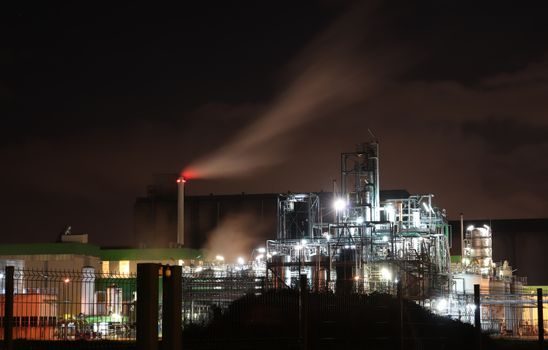
ICIS's 7 May 2026 brief is titled "Crude, Chemicals and Chaos: Navigating the Middle East Supply Shock", and it sits alongside the "China structural reset" note, signalling that 2026 is being shaped by two simultaneous shocks: a feedstock-cost spike out of the Gulf, and a demand plateau in the world's largest consuming block [S6]. For European and North-East Asian ethylene buyers, that means hedging strategies built around US ethane are being re-evaluated against Red Sea routing risk and the reliability of Gulf LPG parcels.
Spec implications: more swing in feed Specific Energy consumption forces steam systems to be designed for wider fuel-gas compositional variation, and the burner management system has to tolerate broader Wobbe-index bands than the 2020 fleet [S6]. For a procurement engineer comparing cracker-cycle quotations across Q3 2026, the ICIS framing implies that any "fixed-formula" contract pricing should be re-read with a regional premium/discount clause tied to actual feedstock origin.
Market Forecast Divergence: USD 575 Billion vs USD 973 Billion
The headline number depends entirely on which report you read. IndustryArc's 2021-2026 forecast puts petrochemicals at USD 575.1 billion by 2026 at a 4.1% CAGR [S4], while Grand View's 2025-2030 outlook reaches USD 973.10 billion by 2030 at a 7.3% CAGR [S2]. The Business Research Company's January 2026 report segments the same market by type (ethylene, propylene, benzene, xylenes) and by application (polymers, paints & coatings, solvents, rubber, adhesives & sealants, surfactants, fibres) — confirming the 2030 endpoint is an extrapolation, not a 2026 number [S5].
Treating the two forecasts as a single trend is a mistake. The lower CAGR of IndustryArc reflects the 2021-2022 price-spike base and 2023-2024 destocking, while the higher Grand View number assumes a return to normal plastics demand growth post-2026 [S2][S4]. For a spec engineer sizing a 2026 debottleneck, the safer planning anchor is the 4.1% CAGR [S4], with a stress test against the 7.3% number [S2].
Application Segments: Where 2026 Demand Is Real
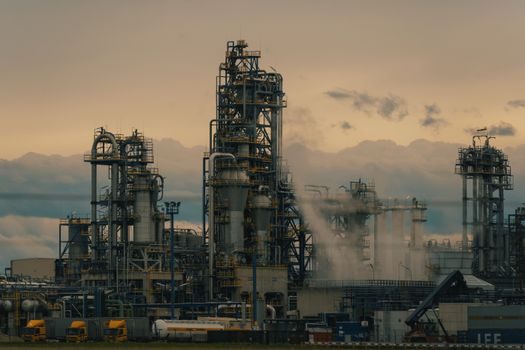
Polymers remain the largest application bucket, but ICIS's "Beyond the Horizon: 2026 Key Trends" separates volume growth from value growth, with surfactants and specialty adhesives holding margin while commodity polyethylene and polypropylene chase utilization [S5][S6]. Paints & coatings demand is tied to construction cycles, with 2026 weakness in China commercial real estate offset partially by infrastructure spend in India and South-East Asia [S5].
For instrument and valve buyers, the actionable read is this: servo motor-driven actuated valves and precision flow control in the specialty chemicals and surfactants sub-sectors justify the higher CAPEX, while in commodity polyolefins the spec is converging on minimum-spec, high-cycle industrial valves with documented total cost of ownership over 5-year MTBF windows. Procurement strategies that treat "petrochemicals" as one segment will mis-allocate; the 2026 spec must follow the application segment, not the headline category.
Standards, Sourcing and Selection Gates for 2026 Builds
Three selection gates are converging for 2026 plant builds: (1) documented Scope 1+2 emissions per ton of product, which is now a bid qualifier in many Asian and European tenders; (2) digital-ready instrumentation — HART-7/8, Ethernet-APL, and OPC UA over PA — because manual calibration walk-downs are being priced out of the operating budget; (3) materials of construction traceable to NACE MR0175 / ISO 15156 for sour service, with full mill cert traceability [S3][S6]. The first gate is buyer-driven, the second is OEM-driven, the third is a hard regulatory floor.
The trade-off matrix to use in vendor scoring in 2026: emissions intensity per ton (lower wins), digital protocol coverage (more wins, with HART on the 4-20 mA analog loop as a baseline, not an option), materials trace documentation (must-have, no points for partial), total lifecycle cost over 10 years (the tiebreaker). Skipping any of these to chase a 5% CAPEX discount is the spec error that surfaces two operating cycles later. Compared with the 2026 LNG capacity build, petrochemicals share the feedstock-shock exposure but lack LNG's anchor-contract pricing cushion, which is why 2026 buyer-side discipline is sharper on the chemicals side.
Trackable signals to watch in the back half of 2026: ICIS's monthly cracker operating rate update, China's apparent polymer demand growth rate (the leading indicator for the 35.4% China share), and the next CIOE petrochemical-inspection forum call for papers — each is a public, dated data point that will confirm or refute the structural-reset thesis [S1][S2][S6]. If apparent polymer demand in China prints below 3% year-on-year for two consecutive months, the lower-end forecast (4.1% CAGR) becomes the working baseline for 2027 debottleneck decisions [S2][S4].