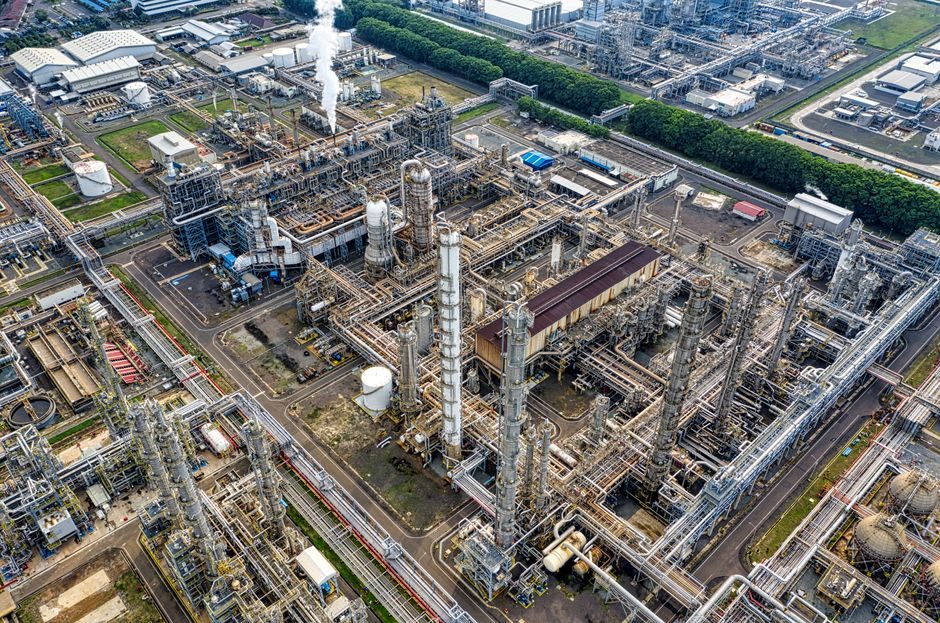
Petrochemical value chains in July 2026 still resolve into two clearly demarcated halves — an upstream block (exploration, drilling, wellhead, gas processing) and a downstream block (refining, cracking, polymerisation, conversion) — with engineering-service and inspection providers such as Intertek operating across both, per Intertek's own asset-integrity scope statement [S1].
Vertically integrated operators now stretch the chain into specialty polyesters: ZHINK Group's PET operation, for example, runs an "upstream to downstream industrial chain" from PTA through resin to bottle-grade PET out of Haining, Fuling and Jinhua, illustrating how the same upstream feedstock logic drives a polymer conversion line as much as it drives a refinery [S2].
Defining the two blocks and where they hand off
Upstream covers exploration, drilling, production, gathering, and gas processing; downstream covers refining crude into fuels and petrochemical feedstocks (naphtha, gas oils), then steam-cracking those into olefins and aromatics, then polymerising into polyolefins, PET, PVC, and so on [S3]. The hand-off is the cracker feed — typically naphtha or ethane/LPG — and every gram of impurity (sulphur, chlorides, water) the upstream side lets through forces the downstream side to over-build hydrotreaters, molecular sieves, or chloride guards. Intertek's engineering-services line lists "energy, petrochemical, power generation, chemical, and construction" as a single asset-integrity envelope, confirming that operators increasingly buy reliability and life-management on the whole chain rather than block-by-block [S1].
From a process-engineering seat, the upstream boundary ends at the sales-gas or stabilised-condensate specification, and the downstream boundary starts at the refinery crude unit. Petrochemical-feedstock purity targets (e.g. < 1 ppmw sulphur on ethylene cracker feed, < 10 ppb on certain polymer-grade propylene catalysts) are the real contract between the two blocks; feed that misses those numbers kills catalyst life downstream and re-titration work upstream.
Process equipment and instrumentation that straddles the chain
Three equipment classes dominate the chain regardless of block. pressure transmitters are dense on wellheads, separator vessels, compressor suctions/discharges, and reactor outlet lines — differential-pressure units on the upstream side, gauge/absolute units on hydrocracker and reactor beds downstream. flow meters change technology across the chain: ultrasonic and Coriolis on gas processing and custody transfer; orifice and turbine on refinery and pipelined hydrocarbon service; magnetic and Coriolis on the water/chemical-injection side that supports both. industrial valves — gate, globe, check, ball, and control — sit on every isolation and control point, with material grade (carbon steel, low-temp CS, 304/316 SS, duplex, alloy 625) chosen to the fluid and the temperature, not to the block label. [S1]
Two more classes are also chain-wide. pressure sensors show up in dense clusters on safety-instrumented-function (SIS) loops — wellhead ESD, compressor anti-surge, and reactor quench — where redundancy and proof-test interval drive the spec as much as range and accuracy. PLC and DCS controllers integrate the field devices into the operating envelope: SIS-rated PLCs on emergency shutdown, BPCS/DCS on continuous control, and remote-terminal units on well-pad and gathering-station telemetry. Servo motors and hydraulic actuators show up in fewer but punishing roles — large-modulation control-valve actuators, compressor anti-surge valves, and the indexing drives on continuous-catalyst-regeneration crackers.
Service suppliers and what they actually sell in 2026
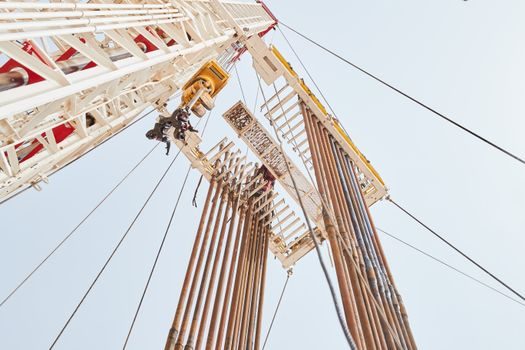
The service market is now organised around three offers: (a) asset-integrity and life-management consultancies (Intertek's engineering-services line, which combines failure analysis, fitness-for-service, and litigation support across energy, petrochemical, power, chemical, and construction clients) [S1]; (b) specialist petro-industry consultancies and training (Petrogenium supports upstream, downstream, petrochemicals, gas processing, renewable resources, and downstream commercial/retail clients on strategic, operational, commercial, and technical challenges) [S3]; and (c) vertically integrated polymer operators that pull the chain inside one corporate envelope (ZHINK's Haining/Fuling/Jinhua PET "upstream to downstream" bases, where Wankai New Materials is described as the only enterprise in the industry field running that PTA-to-PET chain end-to-end) [S2].
For a buyer, that means integrity-side RFQs go to firms like Intertek for risk and reliability work [S1], operational-improvement RFQs go to firms like Petrogenium for technical and commercial coaching [S3], and capacity RFQs go directly to integrated polymer producers for chain-locked supply [S2]. Petrogenium's published scope is useful as a checklist: it lists six market segments — upstream, downstream, petrochemicals, gas processing, renewable resources, and downstream commercial/retail — and four work-streams — strategic, operational, commercial, technical — which together describe what a mid-size 2026 service engagement is expected to cover [S3].
Spec gates and decision criteria across the chain
Specification work in 2026 runs against a small set of hard gates. On the upstream side, materials follow NACE MR0175/ISO 15156 for sour service, with low-temp impact testing on separators and cold-box equipment. On the downstream side, materials follow ASME B16.5/B16.34 valve and flange classes, with piping classes keyed to ANSI B16.5 pressure class and corrosion allowance, and reactor internals specified to ASME BPVC Section VIII. Electrical equipment in hazardous areas follows the ATEX 2014/34/EU directive inside the EEA, with IECEx as the IEC-based equivalent for the rest of the world, and the relevant IEC 60079 parts for the protection concept (Ex d, Ex e, Ex i). Flow measurement on custody transfer follows ISO 5167 for differential devices and AGA reports for gas ultrasonic, and process-analyser shelters on crackers follow API RP 555. Process-control and SIS architectures follow IEC 61511/ISA 84 on the safety side, with HART (FSK over a 4-20 mA analog loop) on conventional instrumentation and Foundation Fieldbus or PROFIBUS PA on digital field segments where the plant has standardised on them. [S2]
Selection across the chain reduces to four criteria: (1) fluid corrosivity and phase (drives material grade and NACE/ISO 15156 compliance), (2) temperature and pressure envelope (drives ASME class and flange rating), (3) hazardous-area classification (drives ATEX/IECEx zone and protection concept), and (4) control / safety tier (drives BPCS vs SIS architecture, proof-test interval, redundancy). A wellhead choke on wet sour service, a hydrocracker effluent air-cooled exchanger, and a polymerisation reactor dump valve are wildly different equipment, but they all flow through those same four gates — and the suppliers that win bids in 2026 are the ones whose datasheets are organised the same way.
Use cases, limitations, and the integrated chain play
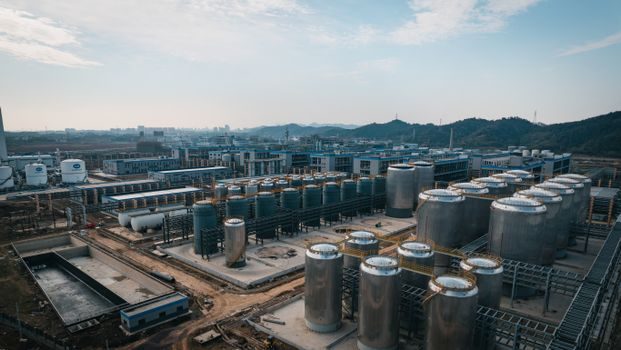
Two use cases dominate. The first is the integrated polymer play: a producer such as ZHINK runs PTA-to-PET on three Chinese sites (Haining, Fuling, Jinhua) and uses the integrated chain to lock in resin-grade consistency and bottle-grade qualification [S2]. The second is the brownfield integrity play: an operator hands a refinery, a gas plant, and a petrochemical complex to one integrity consultant (Intertek's published scope covers energy, petrochemical, power, chemical, and construction under a single asset-integrity envelope) to standardise RBI programmes, fitness-for-service studies, and inspection intervals [S1]. The first use case wins on cost and lead-time; the second wins on risk reduction and audit posture.
Limits are real. Vertically integrated PET capacity is concentrated in a small number of Chinese producers, so a downstream PET bottle buyer with no domestic Wankai-class chain is exposed to resin-grade swings. Conversely, outsourcing integrity to a single consultancy concentrates knowledge of failure modes in one place — useful for consistency, dangerous if that firm's senior engineers rotate. Operators buying integrated chain supply (resin) and integrated chain service (integrity) in 2026 should keep dual-source and knowledge-redundancy plans explicit in the contract, rather than implied. Related reading on spec-driven sourcing — for materials outside this chain but under similar pressure from buyers — is collected in the optical glass buying guide 2026 and the quartz material buying guide 2026, which apply the same grade / spec / sourcing-lever discipline to optical materials.
What to track into 2026 H2
Trackable signals: (i) whether asset-integrity consultancies continue to publish cross-block scope statements (Intertek's current engineering-services page lists energy, petrochemical, power, chemical, and construction under one envelope, which is the working definition of an integrated-chain offer) [S1]; (ii) whether integrated polymer operators continue to publicise end-to-end site lists (ZHINK's three-site Haining/Fuling/Jinhua base remains the canonical example in the public material) [S2]; and (iii) whether specialist consultancies extend their segment list (Petrogenium currently lists six segments and four work-streams, which is a useful benchmark for the breadth of offers a 2026 service buyer should expect) [S3]. A new segment on the Petrogenium list, a new site on the ZHINK list, or a new asset class on the Intertek list are the earliest public signals that the chain is reorganising underneath the spec sheets.