
A plunger pump is a positive-displacement machine that traps a fixed volume of fluid between a reciprocating plunger and a set of check valves, then forces it out at high pressure: working pressures land in the 30-70 mpa band and volumetric efficiency holds above 90% in well-maintained units [S1].
That combination of pressure ceiling and metering accuracy is why plunger designs sit inside hydraulic power packs, oilfield water-injection skids, high-pressure cleaning rigs, and chemical metering skids, where a centrifugal pump would lose head, surge, or cavitate before reaching setpoint [S1][S3].
Headline spec bands and what they buy you
Plunger pumps cover 30-70 MPa working pressure and above 90% volumetric efficiency, with flow trimmed by changing plunger stroke length or rotational speed, which makes them one of the few positive-displacement types with both a high pressure ceiling and a linear trim curve [S1]. For comparison, a multistage centrifugal pump is built for high flow, not high head, and has to stack stages in series to chase pressure, which then drags efficiency down [S1]. A diaphragm pump trades away some of that pressure head to gain leak-tightness on aggressive or sterile fluids, so its spec band is lower than a plunger's, and a metering pump variant, covered in this metering pump selection map, sits in the low-flow, high-accuracy corner of the same family [S3].
Inside the broader industrial pump taxonomy, plunger and piston pumps are the high-pressure wing of the positive-displacement group, contrasted against dynamic machines where impeller tip speed, not trapped volume, sets the head [S3].
Advantages that justify the price tag
High-pressure capacity: plunger units routinely reach 30-70 MPa, which covers hydraulic systems, oilfield water injection, and high-pressure cleaning duty, well above what a single-stage centrifugal can deliver [S1]. High efficiency: volumetric efficiency above 90% on a clean, well-sealed unit beats most dynamic pumps on energy conversion per litre pumped [S1]. Adjustable flow: stroke length and rpm are both clean tuning knobs, so the same pump can hold a stable flow across a wide pressure range, the opposite of a centrifugal whose flow collapses as differential pressure rises [S1][S3]. For an atachpumps sourcing reference, see this breakdown of plunger pump types, spec bands, and selection cues.
Disadvantages and the failure modes behind them
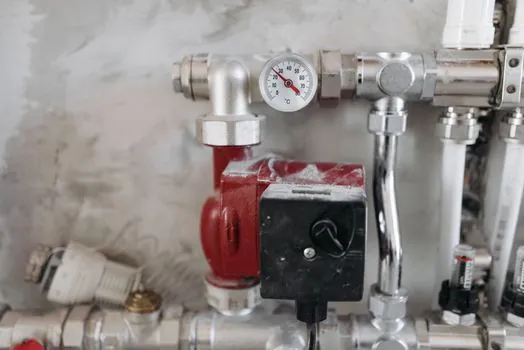
Complex structure: precision plungers, seal packs, and check valves raise both manufacturing cost and the skill level needed for service [S1]. Sensitivity to fluid cleanliness: the tight plunger-to-cylinder clearances that deliver 90%+ volumetric efficiency are the first thing a dirty fluid destroys, and the failure usually shows up as a rapid drop in volumetric efficiency before any visible wear [S1]. Flow pulsation: reciprocating action produces cyclic flow at the discharge, so any system that needs steady flow downstream needs a pulsation dampener or accumulator, otherwise instrumentation, nozzles, and pipework see fatigue loading on every cycle [S1].
None of these are deal-breakers on their own, but stacked together they push a plunger pump out of jobs where the fluid is dirty, the budget is thin, or the downstream process is pulsation-intolerant.
Plunger vs centrifugal vs peristaltic on four decision axes
The same four criteria lined up across the three main contenders reads cleanly. Pressure ceiling: plunger 30-70 MPa, multistage centrifugal stacks stages to chase head, peristaltic tops out far lower [S1][S2]. Flow stability against pressure: plunger holds set flow across pressure, centrifugal flow falls as head rises, peristaltic holds flow within its narrow band [S1][S2][S3]. Dirty or viscous fluid tolerance: plunger is the worst of the three because of tight clearances, centrifugal tolerates some particulates thanks to impeller clearance, peristaltic handles slurries and abrasives because the fluid only touches the tubing [S1][S2]. Maintenance shape: plunger needs seal and valve service, centrifugal is mainly bearings and impeller, peristaltic is a single hose or tube change [S2]. The point is that "best pump" only exists inside the four corners of pressure, flow stability, fluid quality, and maintenance budget.
Where a plunger pump is the right call, and where it is not

Plunger pumps are right for high-pressure cleaning rigs, hydraulic power units, oilfield water injection, and chemical metering skids where a fixed flow at a fixed high pressure is the spec, all jobs the plunger pump types, spec bands, and selection cues reference groups under high-pressure, stable-flow duty [S1]. They are wrong for raw-water transfer, slurry handling, sterile pharmaceutical transfer, and any general-purpose plant utility loop where a centrifugal, peristaltic, or diaphragm pump will do the work at lower installed cost and with a kinder maintenance profile [S2][S3].
Selection gates worth writing into the purchase spec
Pin four numbers in the datasheet review: working pressure bar or MPa, required flow at that pressure, fluid cleanliness class (typically NAS 1638 or ISO 4406), and allowable flow pulsation at the discharge. Match each one against the 30-70 MPa pressure band, the above-90% volumetric efficiency claim, the stroke/rpm trim range, and the dampener or accumulator requirement, and the field narrows fast [S1]. Cross-check the fluid cleanliness gate against the planned filtration, because the cleanest pump on paper will still drop volumetric efficiency if the upstream strainer rating is loose [S1]. For a broader view of how plunger variants sit next to other positive-displacement types in the wider construction machinery and equipment ecosystem, the selection logic in this vacuum pump types and classifications spec map applies the same pressure-versus-cleanliness trade-off to a different pump family.
Trackable signals: monitor 2026 OEM bulletins for plunger pumps quoting higher than 70 MPa working pressure with sealed-for-life packing, and watch for revised API 674 acceptance criteria on pulsation limits, both of which would shift the cost-versus-duty curve and the comparison against peristaltic and centrifugal options covered above.