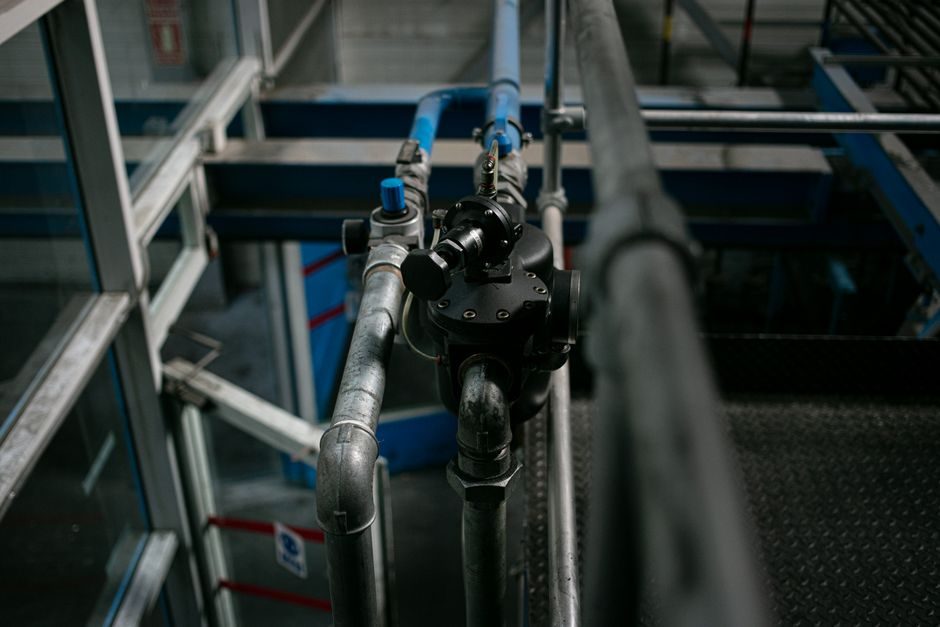
Total installed cost for an industrial pneumatic conveying system in 2026 spans roughly USD 50,000 for a short, single-source dilute-phase vacuum package up to USD 1,200,000+ for a multi-source dense-phase pressure network with rotary valves, blowers, filters and instrumentation [S3].
Dilute-phase is the default low-cost mode used by most chemical, food and plastics plants for free-flowing granules under 5 t/h; dense-phase and semi-dense-phase handle abrasive, friable or blended products at higher pressure and cost, with system topology (positive-pressure, vacuum, or combination) and gas source (Roots blower, screw compressor, oil-free rotary lobe) as the two largest cost drivers [S1][S3].
Price Bands by System Type and Throughput
Three commercial bands cover roughly 90% of 2026 buying decisions. A single-line dilute-phase pressure package for under 2 t/h over 50 m typically prices USD 80,000-150,000 turnkey; a mid-range 5-15 t/h system with a Roots blower (40-80 kW class), filter receiver, cyclone and control panel sits between USD 200,000 and USD 450,000; and dense-phase packages for cement, fly-ash or pellet handling above 10 t/h run USD 400,000 to USD 1,200,000+ depending on line length and the number of switching valves [S1][S3].
Vacuum (negative-pressure) systems remain the cheapest entry point for multi-source unloading from railcars or silos, with small 200-500 kg/h packages available for USD 50,000-90,000 from Chinese and European OEMs on DirectIndustry's industrial directory [S1]. Engineering hours, structural steel and ATEX/IECEx-certified components for Zone 21/22 dust atmospheres typically add 15-25% to the bare equipment price once classified areas are in scope [S1].
The Five Cost Levers That Move the Number
Line length and bend count set the pressure-drop budget and therefore the blower or compressor class. A 20 m horizontal run with two bends and a single pick-up can use a 15-22 kW Roots blower; the same duty at 200 m with six bends generally steps up to a 75-110 kW unit or a multi-stage screw compressor, tripling gas-source cost [S3][S4].
Material abrasiveness and friability decide dense vs dilute phase. Quartz, alumina, cement clinker and fly ash erode conventional carbon-steel bends quickly, so dense-phase typically swaps in alumina-lined or Ni-hard elbows, and adds a pulse-jet filter receiver sized for 3-5 m/min filtration velocity - the filter alone often costs USD 25,000-60,000 at 10-20 t/h duty [S3].
Gas source is the hidden capital line item. Oil-free screw compressors (ISO 8573-1 Class 0) for food or pharma conveying cost roughly 1.5-2x a Roots blower package of equivalent FAD, and they must be paired with a desiccant or refrigerated dryer to keep the conveying gas below the product's humidity tolerance (typically -20 to -40 degrees C pressure dewpoint for hygroscopic powders) [S3].
Instrumentation and control is the third lever, often the easiest to underestimate. A modern dense-phase line now ships with a differential-pressure transmitter across the conveying pipe, a Coriolis or load-cell mass-flow meter on the receiver, and a PLC with HART or PROFINET I/O - hardware that adds USD 15,000-40,000 versus a basic relay panel but delivers the data needed to feed bulk-material equipment fleet analytics [S1][S3].
Material of construction and certification close the list. 304/316L stainless contact parts for food or pharma raise fabricated cost 20-40% over mild steel; ATEX/IECEx Zone 21 rated motors, valves and panels add a further 8-15% but are non-negotiable for sugar, flour, grain and toner applications where MIE (minimum ignition energy) sits below 10 mJ [S1].
Dilute-Phase vs Dense-Phase: A Side-by-Side Spec Comparison
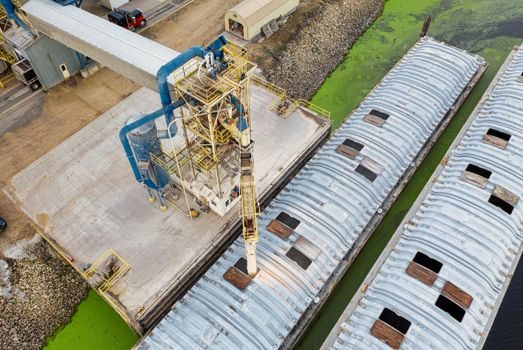
On the four decision criteria most procurement engineers track, dilute-phase pressure systems ship faster, cost less at low tonnage, and tolerate variable feed better; dense-phase pressure systems win on particle degradation (typical conveying velocity drops from 18-25 m/s to 4-8 m/s), pipe wear, and air-to-product ratio (kg of product per kg of conveying gas moves from roughly 5-15 in dilute phase to 40-100 in dense phase) [S3][S4].
Lead time for a Chinese-built dilute-phase skid in 2026 is 6-10 weeks ex-works; a European dense-phase engineered package from suppliers like Progressive Products typically runs 16-24 weeks because of fabricated pressure-vessel certification cycles and longer rotary-valve component lead chains [S2][S3]. For buyers weighing both, the break-even tonnage where dense-phase pays back in gas and maintenance savings is usually in the 8-20 t/h range, provided the material is non-segregating and below 500 microns mean particle size [S3].
Standards, Sizing Tools and Software That Lock the Budget
Design starts with the minimum conveying velocity (saltation velocity) plus a 1.2-1.5x safety margin, and most OEMs size the line using established references such as the Mills, Rhodes or Klinzing charts, with PneuCalc (now at version 8, released 2025) providing the dominant commercial workflow for both pressure-drop and power-requirement calculations [S4].
Pressure-vessel certification on receivers, filter housings and blow tanks typically follows ASME BPVC Section VIII or PED 2014/68/EU for European builds, with NFPA 654 controlling dust-explosion prevention and NFPA 484 covering combustible metals - standards that engineering teams should confirm before locking scope with the OEM [S3]. For Zone 21/22 internal dust, IEC 60079-31 governs dust-protected enclosure selection; for the broader safety argument, an ATEX-certified internal audit and risk assessment is the standard route for EU plants [S1].
Who a Pneumatic Line is FOR - and Who Should Look Elsewhere
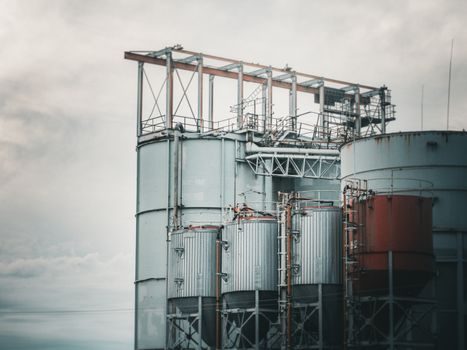
Dilute-phase vacuum unloading fits plants receiving multiple raw materials from road tankers or FIBCs into day-bins, where flexibility and low capital beat throughput. Dense-phase pressure networks suit cement, mineral, alumina and polymer pellet plants moving 10-50 t/h over long distances with limited degradation tolerance and where the gas-source already exists [S3].
Pneumatic conveying is the wrong choice for very high tonnage of low-bulk-density fluff (typical ceiling around 30-50 t/h even on engineered dense-phase), for highly cohesive or moist materials above critical moisture that fluidise poorly, and for very long horizontal runs beyond 400-500 m where a bucket elevator plus enclosed belt or chain conveyor starts to win on both kWh per tonne and maintenance hours [S3].
Common Failure Modes and Lifecycle Costs
Rotary-valve airlocks and diverter valves together drive roughly 60% of unplanned downtime on dense-phase systems, and replacement rotor sets typically run USD 3,000-8,000 depending on size. Specifying a drop-through rotary valve with adjustable tip clearance, plus a spare rotor in the parts kit, is the single highest-ROI field decision for a 2026 dense-phase build [S2][S3].
Filter bag life on the receiver pulse-jet collector averages 12-24 months at -300 to -500 mbar vacuum, with replacement sets priced USD 2,500-7,000 for a 10 t/h unit; a real-time differential-pressure gauge across the filter (a 50-200 USD transmitter) is the cheapest predictive tool available and should be specified even on the leanest skids [S1][S3].
Sourcing Reality: Where the 2026 Quotes Land
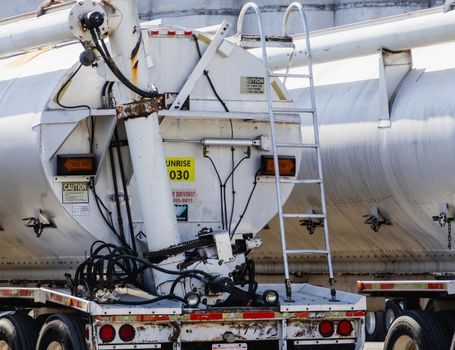
For buyers comparing quotes, pneumatic actuator and pneumatic fitting sub-assemblies are largely commodity-driven in 2026, and the wider factory automation supply chain - including motion components like the linear guide rails used in pick-up hood positioners and diverter carriages - has normalised to 6-12 week lead times versus the 30+ week peaks of 2022-2023 [S1].
A typical 2026 sourcing playbook is to obtain two Chinese equipment-builder quotes (6-10 week lead time, 25-40% below European equivalents for dilute-phase packages), one European engineered-system quote (16-24 weeks, stronger documentation and CE/ATEX file), and one integrator quote for install and structural steel - the integrated number is usually 12-18% above the OEM line and is where schedule risk lives [S1][S2].
Two watch items for the second half of 2026: steel and stainless surcharge escalation clauses, still being applied by most European OEMs on quote validity beyond 30 days; and AS-12 Blower or above models in the 110-200 kW class where the European supply of cast-housings for the rotors is still tight. Buyers who can flex blower selection to a different OEM brand or to a packaged 75 kW twin-pack of smaller units will see shorter delivery dates and lower cost without significant efficiency loss [S1].