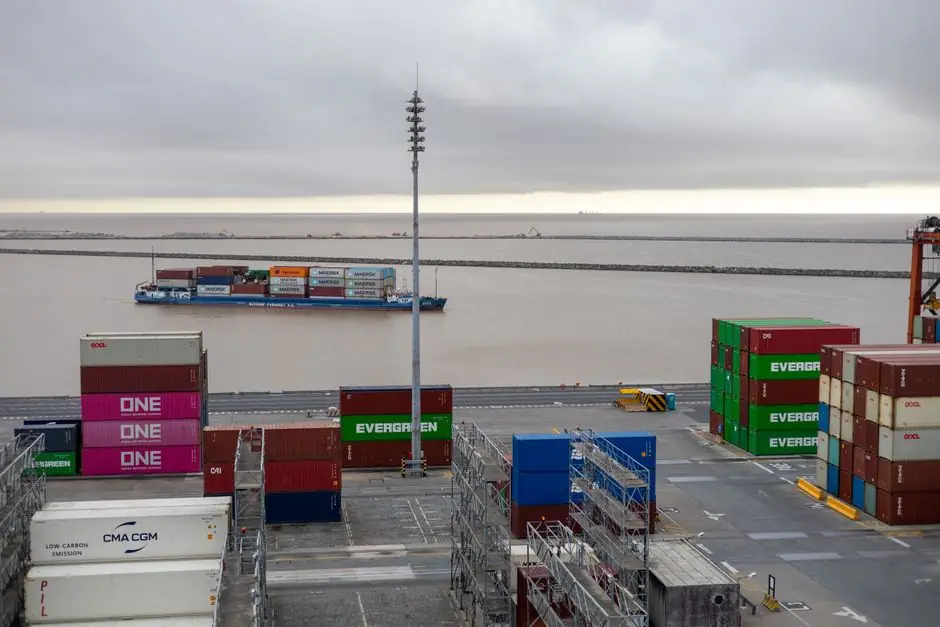
Port and terminal tank cleaning programs are converging on fixed rotary jet heads as the default, with documented operating windows of 10–18 bar (145–260 psi) and 20–60 L/min per head, paired with portable hydrojets at 200–500 bar for heavy sludge [S5]. Selecting the right machine is no longer about pressure alone; geometry, residue chemistry, hazardous-area classification, and downstream waste routing now drive the spec sheet.
For fuel bunkering, slop, and chemical service tanks at marine terminals, the rotary jet/Butterworth pattern remains the workhorse. Automated tank cleaning machines typically deliver 360° coverage in 2–4 indexed passes and remove the need for confined-space entry on routine cycles, a primary driver behind the segment's 7.4% CAGR through 2034 [S6].
Residue profile drives the head type
HFO and IFO fuel tanks carry asphaltene sludge, wax, and cat-fine sediment, which require hot-wash cycles at 50–80 °C (122–176 °F) and high-impact rotary jet heads to break deposits without manual entry [S5]. VLSFO and LSFO tanks with paraffinic wax benefit from solvent boosters and emulsifiers matched to coating compatibility, with soak times set by residue thickness rather than fixed intervals.
MGO and day-service tanks show film, light varnish, and microbial growth (diesel bug), and respond to neutral detergents and microbicides at lower pressure windows, generally under 12 bar, where coating integrity is the limiting factor [S5]. Slop and settling tanks with emulsions and water/oil layers need demulsifier dosing and phase-separation cycles before mechanical cleaning begins. Selecting the wrong head class for a given residue typically doubles cycle time and chemical consumption.
Geometry, nozzle, and coverage mapping
Tank diameter, baffle count, internal obstructions, and nozzle count determine effective coverage, and a single rotary jet head typically covers 3–6 m diameter in one indexed position [S4]. For tanks above 8 m diameter or with multiple compartments, multi-head drop-in arrays replace single fixed machines to keep cycle time under 90 minutes per tank. Spray balls suit low-pressure, low-residue sanitary vessels but lack the impact needed for fuel and chemical service.
Rotary spray heads (free-rotating spinners) use low volume and low pressure for films and light residues, while rotary impingement heads combine pressure and flow to deliver a precise 360° jet pattern suited to industrial service [S4]. Operators specifying for port service should map nozzle count to the largest expected deposit thickness, since under-spec'd arrays create shadow zones around baffles and stiffeners that require handheld hydrojet rework.
ATEX zoning, electrical rating, and confined-space rules
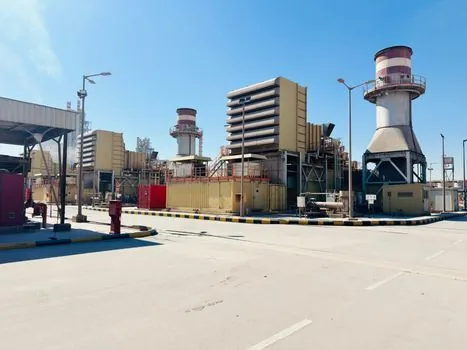
Fuel, slop, and most chemical service tanks at ports are classified hazardous locations, so electrical equipment inside the tank or within the spray envelope must meet hazardous-location listing requirements and be used as labeled [S1]. For routine cleaning, the preferred path is to eliminate entry entirely by using fixed, ATEX-rated machines that run from outside the tank. When manual entry is unavoidable, OSHA 1910.146 (permit-required confined spaces) governs the program, and 1910.307 governs electrical equipment in hazardous locations [S1].
MARPOL Annex I, SOLAS, ISGOTT, and Port State Control overlay the marine side, with chain-of-custody documentation through the Oil Record Book and waste transfer to Port Reception Facilities [S5]. On the gas-test side, ISGOTT-aligned practice is O₂ near 20.9%, hydrocarbon vapors below 10% LEL (or stricter terminal limit), and toxics below TLV before any entry or non-EX equipment is introduced [S5]. Specifiers should treat ATEX zone as a hard input, not a checkbox: a Zone 1 tank rules out most non-Ex portable pumps and lighting.
Comparison of the four common head classes
The four head classes used in port tank cleaning each map cleanly to a residue and pressure profile. Rotary jet heads (Butterworth-class) cover HFO/IFO and chemical slop at 10–18 bar and 20–60 L/min per head, with hot-wash support to 80 °C [S5]. Rotary spray heads cover MGO day tanks and light film at lower pressure and lower flow, where impact is less critical than coverage. Spray balls suit sanitary and water-service tanks with low residue and low pressure tolerance, generally under 3 bar. Portable hydrojets cover localized heavy deposits at 200–500 bar and are deployed as a complement, not a primary head [S5].
On the decision criteria of cost, cycle time, residue hardness, and hazardous-area compatibility, rotary jet heads score best for heavy fuel and chemical residues where ATEX-rated drop-in units are available; rotary spray heads win on cost and water/chemical use for light films; spray balls win only for sanitary vessels; and portable hydrojets are universally specified as a backup rather than a primary machine [S4][S5].
Selection workflow for port and terminal buyers
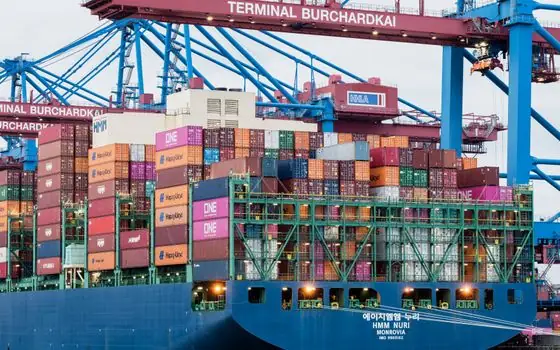
A defensible spec starts with four inputs: tank diameter and baffle layout, residue class (asphaltene, paraffinic, polymerized, biological), ATEX zone, and target cycle time. Match the head class to the residue first, then size the pump to the 20–60 L/min per head window, then verify hazardous-area certification for the installed electrical envelope [S5]. For multi-tank terminals, standardize on a single head family and a single chemical supplier to reduce spare-parts inventory and operator-training overhead.
Preplanning must also include confined-space program alignment, hazard analysis, permit-to-work, and a rescue plan, per the OSHA work-activity framework that lists preplanning, training, isolation, vapor freeing, atmospheric testing, cleaning, and recommissioning as the controlling sequence [S1]. The same discipline applies to marine terminals under ISGOTT, where PTW, LOTO, and gas testing precede any mechanical cleaning step [S5]. Buyers who skip preplanning typically discover the gap during the first hot-wash cycle.
Limits, failure modes, and what to watch on the next spec
The hard limits on rotary jet heads are coating temperature rating (most marine coatings cap at 80 °C hot-wash), pump flow at minimum pressure, and nozzle wear after 1,000–2,000 hours in abrasive service. Under-spec'd portable hydrojets cause coating erosion on older epoxy linings, and over-spec'd pressure on a tank rated for 6 bar will deform thin-wall panels. Operators should track nozzle flow decay quarterly and replace heads when flow drops more than 10% from baseline, since degraded nozzles extend cycle time long before they fail outright. [S5]
Two trackable signals for the next buying cycle: API RP 2219A work on vacuum-truck safety in petroleum service, and continued consolidation among ATEX-rated drop-in head suppliers, which the $2.8 billion 2025 market valuation reflects as the segment's center of gravity [S6]. For terminals standardizing across fuel and chemical service, a related reference on tank cleaning machine installation flange, nozzle, and coverage specs covers the piping-side decisions that follow head selection, while adjacent port-fleet guidance on port and terminal forklift selection is useful when planning the staging and waste-handling fleet around the cleaning cycle.
Detailed specification references: terminal block, and self cleaning filter.