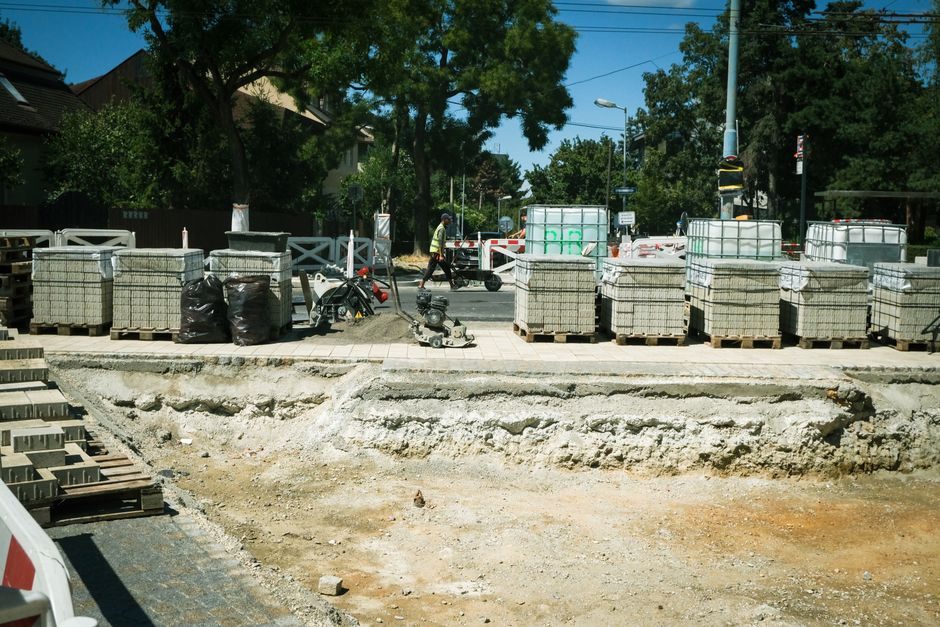
Walk-behind power trowels commonly cover 24–48 in. (610–1220 mm) diameters with engines from 3.7 to 9 kW, while ride-on units reach 90–120 in. (2.3–3.05 m) and 17–30 kW — a 10–15× step in hourly sq-ft output versus hand floating [S1].
Specifying one is a balance of slab thickness, joint layout, pan-and-blade configuration, panning-vs-finishing stage timing, and OSHA 1926.702 concrete-finisher guarding rules; the wrong match burns the slab or stalls the pour.
Ride-On vs Walk-Behind: Two Machine Classes, Two Operating Envelopes
Ride-on trowels (90–120 in. / 2.3–3.05 m, twin-rotor, 17–30 kW) finish 8,000–15,000 sq ft/h and let a single operator control both rotors from a rider seat; walk-behinds (24–48 in., 3.7–9 kW) deliver 1,200–3,500 sq ft/h with a handheld handle [S1]. Ride-ons need a minimum slab thickness of about 4 in. (100 mm) to support the 250–400 kg machine footprint without deflection; walk-behinds can work on 3 in. (75 mm) slabs and smaller pours. The break-even point typically lands around 5,000 sq ft of finished area — below that, walk-behinds or a power mixer-prepped, hand-floated slab is more economical.
Blade and Pan Combinations: Floating vs Finishing, Clip Float vs Combo
or 8×18 in. common sizes) tilt 5–25° to close the surface in the second stage [S1]. Clip-float (combination) blades let one set do both jobs at the cost of slower first-pass closure. A pan-plus-blade sequence is standard for slabs that will receive a hard-troweled, densified, or polished finish.
Productivity, Cost, and Time-to-Open — The Quantified Side
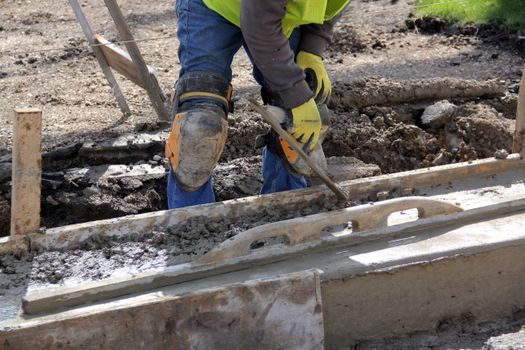
Power troweling typically cuts slab finishing labour by 60–80% versus hand-floating on pours above 2,000 sq ft, and brings a 10,000 sq ft slab from initial set to walkable in 2–4 hours with a ride-on, versus 8–12 hours by hand [S1]. Equipment hire runs roughly USD 80–200/day for a 36 in. walk-behind and USD 350–650/day for a 48 in. ride-on in North American markets, with 4-cycle gasoline or diesel engines most common and electric-drive units growing on indoor, indoor-air-quality-sensitive pours where CO and NO₂ are a concern.
Failure Modes and Quality Risks
Spinning a walk-behind on concrete that has not set enough causes bleed-water entrapment, blistering, and a weak laitance layer; too late and the blades only polish without densifying, leaving a soft, dusty surface. The power trowel page covers the timing windows (footprint test, thumbprint hardness) that trigger float start vs finish start. Common failure modes include: chatter marks from worn blade pitch; burn marks from over-troweling or low-moisture slabs; surface delamination when air-entrained concrete is closed too early; and operator-fatigue-induced lateral drift that leaves wave patterns on ride-on passes. [S1]
Safety, Standards, and Crew Considerations

OSHA 29 CFR 1926.702(a)(2) requires guarded handles and dead-man controls on walk-behind trowels; engine exhaust (CO, NO₂) limits indoor use to electric or well-ventilated setups. Fuel-spill exclusion zones, hearing protection (units run 85–95 dBA at the operator ear), and at least 1.5 m of clear edge on slabs without curbs make up the standard site-rule set [S1]. Crew size is typically 1 operator per rotor and 1 spotter for edges/penetrations; two-handed riding is the norm on modern rider units. For adjacent infrastructure, the power cable used on electric-drive models must be a 600 V SOOW-type rated for the amperage draw (commonly 20–50 A at 480 V three-phase).
Decision Matrix: Which Configuration to Specify
For a 3 in. residential garage slab under 800 sq ft, a 24–36 in. walk-behind with float pan is the right match. For a 5–8 in. commercial slab of 5,000–20,000 sq ft, step to a 48 in. ride-on with pan-then-combo-blade. For industrial flatwork over 20,000 sq ft with FF/FL floor-flatness specs above FF50, a 60–120 in. ride-on with float pan and a power-burnish pass closes tolerances that hand work cannot meet [S1].
Compared by four axes: (1) Productivity — ride-on 10–15× walk-behind, walk-behind 10× hand floating; (2) Slab size threshold — walk-behind under 5,000 sq ft, ride-on above; (3) Skill demand — ride-on requires a trained finisher, walk-behind can be picked up in a few hours; (4) Indoor suitability — electric walk-behind and electric ride-on are the only options in enclosed, CO-monitored pours.
For a parallel trade-off pattern on equipment selection, see holding furnace advantages and disadvantages, which uses the same criteria-based scorecard. For electrical-distribution choices on the same site, see the power transformer and power meter reference pages, and for cord-feeding of electric trowels and mixers, the power cable entry. The storage rack advantages and disadvantages comparison applies the same productivity-vs-capex split to a different equipment class.
Trackable next signals: (a) ASTM E1155 FF/FL tolerance tightening in the ACI 302.1R-15 update cycle; (b) lithium-battery cordless ride-on releases from major OEMs that would shift indoor-air-quality selection; (c) OSHA silica-rule enforcement at the slab edge when trowel-cutting dry shake hardeners.