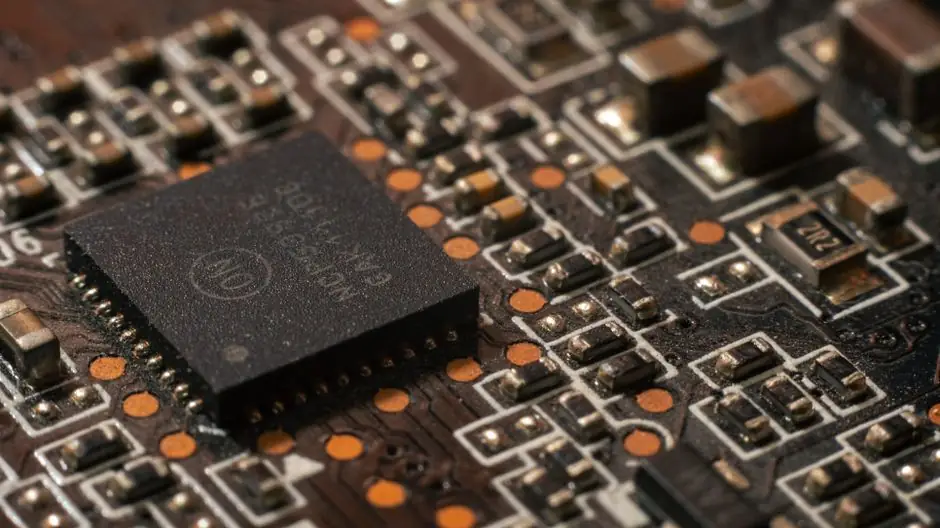
Semiconductor thermal loads split into two distinct engineering problems, and the thermostat class is selected against each one separately: a process-circulation thermoelectric thermostat sized for the wet deck, photoresist reservoir, or chuck, and a board-level solid-state thermostat guarding a hot spot on the tool itself. The LAUDA Semistat line covers –20 to 90 °C using Peltier elements instead of a compressor, which is the standard configuration for resist temperature control and small-footprint etch or CVD skids [S2][S3].
On the board side, solid-state thermostat ICs such as the Microchip MCP9509HT-E/OT (SOT-23-5, active-low open-drain) and the Analog Devices/Maxim MAX6510HAUT+T act as two-state switches that change output when a measured temperature crosses a fixed or programmed threshold, and they are the default trip element for tool-internal overtemperature protection [S1].
Process-circulation thermoelectric units: the –20 to 90 °C class
Peltier-based process thermostats from LAUDA cover –20 to 90 °C with a footprint the company describes as the smallest in its portfolio, targeted specifically at semiconductor temperature control and sterilising loops where a compressor is undesirable [S2][S3]. The control window matters: photoresist dispensing and many etch-side heat exchangers sit between roughly 15 °C and 60 °C, while ALD or CVD block-temperature loops push the high end of that range.
For selection, the three decision fields are (1) cooling-versus-heating load in watts at the worst-case delta-T, (2) fluid compatibility (deionised water, glycol-water mix, or a fluorinated heat-transfer fluid), and (3) control stability, which for thermoelectric units is typically specified as ±0.1 °C around setpoint rather than the ±0.5 °C band common on compressor-based recirculating chillers. Where the loop has to be electrically isolated, specify non-conductive fluid paths; thermoelectric cold plates can otherwise leak bias onto the wafer-side fluid.
Board-level solid-state thermostats: trip points, hysteresis, output type
A solid-state thermostat is a semiconductor temperature switch that flips a two-state output when the die or remote-junction temperature crosses its threshold, and selection is driven by the datasheet parameters: switching temperature (°C), accuracy across the operating range, supply voltage range, maximum output current, output type (open-drain vs. push-pull), and whether hysteresis is fixed or user-selectable [S1].
On the MCP9509, the trip point is programmable through an external resistor divider and the part ships in a SOT-23-5 with an active-low open-drain output, which lets it pull a logic line, a relay coil driver, or a FET gate directly without a level translator [S1]. The MAX6510HAUT+T (SOT-23-6) is the factory-set counterpart where the threshold is trimmed at the wafer and the part is shipped as a hot-trip or cold-trip switcher, which removes the resistor network but locks the setpoint at order time [S1]. Both parts run from a typical 2.7 V to 5.5 V supply, draw single-digit milliamps, and are routinely placed on the same PCB as a pressure transmitter or a flow meter so the trip can shut down a pump or vent a solenoid valve on a thermal fault.
Decision matrix: process thermostat vs. board-level switch
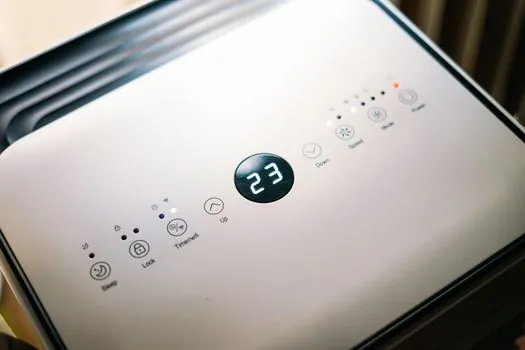
The two thermostat classes are not substitutes. A LAUDA Semistat is sized in kilowatts of heat-pump capacity, pumps a fluid through an external loop, and is the right call when the controlled mass is a bath, a chuck, or a heat exchanger; the Microchip and Analog Devices parts sit on a PCB and switch a logic-level or a few-hundred-mA load, and are the right call when the controlled mass is a single IC, a heater cartridge, or a fan. Mixing them up is the most common spec error in this category. [S1]
For a point-of-load overtemperature trip on a tool controller, specify a board-level solid-state thermostat with ±2 °C accuracy or better across the industrial 0 °C to 70 °C window, user-selectable hysteresis in the 2 °C to 10 °C band, and an open-drain output rated for the downstream FET or relay coil. For a wet-deck or resist loop, specify a thermoelectric process thermostat with a cooling capacity sized at 1.2 to 1.5 times the steady-state heat load, a control stability of ±0.1 °C or tighter, and a process fluid rated for the chemistry it will see, with the loop fed through a pressure sensor tap so a blocked filter is caught before the thermostat trips on a dry-run overtemperature condition.
Integration with the rest of the control loop
A semiconductor thermostat is rarely the only thermal actuator on a tool: it is usually the setpoint authority that drives a heater, a Peltier stack, or a circulation pump, and the safety authority that trips the same actuators off on a fault. A clean integration pattern uses a PLC or a tool controller as the setpoint source, a PT100 or thermistor as the loop sensor, and a solid-state thermostat IC on a separate PCB node as the independent hardware interlock. The solid-state thermostat output is then wired in series with the enable line of the heater driver, the servo motor amplifier on a heat-exchanger valve, or the pump contactor, so a sensor or controller failure cannot leave a heater powered indefinitely. [S3]
On the process side, the Semistat-class unit is normally commanded by a 0-10 V or 4-20 mA setpoint from the tool PLC, with a separate digital interlock that the controller drops on a chamber overpressure, low flow, or high humidity fault, the same pattern covered in any temperature controller supplier spec map. Treat the thermostat and the trip thermostat as two independent safety functions; the trip must be able to act even if the controller is hung.
Selection criteria, failure modes, and what to avoid

Three failure modes dominate semiconductor thermostat incidents in the field. First, undersized cooling capacity: a thermoelectric process thermostat rated for 500 W of heat lift at 20 °C delta-T will fold back to roughly 200 W at 40 °C delta-T, and specifying the unit at the nameplate figure rather than the duty-point figure is the usual mistake. Second, fluid contamination: deionised water loops drop below 1 MΩ·cm quickly when a heat exchanger pinholes, and the resulting leakage current biases the wafer and trips electrostatic clamps; specify fluid resistivity monitoring on any loop that touches the wafer-handling side. Third, board-level thermostat placement: the SOT-23-5 part is meant to be placed within a few millimetres of the heat source it protects, and routing the copper pour under the die of an Analog Devices or Microchip switcher is the standard land pattern; placing the part at the edge of the board to keep it cool is the opposite of what the datasheet assumes [S1].
For procurement, the practical rule of thumb is to buy the process thermostat from a vendor that publishes a full P&ID with fluid, flow, and pressure-drop data, and to buy the board-level thermostat from a vendor that publishes switching-temperature tolerance, hysteresis, and output-current derating curves across the full operating-temperature range, not just the 25 °C typical column. If a candidate cannot supply both, the spec is not yet complete enough to release the purchase order. Related sourcing patterns for adjacent hardware, such as a shaft coupling selection map for packaging lines, follow the same logic: insist on the derating curves, not the nameplate.
Trackable signals for the next review cycle: any LAUDA Semistat variant that extends the –20 to 90 °C window (broader temperature range would shift the resist-versus-etch line), and any new factory-trimmed solid-state thermostat from Microchip or Analog Devices in SOT-23-6 with a sub-±1 °C accuracy and a wider supply range, which would let the board-level trip replace a discrete thermistor plus comparator on new tool builds.