
Reach trucks lift 1.0-2.5 t loads to 6-12 m rack heights in 2.5-3.0 m aisles, while platform trolleys move 150-500 kg payloads on flat floors over distances of 20-200 m per shift [S2][S4].
The two equipment classes target different warehouse zones: a reach truck is engineered for high-bay pallet racking with electric lift masts and pantograph forks; a platform trolley is a four-wheel hand or low-speed electric cart used for picking, replenishment and inter-zone tote movement [S2][S4].
Working Envelope: Aisle Width, Lift Height, Load Class
Reach truck operating envelopes are defined by three constraints: minimum aisle width (MAW) typically 2.5-3.0 m for counter-balanced or straddle reach variants, fork reach depth of 600-1,200 mm beyond the front wheels, and lift heights of 6-12 m for standard warehouse applications [S4].
Platform trolley envelopes are essentially floor-bound: deck dimensions run 600 x 900 mm to 1,200 x 800 mm, with deck heights of 200-300 mm for manual units and 400-600 mm for powered tugs, and practical speeds of 6 km/h unladen [S2].
Capacity separation is sharp — reach trucks in the FRB-series electric class from Chinese OEM Zowell are published at 1.5-2.5 t load ratings with 24 V or 48 V battery packs, while Chinese platform-truck suppliers such as Shanghai ZTC list standard duty at 150-500 kg with optional reinforced decks up to 800 kg [S2][S4].
Power Source, Drive and Control
Modern electric reach trucks run AC drive motors on 24 V (light duty) or 48 V (1.5-2.5 t) battery systems, with electronic regenerative braking and proportional lift/lower valves; the Zowell FRB series specifies a Curtis-style AC controller with EPS (electric power steering) and 360° steering on the lower chassis [S4].
Platform trolleys split into three sub-classes: manual push (no power, four swivel casters, often polyurethane wheels), hand-pallet-truck-style hydraulic lift variants, and battery-powered tugs with 24 V DC drive and 200-500 W traction motors. Shanghai ZTC's catalog covers both the manual platform truck family and powered roll-container tugs in the same product line [S2].
Reach truck steering is typically rear-axle 90-180° swing with optional 360° mode for face-out racking; platform trolleys rely on fixed or swivel caster geometry with no active steering beyond hand-push force [S4].
Selection Criteria: When Reach Truck Is the Right Answer
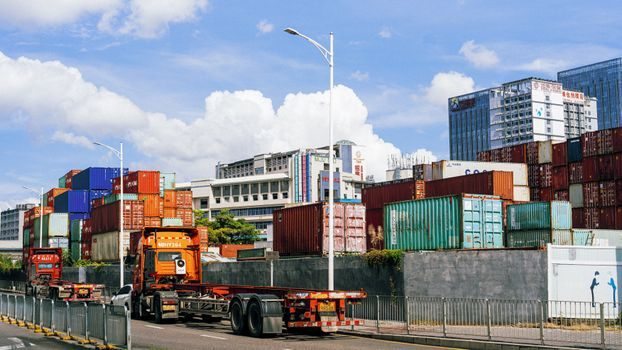
Specify a reach truck when the application requires palletized loads above 800 kg, lift heights above 4 m, aisle widths below 3.5 m, and racking depth-to-width ratios that block a standard counterbalance forklift [S4].
Typical fit-for-purpose scenarios: AS/RS-adjacent narrow-aisle pallet storage, drive-in rack operations where mast reach must clear front pallets, and cold-store facilities where electric-only operation is mandated under -25 °C ambient [S4].
For 2026 warehouse retrofits, see the Storage Rack Selection 2026: Load Class, Frame Layout, Compliance reference for matching upright frame capacity to reach-truck pallet-handling loads. A 2.0 t reach truck moving a 1.5 t pallet at full mast extension generates 1.5 x 12 m of vertical work per cycle, which dictates the rack frame class on the receiving end.
Selection Criteria: When Platform Trolley Is the Right Answer
Specify a platform trolley for order picking below 500 kg, sub-floor load-rail (P&D) operations, tote transfer between picking face and pack-out, and inter-zone movements of 20-200 m where lift is not required [S2].
Manual push trolleys dominate parcel, e-commerce and pharmacy picking where totes weigh 5-25 kg and the operator walks the unit. Powered tugs replace manual pallet jacks for repetitive dock-to-staging moves when each cycle is below 100 m and human push-force ergonomics become a constraint [S2].
A platform trolley is the wrong choice when the load is palletized above 800 kg, when the route includes a ramp above 5° without a powered tug, or when vertical lift above 200 mm is required to clear dock plates.
Comparison: Reach Truck vs Platform Trolley on Five Decision Criteria
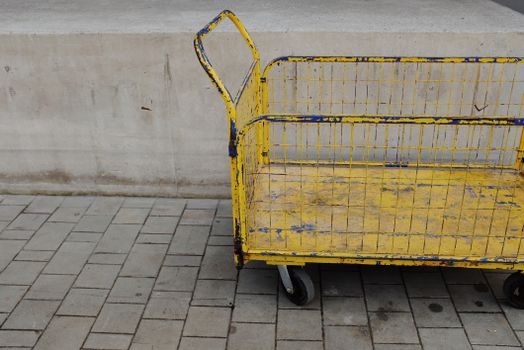
On capacity, the reach truck's 1.0-2.5 t range sits 4-8x above the platform trolley's 150-500 kg range, with powered tugs topping out near 1.0 t only with reinforced chassis [S2][S4].
On lift, reach trucks win outright: standard lift of 4.5-9.0 m with triple-stage masts reaching 12 m; platform trolleys deliver 0-200 mm manual lift or 800-1,500 mm scissor-lift variants in the powered segment [S2][S4].
On aisle, reach trucks require 2.5-3.0 m MAW; platform trolleys operate in any aisle wider than the cart footprint plus 300 mm, often 700-900 mm total. On cost, manual platform trolleys list in the $80-300 OEM range from Chinese suppliers such as Shanghai ZTC, while electric reach trucks list at $8,000-25,000 ex-works [S2][S4].
On operator skill, reach trucks require certified operator training per OSHA 1910.178(l); platform trolleys in manual form have no certification requirement beyond general warehouse PPE rules [S4].
Standards, Safety and Compliance Anchors
Powered industrial trucks in the U.S. are governed by OSHA 1910.178, with truck design meeting ANSI/ITSDF B56.1 (safety standard for low-lift and high-lift trucks); reach trucks are classified as Class I (electric motor rider trucks) and Class II (electric motor narrow-aisle trucks) [S4].
For European deployment, the Machinery Directive 2006/42/EC and EN ISO 3691-1 (industrial trucks — safety requirements) apply, with EN 1726-1 governing specific reach-truck type approvals. Battery-electric units additionally fall under UN 38.3 transport testing for lithium battery shipments [S4].
Reach-All LLC's CraneMate platform (a related suspended platform product line, not a reach truck) is a pin-on crane-swing-jib attachment for personnel lifting and illustrates a separate equipment family covered by ASME B30.5 / OSHA 1926.1431 for crane-suspended platforms [S1].
Limitations, Failure Modes and Sourcing Reality
Reach-truck failure modes concentrate on mast chains, reach-cylinder seals, drive-axle bearings and battery cell imbalance; a 48 V / 600 Ah lead-acid pack typically needs watering every 10 cycles and full replacement at 1,200-1,500 cycles [S4].
Platform trolley failure modes are mechanical: caster bearing seizure, deck-plate fatigue at weld seams, and handle-thread stripping on manual units; powered tugs add motor-controller and tiller-arm failures in the first 24 months if duty cycles exceed 8 hours/day [S2].
For cost bands and sourcing levers on adjacent manual handling equipment, see the Manual Pallet Jack 2026 Price & Cost Guide and the Dock Leveler 2026 Price and Cost Guide for context on the broader dock-and-floor ecosystem.
Final selection rule for 2026 procurement: if any one of load above 500 kg, lift above 1 m, or aisle below 3.5 m is in the spec, the reach truck is the only viable answer; if all three are absent and the route is floor-bound under 200 m, the platform trolley wins on capital cost, operator certification overhead and floor-space flexibility.