Rebar straightener pricing in 2026 spans $850 to $12,000+ for a single machine, with the operating rebar diameter range, drive type (manual / mechanical / hydraulic / servo) and roller count controlling where a buyer's total sits on the scale [S3].
For procurement engineers, a rebar straightener is the upstream half of the cut-to-length chain; for a clean spec, pair it with a rebar straightener reference and the bender-side economics covered in the Rebar Bender Price Guide 2026.
Price bands by rebar diameter capacity
Entry manual straighteners rated 4-8 mm typically list at $850-$1,800 and are aimed at light rebar cages in residential slab work; these are hand-cranked or low-power single-direction units, with throughput around 8-12 m/min and no automatic cut-off [S3].
Mid-range mechanical straighteners cover 6-16 mm at $2,200-$5,500, with 4-7 hardened rollers, 1.5-3 kW gear-motor drive and straightening speeds of 15-30 m/min — the workhorse tier for rebar fabrication shops serving mid-rise concrete frames [S3].
Heavy-duty 8-32 mm and 6-40 mm hydraulic / servo lines command $6,500-$12,000+ before options; expect 9-13 rollers, 7.5-22 kW servo drives, PLC length-stop integration and throughput up to 60 m/min on the 6-16 mm range [S3].
What moves the cost up or down
The four cost levers, in order of magnitude, are: (1) maximum bar diameter — going from 16 mm to 32 mm capacity roughly doubles the price; (2) drive type — servo or hydraulic adds $2,000-$4,500 over a mechanical gear-motor base; (3) roller material and count — HRC 60+ tool-steel rollers run $200-$450 each, and a 4-to-13 roller jump adds $1,500-$3,800; (4) control integration — a PLC length-stop with encoder and automatic shear interface adds $1,200-$2,800 over a hand-wheel stop [S3].
Manual, mechanical, hydraulic and servo compared
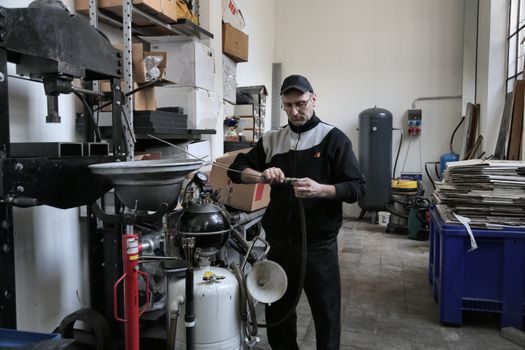
Manual straighteners make sense only for job-site work and low-volume rebar cages — they are cheap, slow, and inconsistent on bar straightness beyond 8 mm; mechanical gear-motor units are the value choice for 6-16 mm volume production, with the best throughput-per-dollar ratio [S3].
Hydraulic straighteners are specified when the input stock is coiled rebar (rather than straight-length stock) and a decoiler-payoff is required, since the hydraulic feed handles the back-tension; servo-driven PLC straighteners are the spec for cut-to-length lines integrated with a rebar bender, where length accuracy better than ±2 mm over 12 m bars is a contractual requirement [S3].
For a sister machine reference, the Rebar Coupler on the output side of the line is the mechanical-splice component that consumes straightened-and-cut rebar in column and beam splices.
Standards and spec drivers on the data plate
A rebar straightener is not a pressure-bearing or explosive-atmosphere device, so ATEX and IECEx do not apply; the relevant specs on the nameplate are the input rebar grade (typically Grade 60 / 420 MPa or Grade 75 / 520 MPa per ASTM A615), the input rebar diameter range, motor kW, roller hardness (HRC 58-62) and a CE / ISO 9001 build certificate [S3].
For projects under ACI 318 or Eurocode 2, the straightness tolerance after the machine is typically ≤ 2 mm per 300 mm of length; buyers should request a straightness-test report on a 6 m sample of the hardest grade the line will see, because tolerance degrades as the input yield strength rises [S3].
Total landed cost beyond the machine price
Ex-works (EXW) rebar straightener pricing is what most online catalogs show; the realistic landed cost for a 6-16 mm mid-range unit at $3,500 EXW lands closer to $5,200-$6,000 CIF to a US port once you add crating ($250-$500), sea freight for a 600-900 kg crate ($400-$900), 25% Section 301 tariff for Chinese-built machines (where applicable), and commissioning / electrical hookup ($600-$1,500) [S3].
For comparison context across adjacent capital lines, the Top Steel Companies 2026 spec map lists the upstream rebar mills whose Grade 60 / Grade 75 output these straighteners feed, and the Aerial Work Platform 2026 Buying Guide covers the lift equipment often used to feed coil stock into the larger lines.
Who should and should not buy a new unit
Buy new if annual straightening volume exceeds 800-1,200 tonnes of rebar, or if the rebar diameter range crosses 8 mm and tolerance per ACI 318 / EC2 is a contractual deliverable; the 6-16 mm mechanical tier at $2,200-$5,500 is the break-even point against a 7-day-per-week fabrication shop [S3].
Do not buy a new servo straightener for under 400 tonnes/year or for diameters stuck below 8 mm — the payback does not clear within 5 years on energy, depreciation and floor space. In those cases, contract the work out or buy a refurbished mechanical unit at 40-55% of new [S3].
For plant engineers comparing total ownership of related drive and control assets, the Variable Speed Drive Price & Cost Guide 2026 walks through the VFD / servo-amp side of the same motor envelope, and the Helical Gear Reducer 2026 Price and Cost Guide covers the gearbox tier that often sits between motor and rollers on the 8-32 mm lines.
The signal worth tracking into the second half of 2026: servo-line pricing on the 6-16 mm tier is compressing as Chinese fabricators add PLC length-stop as standard, and the hydraulic 8-32 mm tier is being undercut by servo retrofits that drop 1-2 roller stations at the same straightness spec — both shifts will move the bands above by another 5-10% on a like-for-like basis by Q4.