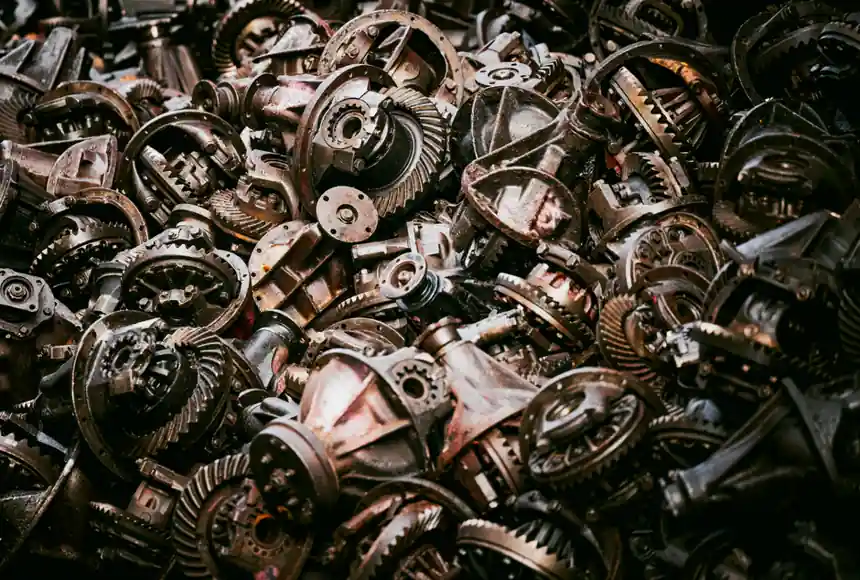
Automotive roller-bearing selection in 2026 still resolves around four load cases: wheel-hub combined axial+radial, transmission gear-mesh radial+thrust, e-motor high-RPM radial, and auxiliaries (pump, tensioner, alternator) mixed. Hub units must carry axial and radial load simultaneously and provide accurate wheel guidance, per Tianjin Semri's 2026 hub-bearing product definition [S2].
Supply is dominated by Schaeffler/INA (Germany, est. 1946, 30+ plants, 30,000+ staff, needle-roller origin), Chinese OEM/ODM makers such as Sheng Yao Wang (Dalian) operating in the ZWZ industrial zone with 100-800 mm inner-diameter coverage, and Tianjin Semri (SEMRI/TFN brand, exporting to 130+ countries) [S1][S2][S3]. Bearings span deep-groove ball, cylindrical, tapered roller, self-aligning ball, self-aligning roller, angular contact, thrust ball, thrust roller, and slewing types [S1].
Selection criteria for an automotive bearing
Bearing choice on a 2026 automotive line starts with four numbers: load direction (radial, axial, combined), speed (dn in mm/min), required life L10 in hours, and the operating temperature window. Sheng Yao Wang (Dalian) lists cylindrical rollers in single-row, double-row, and four-row variants, with a stated precision grade of P5 and inner-diameter range of 100-800 mm [S1]. Cylindral rollers are the default for high-RPM spindles; four-row cylindricals handle rolling-mill pinions but the same logic carries into large gearbox countershafts.
Wheel-hub units are a separate sub-category: they must handle combined axial + radial load while guiding the wheel accurately, per Semri's 2026 hub-bearing page [S2]. Roller bearing families are differentiated by the rolling element (ball vs roller) and the load path (radial, thrust, or combined). A deep-groove ball bearing cannot substitute for a tapered roller on a pinion shaft where the contact-angle-induced thrust capacity is required; a cylindrical roller cannot substitute for an angular-contact ball where pure thrust is the dominant load.
Type-by-type comparison for automotive duty
For 2026 automotive programs, the practical type map is: (1) Deep-groove ball 6000/6200-series, low cost, radial-dominant, used in alternators, electric water pumps, seat adjusters, and tensioner pulleys; (2) Tapered roller, paired back-to-back or face-to-face, handles combined radial+thrust on pinions, differentials, and wheel hubs where axial preload is required; (3) Cylindrical roller (NJ, NUP, NN30), highest radial capacity per envelope, used in e-motor shafts and gearbox input shafts; (4) Self-aligning ball or spherical roller, only where misalignment of 0.5-2° is unavoidable (e.g. long cardan shafts, trailer axles); (5) Needle roller (INA's 1949 founding product), for limited-space oscillating pivots in robotics and DCT actuators [S1][S2][S3].
On tolerance: P5 is the practical minimum for automotive transmission input shafts; P4 and above belong to machine-tool spindles. Semri's B7218-C-2RSD-T-P4S-DUL and B7218-E-2RSD-T-P4S-DUL spindle bearings in the 2026 catalogue are P4S class, designed for grinding and high-precision spindle duty, not for volume automotive use [S2]. Sourcing from a plant with ISO9000 and ISO14000 certification is the documented baseline for automotive-tier programs, per Sheng Yao Wang (Dalian)'s 2026 quality statement [S1].
Who roller bearings are for (and not for)
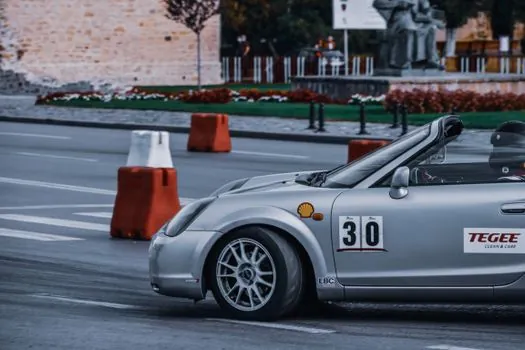
Automotive roller bearings are for: OEM wheel-hub assemblies, manual and automatic transmission gear trains, differentials, e-motor rotor support (typically 12,000-20,000 rpm), belt-driven accessories (alternator, A/C compressor, water pump), and electric power-steering column shafts. Deep-groove ball 6002 15x32x9 mm and 608 2RS 8x22x7 mm examples appear in Sheng Yao Wang's 2026 catalogue at indicative FOB price points of US $0.7 and US $0.4 respectively, with ABEC-9 grade on the 608 [S1].
They are NOT for: pure oscillating pivots under high radial shock (use bushings or needle rollers), ultra-high-speed turbocharger shafts above 200,000 rpm (use ceramic hybrid or air bearings), food-contact conveyors where stainless 304/316 and USDA/EU hygienic design apply, and wind-turbine main shafts where L10 life requirements of 130,000+ hours dominate the spec. For those duty cycles, see the related 2026 spec maps on food-grade roller bearing selection and roller bearing selection for wind power.
Real use cases on the 2026 automotive line
Three use cases dominate current auto programs. First, e-drive units: parallel-axis reducers with 2-3 planetary stages use cylindrical roller bearings on the input shaft and needle roller bearings on the planet-carrier journals; the e-motor itself typically runs a pair of angular-contact or deep-groove balls at the rotor. Second, the wheel-hub: a Gen-3 hub unit (e.g. SEMRI's 2026 hub-bearing product line) integrates the flange, ABS ring mount, and a pre-set bearing stack, with combined axial+radial load handling [S2].
Third, automated production equipment: a 2026 automotive cell uses slewing bearings on rotary index tables, deep-groove ball 6204-6206 series on conveyor rollers, and tapered roller bearings on the drive shafts of robotic positioners. For the cell layout and takt-side constraints of these lines, the drone production line design spec map covers adjacent takt/compliance logic, while a pallet rack selection spec map covers parts-logistics upstream of the cell.
Limitations, failure modes, and supplier gates
The most common automotive bearing failures in 2026 are still: (a) lubrication starvation at cold-start (grease channel blocked), (b) false brinelling on press-fit housings during shipping, (c) electrical-erosion pitting on e-motor bearings from VFD-induced shaft currents, and (d) seal failure on hub units allowing water/salt ingress. None of these are solved by picking a higher-precision class; they need grounded housing, shaft current grounding rings, and IP-rated seals. [S1]
Supplier gates on a 2026 RFQ should include: ISO9000 + ISO14000 certification as a documented baseline [S1]; documented P5 or better capability on the relevant part number; signed PPAP/IMDS for automotive programs; agency relationships with TIMKEN, NSK, or Schaeffler/INA where the program requires branded equivalents; and reference customers in the automotive tier-1 supply chain. Sheng Yao Wang (Dalian) discloses agency relationships with TIMKEN and NSK, plus supply to Toshiba China and Fuji Electric China, as documented commercial credentials [S1]. Note that INA products for the precision cylindrical and needle-roller families are partially toll-manufactured by IDC in Germany, per Schaeffler/INA's 2026 product statement [S3].
Sourcing and standards anchor
For an automotive bearing engineer in 2026, the working standards stack is: ISO 15 for radial bearing boundary dimensions, ISO 492 for radial bearing tolerance classes (P0/P6/P5/P4/P2), ABEC-1 through ABEC-9 as the ANSI/ABMA North-American equivalent, ISO 9001:2015 / ISO 14001:2015 for supplier QMS/EMS, and OEM-specific PPAP/IMDS submission rules. INA's documented product family for the 2026 automotive market is rolling bearings, plain bearings, linear guides, high-precision products, and engine components, with application coverage across 18+ industries including tractor, gearbox, and industrial robot [S3].
On adjacent process equipment, crossed roller guide and roller conveyor selections should follow the same ISO 15 / ISO 492 logic applied here; for paper-mill and steel-mill parallels outside automotive, the 2026 spec map for pulp and paper roller bearing selection provides a comparable type/station matrix. Final RFQ checklist for 2026: confirm load case and dn, lock tolerance class (P5 minimum for transmission), verify ISO9000+ISO14000 certification [S1], request IMDS/PPAP package, and pre-clear VFD/shaft-current provisions for any e-motor-adjacent bearing.