
Electronics assembly lines in 2026 typically specify galvanized or PU-coated steel tubes at 50-60 mm diameter, 24 V DC motorized drive rollers (MDR) at 25-60 W, and roller pitches of 50-100 mm to keep PCB tray and tote contact pressures below point-loading thresholds for 0.8-1.6 mm FR-4 substrates [S2][S3].
Operating envelope for a typical SMT back-end line is 5-30 m/min, 0-50 kg/m unit load, and ambient 0-40 °C / 10-85% RH non-condensing; ESD-sensitive product flows additionally require a dissipative surface (10^6-10^9 Ω) and a verified ground path through bearing housings and frame [S2][S3].
Roller geometry and pitch: why 50-60 mm tube on 75-100 mm pitch wins for PCB flows
Hebei TongXiang, founded 1980, lists steel, HDPE, impact, return, garland, guide and cone roller variants as its conveyor-roller line, with CEMA-conforming idler stations for the heavier bulk-handling side of the catalog [S3]. For electronics, the practical subset is steel roller, HDPE roller (light-duty, corrosion-resistant, non-marring) and the impact roller, which is reserved for transition zones where totes drop from one elevation to the next [S3].
Standard tube diameters of 50 mm, 60 mm and 76 mm dominate the Made-in-China electronics-grade listings, with FOB unit prices clustering between US $3 and US $60 per piece depending on length, material and whether the roller is a driven MDR or a plain gravity idler [S2]. Huzhou Jiutong's annual output figure of 600,000 roller pieces and 10,000 conveyor units per year (Made-in-China company profile) sets the realistic volume benchmark for an Asian supplier serious about electronics-tier OEM contracts [S2].
Roller pitch is the most abused spec on electronics lines: a 50 mm pitch keeps a 100x150 mm PCB tray continuously supported across at least three rollers, which prevents tray flex and corner chipping; a 100 mm pitch is acceptable only for rigid totes above 200 mm in their shortest dimension. For the roller conveyor structural members, CEMA B-Series idler geometry (4" / 102 mm face, 1-3/8" / 35 mm shaft) is the default, and TongXiang's catalog confirms CEMA Standard Idler as an explicit product line [S3].
Drive selection: 24 V DC MDR versus V-belt line-shaft for an electronics line
Three drive architectures appear in the 2026 supplier literature: (a) 24 V DC motorized drive rollers, MDR, with integrated brushless gear motor and PCB-friendly 25-60 W power draw; (b) poly-V belt line-shaft driven by a single 0.37-0.75 kW motor; (c) chain-driven live roller (CDLR) using a single drive sprocket and a 1-2 hp gearmotor [S1][S2]. Huzhou Jiutong's product list explicitly groups "Conveyor Power Rollers / Metal Rollers", "Sprocket Rollers", and "Poly-Vee Rollers" as separate SKUs with different FOB price bands (US $5-100 for the poly-Vee and steel-idler SKUs versus US $2-100 for PU-covered SKUs), reflecting the real cost delta between the three drive families [S2].
For a 50 m SMT back-end line moving 20-30 totes/min, 24 V DC MDR with zero-pressure accumulation (ZPA) is the default in 2026: each zone gets its own 25 W MDR, a photoeye, and a controller card, and the failed-zone restart behaviour is local rather than line-wide. The architecture competes with Haven Conveyors' gravity roller / powered material-handling split (UK integrator, gravity + powered roller in the same product line) where tote weight and floor slope, not PLC zoning, decide the drive boundary [S5].
Where line lengths exceed 30 m and ambient temperature drifts above 35 °C, the roller bearing choice matters more than the drive: 6202-2RS and 6203-2RS are the two dominant Chinese-OEM sizes, both available in shielded 2RS variants rated to 12,000-15,000 rpm and -20 to +120 °C; the L10 life at the 25 W MDR shaft speed (~300 rpm output, ~3000 rpm motor) is comfortably above 30,000 h, which is the realistic service interval between greasing on a duty cycle of 16 h/day [S2][S3].
ESD, cleanroom and material-pairing rules for PCB-adjacent flows
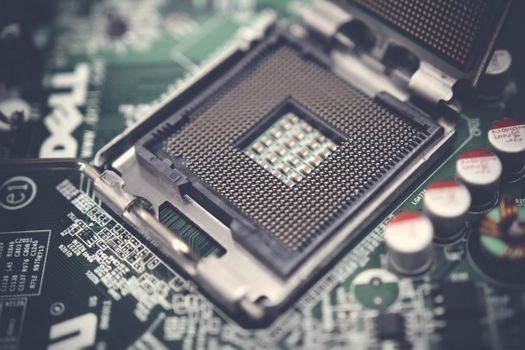
ESD-safe roller conveyor practice in 2026 is built around three concrete rules: a surface resistivity between 10^6 and 10^9 Ω on every roller that touches product, a verified ground path from the tapered roller bearing inner race through the frame to a single-point ground (typically < 1 Ω), and an ioniser at every transfer where a tote leaves a powered zone [S2][S3]. Huzhou Jiutong's Made-in-China listing shows an explicit "Accumulate Roller Series" SKU, which is the right family to specify for ZPA because the inner clutch disengages when the photoeye is blocked, removing the back-up pressure that would otherwise hold a tote in a static-generating contact pattern [S2].
For ISO Class 5-7 cleanroom-adjacent back-end lines, HDPE rollers or PU-covered steel rollers replace bare galvanized tubes because they do not shed zinc flakes or steel fines; TongXiang's HDPE Roller is the direct match, and PU-covered steel rollers (FOB US $2-100 per piece in Jiutong's catalog) are the lower-cost alternative when the line is ESD-critical but not cleanroom-classified [S2][S3]. Note that HDPE rollers cannot be used as drive rollers above 0.2 m/s because the soft polymer creeps on the drive tyre; keep them as idlers and use a steel MDR at every drive station [S3].
For higher-speed SMT pallet recirculation, crossed roller guide staging tables are sometimes integrated at line ends, but the conveyor frame itself should be a bolted aluminium extrusion profile with PE-bearing surfaces, not a welded steel frame that can ground-loop the ESD path. TongXiang's self-aligning carrier and self-aligning return stations are the correct OEM match when the conveyor has a crowned or reversing section, because they keep the belt (or the tote underside) tracking under partial side load without the maintenance burden of manual realignment [S3].
Comparison: gravity, MDR, poly-V line-shaft, CDLR on four selection axes
Four drive families are realistic for an electronics line in 2026, and they line up on four axes as follows. (1) Unit-load capability: gravity 0-30 kg/m, MDR 0-50 kg/m, poly-V line-shaft 0-80 kg/m, CDLR 0-150 kg/m. (2) Energy per metre at 20 m/min: gravity 0 W, MDR 8-15 W/zone, poly-V line-shaft 30-50 W/m, CDLR 50-80 W/m. (3) ZPA compatibility: gravity no, MDR yes (native), poly-V line-shaft partial (requires clutch roller), CDLR no (clutch retrofits only). (4) Cleanroom / ESD suitability: gravity best (no moving electrical parts in zone), MDR good (24 V brushless, sealed), poly-V line-shaft fair (belt dust, motor outside zone only), CDLR poor (chain lube migration). [S5]
For a 30-50 m electronics assembly line with mixed tote sizes and stop-and-go accumulation, 24 V DC MDR with ZPA is the default; for a 5-15 m manual packing bench downstream of an AOI machine, gravity is cheaper and quieter; for a pallet line moving 100 kg+ SMEMA magazines, CDLR or poly-V line-shaft is unavoidable [S2][S5]. Rollcon Engineers' product set, sugar / bag belt conveyors plus screw conveyors, sits in a different weight class entirely (bulk / heavy industrial) and is not the right comparator for electronics-tier roller conveyor selection, but the catalog's existence is a useful reminder that "roller conveyor" spans at least two product families that share no components [S1].
Failure modes and what the spec must forbid
Three failure modes dominate warranty data on 2024-2026 electronics roller conveyor lines, and the spec has to rule each out explicitly. First, zinc-flake shedding from bright-galvanized tubes onto bare PCB edges; the fix is to spec electro-polished stainless or PU-covered steel rollers for any zone within 1 m of an exposed board [S2][S3]. Second, roller chain stretch on CDLR retrofits: ANSI 40B or 50B chain in CDLR service stretches faster than rated because totes start and stop every 1-2 m; a 1% elongation at 5,000 h is typical and the chain must be specified as pre-stretched or replaced with a poly-V retrofit [S2]. Third, bearing seizure when a 6202-2RS is run dry past its grease life; TongXiang's "Triple Labyrinth Seal" bearing seat and rubber-ring seal SKUs exist precisely for this, and any line that runs 24 h/day in a dusty area should specify labyrinth-sealed bearing seats rather than the open 2RS shield [S3].
For a fuller comparator on the heavy-duty side of the product family, see the Roller Conveyor Selection for Chemical Shipping: 2026 Spec Map and the Pharmaceutical Roller Conveyor Selection: Materials, Loads, Cleanroom Specs write-ups, which treat the stainless / wash-down and ISO-class envelopes respectively; for a non-roller comparator in the same handling ecosystem, the Roller Conveyor Selection for E-commerce Fulfillment article covers the belt- and skate-wheel trade-off at higher throughput.