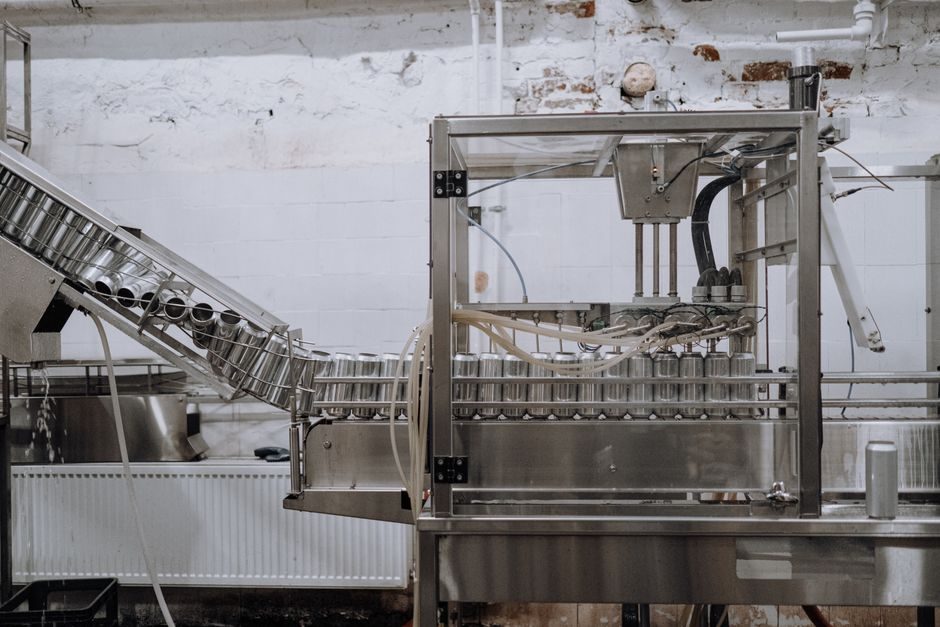
Roller conveyors for chemical shipping are gravitied toward hot-dip galvanized mild steel frames with SS304 or SS316 tube rollers, with load classes commonly rated 50 kg/m, 100 kg/m and 250 kg/m per ANSI/CEMA 401-2003 [S4].
Drum and IBC tote lines dominate the 2026 enquiry mix at Indian and Chinese OEMs, and these suppliers (Rollcon Engineers, Advance Equipment Co., Huzhou De-Nen) explicitly list galvanized frame + stainless roller combinations in their chemical-handling conveyor offering [S1][S3][S5].
Where chemical-shipping roller conveyors differ from a generic line
Chemical shipping rejects standard painted mild steel because drum condensation, tote sweat and intermittent acid/alkali splash attack uncoated carbon steel within 6–12 months on a loading-dock deck, so the default frame finish in 2026 supplier catalogues is hot-dip galvanized to ASTM A123 with optional 2-pack epoxy top-coat [S1][S3].
Roller tube material separates the 2026 chemical-shipping market into three tiers: zinc-plated mild steel for low-corrosion, non-spill zones; SS304 for general caustic-soap and surfactant drum lines; SS316L for chloride-bearing brine, bleach (NaOCl) and HCl tote yards where pitting is the dominant failure mode [S1][S5].
Bearing sealing is the silent decision point: chemical-shipping conveyors specify 2RS (double-rubber-sealed) deep-groove ball bearings, typically 6204-2RS at the driven end, because open bearings fail when drum rinse water and dust migrate past the inner race [S1][S3].
Selection criteria: load, roller pitch, drum geometry, span
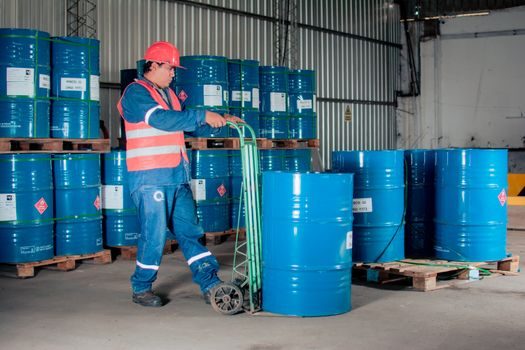
Selection starts with package footprint and weight: a standard 200 L steel drum is 585 mm OD × 900 mm tall and weighs 220–240 kg full, so a drum line needs a roller pitch of roughly 100–130 mm (3–4 rollers under the drum at any time) to prevent the chime from riding between rollers [S2][S3].
Roller diameter is the second gate: 60 mm OD is the chemical-shipping floor for 200 L drums at 250 kg/m, 76 mm OD covers most 250–500 kg drum/IBC duty, and 89–108 mm OD is reserved for full 1000 L IBC totes at 1000–1200 kg/m impact load [S2][S5].
Frame section is the third: 2.0 mm cold-formed channel is the 2026 budget tier for pallet lines, 2.5 mm hot-dip channel is the chemical-shipping default, and 3.0 mm with cross-braced feet is required for 250 kg/m continuous runs longer than 12 m [S1][S3].
Powered vs gravity: when to motorize a chemical line
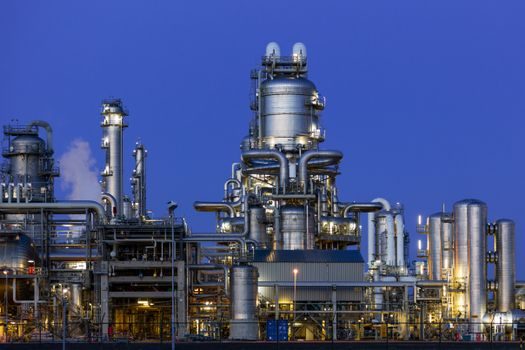
Powered roller conveyors (24 V DC brushless roller drives, or 3-phase 0.37–0.75 kW gear-motor drive rollers) enter the picture when the run exceeds 6 m, when reverse indexing is required, or when zero-pressure accumulation is specified for drum batching — typical 2026 throughput is 5–60 m/min, exactly the band Advance Equipment publishes for its belt-and-roller product family [S3].
For chemical-shipping wash-down zones, IP65 VFD enclosures, 304 stainless motor shrouds, and 24 V DC roller drives are now standard; 400 V AC drive motors with epoxy-coated cast iron housings are the legacy choice only for indoor dry rooms [S1][S5].
Drum handling specifics: pin stops, pop-up transfers, and 90° turns
Drum lines need pneumatically actuated pin stops every 1.5–2.0 m for batch-accumulation; 2026 OEM offerings pair these with photo-eye triggers rated IP67 stainless housings because drum decks are routinely hosed down [S1].
Right-angle drum transfer is a different product: chain-driven live roller (CDLR) spurs with 90° turntables or chain transfers, never plain gravity curves, because 200 L drums cannot roll a 90° bend on tapered rollers without a lifting fixture that is itself a spill source [S3][S5].
Pallet and IBC tote lines instead use roller turntables in the 800–1200 mm diameter range, with 3–4 driven rollers under the turntable deck driven by a central 0.55 kW gear motor; 2026 chemical-plant specs typically call for 1000 mm turntables for 1200×1000 mm chemical pallets [S1][S3].
What NOT to use: common 2026 mis-specs
Galvanized frames are NOT a substitute for stainless in chloride service — a hot-dip galvanized ASTM A123 frame will fail in 12–18 months under HCl vapor, whereas an SS316L frame survives 8+ years; the cost delta of roughly 1.8–2.2× is recovered inside one maintenance cycle [S1][S5].
Unpowered skate-wheel conveyors look cheap on a 50 m dock run, but they cannot index a 200 L drum accurately and they have no place in chemical shipping where drum damage equals product loss; a powered roller line at 60 m/min is the lower total-cost option once drum scrap is priced in [S3].
Wooden or phenolic rollers are banned on any line carrying flammable solvents, even though some 2018-era catalogues still show them; ANSI/CEMA 401-2003 frames this around non-powered roller design, but the chemical-shipping overlay is anti-static / non-spark roller cover, typically PU or HDPE sleeve over steel tube [S4][S5].
Comparison: chemical-shipping roller conveyor options on 2026 duty
Lining the three practical 2026 chemical-shipping tiers against four decision criteria: galvanized + zinc-plated steel roller suits low-corrosion, indoor, empty-drum return at the lowest capex (≈USD 90–140 per meter installed) and shortest lead time (2–3 weeks from Indian or Chinese OEM stock) [S1][S3][S5].
Hot-dip frame with SS304 roller is the workhorse for general caustic, surfactant and non-chloride solvent drum lines at mid capex (≈USD 180–260 per meter) and 3–4 week lead time, with the broadest chemical compatibility envelope [S3][S5].
Hot-dip frame with SS316L roller and 2RS sealed bearings sits at the top for chloride, bleach and outdoor tank-farm duty; capex runs 1.8–2.2× the SS304 line (≈USD 360–520 per meter) and lead time stretches to 5–7 weeks because SS316L tube is mill-rolled, not stocked [S1][S5].
On a like-for-like 12 m run with 250 kg/m rating, the four criteria — chemical compatibility, lifecycle, capex, lead time — line up as: galvanized+steel = poor/3 yr/low/fast; galvanized+SS304 = good/6–8 yr/mid/mid; galvanized+SS316L = excellent/10+ yr/high/slow. This is the comparison an engineer should walk into a supplier meeting with [S1][S3][S5].
Standards and supplier landscape for 2026 builds
ANSI/CEMA 401-2003 is the working standard for non-powered roller conveyors; powered lines fall under ANSI/CEMA 402-2003 (unit handling belt conveyors) and ANSI/CEMA 403-2003 (unit handling powered roller conveyors) at the North-American reference level, and these are the documents 2026 EPC specs cite even on Asian-sourced equipment [S4].
European chemical builds additionally layer EN 619 (continuous mechanical handling equipment — safety requirements) and ATEX 2014/34/EU zone classification for any line running within Zone 1 or Zone 2 of a flammable-solvent dock; ATEX-rated roller motors and stainless-encapsulated photo-eyes are then mandatory, not optional [S1][S5].
Supplier shortlist in 2026 — the three names that surface repeatedly on chemical-plant RFQs in mid-2026 — is Rollcon Engineers (India, sugar/coal/chemical EPC) [S1], Advance Equipment Co. (India, Thane, since 1992, 50 kg belt to 250 kg+ roller duty) [S3], and Huzhou De-Nen Logistics Equipment (Zhejiang, China, flexible + roller + chain for export) [S5]. Alibaba listings also confirm SS304/SS316 carrier-roller availability from Chinese mills at 60–89 mm OD × 2.0–3.0 mm wall for 2026 shipment windows [S2].
How this fits beside other 2026 conveyor spec work
For a chemical-plant engineer also specifying the upstream and downstream handling kit, the 2026 selection map for drum/tote roller lines sits next to the food-and-beverage conveyor spec map (where the decision pivots on hygienic open-frame SS304 design and CIP wash-down) and the automotive-parts conveyor spec map (where accumulation, zero-pressure and towline integration dominate) — the same three-tier material logic, but with chemistry not torque as the driver [S1][S3].
Drum-yard drum and IBC tote handling also crosses over into the construction-equipment spec space when the same plant is siting a new tank-farm pad; the excavator and earthworks selection logic for landfill and pipeline pads is downstream of the same corrosive-soil risk envelope, and 2026 plant EPCs are issuing these spec maps together rather than in isolation [S1].
The underlying component specifications are covered under roller conveyor, chemical anchor, and chemical reagent.