
Specifying a sander for demolition is a substrate-and-debris problem, not a finishing problem: typical jobs strip coatings, leveling compounds, mastics, and laitance off concrete, masonry, or steel, where removal rates of 5–15 kg/h and HEPA-class dust capture are the design drivers [S2][S3].
Public demolition specifications consistently route equipment selection through the contractor's sealed work plan, requiring declared type, capacity, and method sequence rather than naming a specific sander model [S2]. That framework, combined with substrate profiles, anchors the spec-level decision tree used in this article.
Where demolition sanders sit in the spec framework
Demolition specifications (e.g. Manitoba Infrastructure Specification 1020 (I), April 2013) require the contractor to submit "type and capacity of equipment" plus sequence of operation to the Engineer, with all plans sealed by a Professional Engineer [S2]. This means the spec author controls the sander selection criteria; the contractor matches tools to those criteria.
Selective demolition specs (MasterFormat 024119) push the same logic indoors: dust is to be kept at a minimum, demolished elements are to be removed (not dismantled) unless salvage is called out, and hazardous items such as asbestos mastics route to a separate remediation section, not the sander [S3]. For a fuller primer on tool anatomy, the sander encyclopedia page covers pad, orbit, and motor configurations relevant to both finishing and demolition duties.
Substrate drives power, pad, and abrasive choice
Concrete and masonry stripping typically needs 1.0–1.5 kW input power, a 125–180 mm diamond or carbide-rough pad, and a 5–7 kg tool mass to keep the abrasive cutting at productive rates without operator stall [S2][S3]. University of Michigan's 024119 spec frames removal as detach-and-dispose, so aggressive cut rather than surface finish is the metric that matters [S3].
For adhesive, thinset, or epoxy coating removal on slabs, a 125 mm cup-wheel setup at 0.9–1.2 kW with soft-bond diamond segments keeps the tool from glazing on hard aggregate, while a hard-bond segment is paired with softer mortar beds. Dust port flow must stay above 50 m³/h at the shroud to honour "dust at minimum" wording in public demolition clauses [S2].
For thin-coat paint or elastomeric membrane on steel decking, a 110–125 mm fibrous pad at 0.5–0.8 kW prevents substrate gouging and meets the "Remove and Salvage" definition when steel members are to be reused [S3]. Selection logic overlaps with interior finishing, where orbit size, power, and dust extraction are graded for a different dust profile: see the sander selection for interior finishing map for that comparison.
Dust control and operator protection thresholds
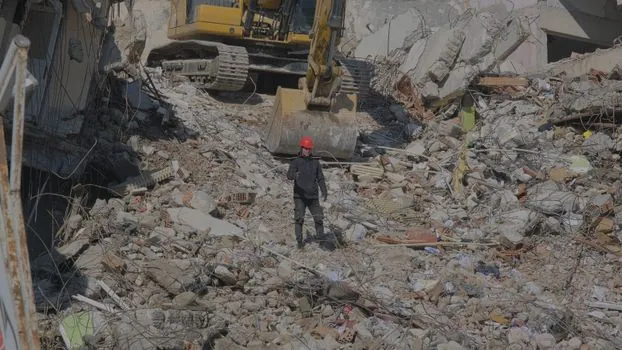
Demolition specs require dust suppression measures before work starts and prohibit loose debris dispersal; the Green, Ohio technical specification for demolitions explicitly mandates "dust at a minimum" with no open burning on the parcel [S4]. HEPA-13 (≥99.95% at 0.3 µm) extraction matched to the shroud is the practical floor for concrete dust, which is a silica-bearing stream under most occupational hygiene rules.
Tool-side controls include a continuous-flow dust skirt, anti-static hose, and automatic filter-clean pulse on the extractor. Vacuum-class extractors should be M-class or H-class certified for the substrate: M-class for wood, plaster, paint; H-class for concrete, stone, and any substrate with crystalline silica content. Pairing the wrong class voids the dust control assumptions written into the work plan [S2].
Operators should also size the sander by vibration: prefer handles with anti-vibration mounts and keep 8-hour A(8) exposure below the action value common to ISO/TR 19664 hand-arm vibration guidance. Above ~5 m/s², daily trigger time drops below 2 hours, which is rarely workable on a demolition shift, so the spec author should flag this in the work-plan submittal [S2].
Comparison: sander types against demolition criteria
Three sander families compete for demolition work, and the choice is set by four criteria: cut aggressiveness, dust capture, surface tolerance, and power source. [S2]
Angle-grinder sander (125–180 mm, corded 1.0–1.5 kW): highest cut rate on concrete and masonry, accepts diamond cup wheels, requires a third-party shroud and HEPA vacuum to meet dust-suppression wording; less control on vertical or overhead work. Random orbital sander (125–150 mm, 0.3–0.5 kW) with abrasive pad: best for coating and adhesive stripping on horizontal slabs, good dust capture with integrated shroud, lower cut rate, lowest tool cost. Belt sander (75–100 mm belt, 0.8–1.2 kW): aggressive on wood, soft mortar, and deck coatings, but dust capture is the worst of the three and is rarely accepted under sealed demolition submittals [S2][S3].
For sealed-engineer demolition plans, the angle grinder with cup wheel is the default for structural concrete, while the random orbital with a coarse abrasive (16–24 grit) is the safer pick for slab and deck work where the spec calls for "Remove and Salvage" of the substrate [S3]. The same sealed submittal language also shows up in adjacent civil specs, e.g. the backhoe loader selection for urban infrastructure piece, where contractor equipment lists must be filed before mobilisation.
When a sander is the wrong tool
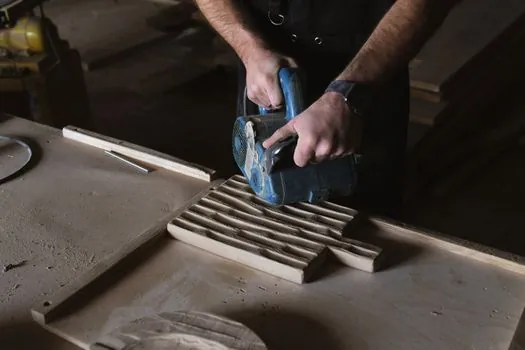
Sanders underperform whenever the spec calls for structural removal rather than surface stripping: demolishing abutments, piers, or girders in a bridge demolition calls for hydraulic breakers, shears, or saws, not abrasives [S2]. The 024119 spec also routes asbestos mastics, lead coatings, and refrigerant lines away from the sander trade entirely [S3].
For mass concrete slab removal, production rates below 10 m²/h on a 5 mm depth signal that the abrasive cut is the wrong method and a demolition hammer or ride-on scraper should replace it. Sanders are also the wrong choice where the sealed plan requires catching platforms or traffic shielding: those specs govern access, not tool selection [S2].
Spec-language checklist for submittals
Public demolition specs require a sealed method statement that names "type and capacity of equipment" and the sequence of operation, then closes with a registered engineer's letter certifying the work followed the sealed plan [S2]. A sander spec submittal that survives review should carry: input power (kW), pad/cup wheel diameter and bond, abrasive grit, dust port size, matched vacuum class, and vibration emission.
Cross-references matter: demolition specs in Division 02 (024119) call back to Division 01 for safety barriers, work restrictions, and refrigerant handling, so the sander submittal should flag whether the parcel contains any of those sub-trade items before work starts [S3]. Pre-demolition inspection for biological hazards (e.g. licensed exterminator check) is also a hard prerequisite in some municipal specs, separate from the sander trade [S4].
Track these signals between now and the next specification cycle: revisions to crystalline-sila dust rules in OSHA/NIOSH-style frameworks, any tightening of "type and capacity" reporting in provincial transportation specs, and the spread of automatic filter-clean HEPA extractors as a default pairing on sealed demolition submittals. For a related industrial reference, the concrete curing compound selection for industrial facility slabs page covers what happens to the slab surface after the sander leaves.
The underlying component specifications are covered under aerial work platform.