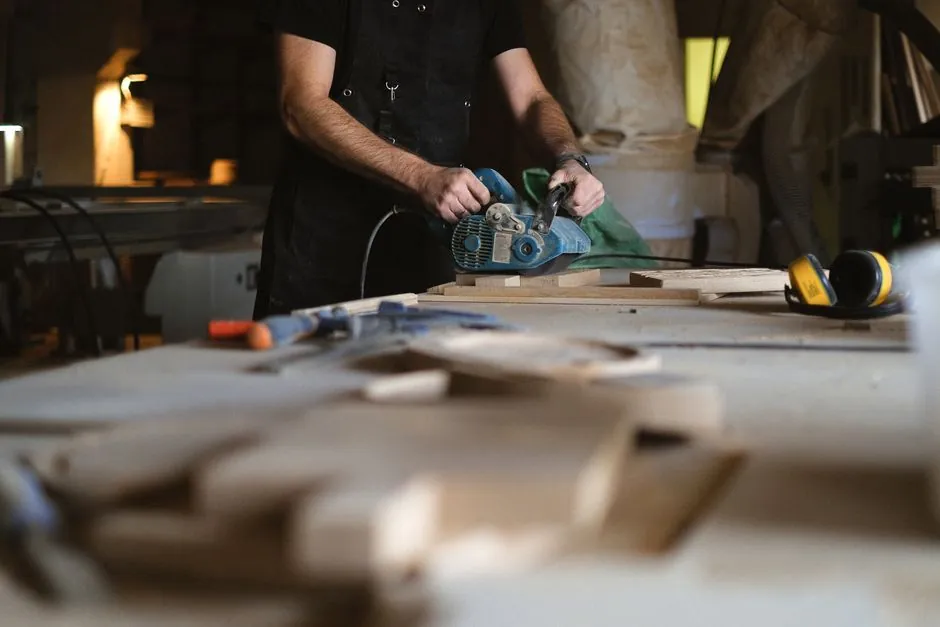
On electrical-installation jobs the sander is rarely a generic carpentry tool. It touches copper busbars, aluminum cable trays, galvanized conduit, stainless enclosures, and the inside of flameproof (Ex d) or increased-safety (Ex e) junction boxes, and each substrate has its own abrasive and surface-speed window. Specifiers in 2026 increasingly pull the sander spec out of the carpentry chapter and place it next to the electrical fire monitor and the explosion-proof electrical accessory schedules, because a stray spark or a steel-grit smear in the wrong place voids the hazardous-area certification on the whole panel.
This guide maps the decision tree a panel-builder, site electrician, or QA engineer actually uses: substrate and finish target, hazardous-area class, dust extraction interface, then RPM and pad size. The rules below apply to any site that follows IEC 60364 low-voltage installation practice or its national equivalent, and they assume the sander is used for dressing, deburring, and surface prep rather than material removal.
Match abrasive and surface speed to the conductor or enclosure material
A busbar dressed at the wrong speed leaves copper smear, embedded aluminum oxide, or a heat-tinted surface that raises contact resistance at the bolted joint. Industry guidance for copper busbar prep calls for aluminum-oxide or silicon-carbide discs at a surface speed of 25–35 m/s for finish sanding, with coarser 36–60 grit for stock removal and 120–180 grit for the final contact face; a 180 mm disc at 2800 RPM delivers roughly 26 m/s at the rim, which matches the slower end of the working window [S2]. For aluminum cable-tray work, a non-loading abrasive (zirconia alumina or coated ceramic) at 80–120 grit is the common compromise between cut rate and the risk of galling the soft alloy.
On galvanized conduit, the priority is not cut rate but preserving the zinc layer: 120–180 grit silicon-carbide on a random-orbit pad at 6000–12,000 OPM keeps the surface below the 200°C threshold where zinc volatilizes, so no cold-galv touch-up is needed after dressing. For stainless-steel enclosure rework, the spec must call out iron-free, non-metallic backed discs specifically: a standard aluminum-oxide disc leaves free-iron contamination that later flashes as rust and breaches the ASTM A480 / EN 10088-2 surface requirement. Random-orbit sanders in the 125–150 mm pad class, drawing 250–400 W and fitted with a 6–8 hole extraction pattern, cover most panel-builder use; the pad-backing thickness should sit at 5–10 mm so the tool follows the panel flatness without dishing the surface [S2][S4].
Hazardous-area zoning decides whether the sander can be mains-powered at all
If the sander is going to be used inside or within 1 m of a classified area, the equipment selection chapter of the electrical spec overrules every other criterion. For Zone 1 / Zone 21 (IEC 60079-10-1 / IEC 60079-31 classification, equivalent to NEC Class I Division 1 and Class II Division 1), only Ex-rated air-driven or intrinsically-safe cordless sanders are acceptable; a brushed mains motor is a non-starter because the commutator is a continuous ignition source under normal operation. For Zone 2 / Zone 22 (Class I Div 2, Class II Div 2), a properly certified Ex ec (non-sparking) or Ex tb (dust-by-enclosure) 110/230 V sander can be specified, but the certificate number and the ATEX/IECEx marking have to be cross-referenced to the gas group (IIA / IIB / IIC) and dust group (IIIA / IIIB / IIIC) on the project hazardous-area schedule [S1].
On a panel that is de-energised and gas-test cleared, a standard 230 V random-orbit sander is fine, but the spec must still require an earthed (3-core) supply, an RCD with rated residual current IΔn at or below 30 mA on the feeder, and a maximum service voltage window of 85–500 V AC line-to-line as the residual-current device baseline. Where sanding creates conductive dust (copper, aluminum, carbon-loaded plastic), the dust-extraction hose must be metallic or anti-static, bonded to the sander body and to the extraction unit; a standard PVC hose builds a static charge that has ignited solvent vapours in documented incident reports, and most 2024-vintage installation specs now write the anti-static requirement into Section B1 of the wiring methodology chapter [S1][S2].
Dust extraction interface, noise, and operator load
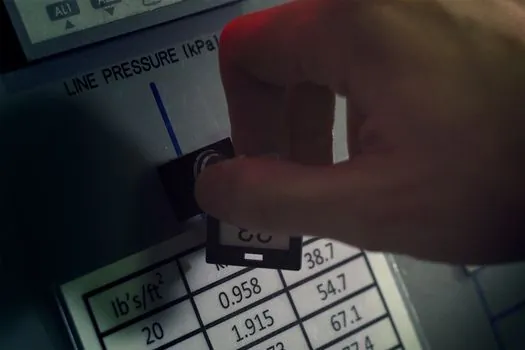
Most modern electrical-installation specs written since 2022 require a dust-extraction port matched to a HEPA H13 (99.95% at 0.3 µm) or higher extraction unit whenever the sander is used on cable trench covers, switchroom floors, or inside panel builds. The port size has to match the tool body: a 32 mm cuff is the European common for handheld sanders, 35 mm for North American, and a mismatch drops extraction efficiency below the 80% capture rate that the spec usually writes in. Sound pressure has to stay below the 80 dB(A) action level at the operator position; belt sanders at no-load RPM above 12,000 sit in the 85–95 dB(A) band and either need to be derated with a variable-speed trigger or earmarked for outdoor work [S3].
Operator load is a selection criterion that gets ignored until the job goes wrong. A 1.5–2.0 kg random-orbit sander with a 125 mm pad is the upper comfort limit for overhead work on a ceiling-suspended conduit run; above that weight, anti-vibration gloves and a two-handed dead-man switch are mandatory under most national occupational-health rules. Vibration total value ahv at the handle should sit below 5.0 m/s² (8-hour A(8) exposure), and the spec should require the manufacturer declaration so the project vibration log can be filled in truthfully. For assembly-line panel shops, a fixed-pedestal belt or disc sander rated 0.75–1.5 kW with a 1500–3000 RPM no-load speed gives repeatable surface finish and frees the installer to hold the workpiece rather than the tool [S5].
Selection tree: substrate, zone, dust, power
Step 1, fix the substrate: copper busbar or cable lug, aluminum tray, galvanized conduit, painted mild-steel enclosure, or stainless panel. Step 2, fix the finish: stock removal (36–60 grit), dressing (80–120), or contact-face finish (150–180). Step 3, fix the zone: gas group IIA/IIB/IIC, dust group IIIA/IIIB/IIIC, Zone 1/2/21/22 or unclassified. Step 4, fix the dust environment: conductive metallic swarf, non-conductive paint or plaster, or mixed. The output of those four steps is one of four practical selections: an Ex-rated pneumatic or Ex ec corded sander (Zone 1/21), a non-Ex but anti-static corded random orbit (Zone 2/22 with bonding), a HEPA-coupled shop sander (panel build shop, no zone), or a hand file / abrasive pad (live work, no ignition source permitted) [S2][S4][S7].
A common comparison at this point lines the four options against ignition risk, surface finish achievable, dust capture, and cost per shift: Ex-rated pneumatic tools are the safest in Zone 1 but cost 3–5x a standard sander and need a compressor with dried air; corded random orbits in Zone 2 are the cheapest path if the dust extraction is anti-static and the RCD is in line; shop sanders give the best finish but cannot leave the workshop; hand finishing is the only option when the work is on or near an exposed live part that cannot be isolated, and the spec should state that no powered sander is to be used within 50 mm of an uninsulated conductor without a written permit [S6][S7].
Maintenance, abrasive change, and failure modes to inspect
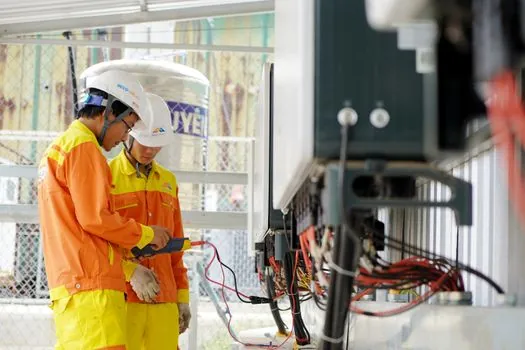
On a service interval of roughly 50 operating hours, three items on a sander used in electrical work carry a written acceptance criterion. First, the carbon brushes: a brushed 230 V sander with brush length below 6 mm or with the auto-stop window tripped is out of service, because a worn brush in a Zone 2 panel job is an ignition source. Second, the pad or backing pad: runout above 0.2 mm on a 125 mm random-orbit pad produces visible swirl marks on stainless and contact-face finishes on copper that fail QA, and the pad is replaced, not dressed. Third, the dust-extraction cuff and the anti-static hose continuity: resistance from the sander body to the extraction unit ground point should measure below 1.0 Ω with a 4-wire ohmmeter; above that, the hose is replaced and the bonding lead re-terminated [S3].
Failure modes to reject on inspection: any scoring or burn mark on the workpiece, any embedded abrasive particle in a contact face (this raises contact resistance and can be a fire source under load), and any sign of zinc volatilization (yellow-brown discoloration) on galvanized conduit that means the speed was too high and the conduit has to be cold-galvanized over the affected area before re-use. In a related pre-cut step, abrasive roll changing and grit selection follow a similar discipline to the way sander selection for demolition work maps to substrate hardness, and operators used to carpentry grit mapping can re-use the logic on copper and aluminum with the speed band shifted down by 30–40%. The two trackable signals to watch for in the next revision cycle are tighter dust-conductivity rules in IEC 60079-32-1 for anti-static hose testing, and the gradual phase-out of brushed universal motors in Zone 2 sanders as cordless brushless platforms pick up Ex ec certification.
For the relevant spec sheets and selection criteria, see sander.