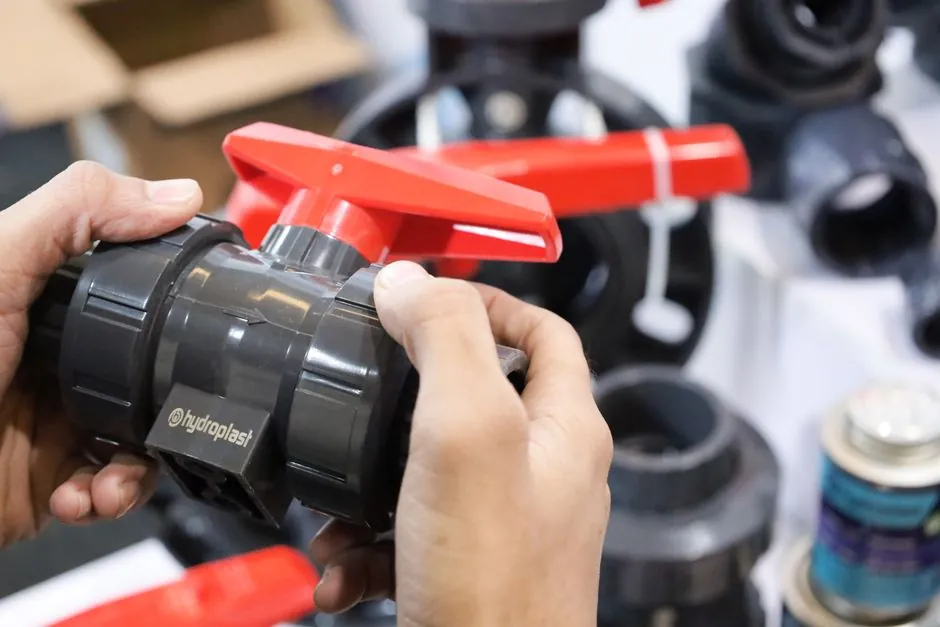
Swing check valves are commonly used in water and wastewater systems, but closure behavior and corrosion resistance require service-specific verification [S1][S5].
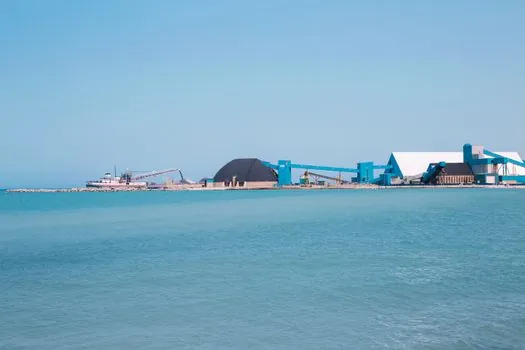
Desalination applications include raw-seawater intake, seawater transfer, pretreatment backwash, RO feed, permeate boosting, and brine discharge, each with distinct pressure, salinity, cleanliness, and transient duties [S3][S4].
Define the desalination duty before choosing the valve type
A pump-discharge check valve must open for forward flow, close to prevent reverse flow, and limit adverse pressure transients while avoiding excessive head loss [S1]. Swing check valves are passive, normally closed devices that use the flow and pressure differential to pivot a disc through a hinge pin, with no external power required [S1][S5].
Swing check valves are commonly used in water and wastewater systems [S5]. It is a reasonable candidate for selected seawater pump-discharge lines, but a rubber-lined construction should be accepted only after the supplier confirms compatibility with the specified seawater chemistry, temperature, velocity, and pump transient [S4].
Do not use one material schedule across the plant. Raw seawater carries sediment, marine organisms, and chlorides; pretreatment backwash carries solids; RO feed operates at project-specific high pressure; permeate service requires contamination control; and brine has higher salinity with greater erosion and corrosion exposure [S4]. The governing P&ID, hydraulic calculation, and piping class must control the final selection.
Compare swing, lift, ball, and dual-plate options
Swing, lift, ball, and dual-plate check valves differ materially in flow resistance, closure response, debris tolerance, and installation requirements, so nominal size and pressure class alone are insufficient for a desalination selection [S2][S4].
For a criteria-based comparison, score each option against minimum stable forward velocity, allowable reverse-flow development, debris tolerance, pressure class, corrosion exposure, head loss, and installation orientation [S2][S4]. Swing check valves are simple and inexpensive, and closure type affects water hammer [S1][S5]. Ball check valves have a smooth bore and a self-cleaning rotating-ball mechanism that prevents solid deposits from building up at the bottom and reduces the risk of impurities sticking to the ball [S5]. A dual-plate spring-assisted check valve's closing characteristic must be matched to the service's transient conditions [S1][S4].
Set hydraulic and transient limits
Sizing must use actual design flow, line velocity, valve loss coefficient, minimum stable operating flow, and the maximum allowable reverse flow, rather than a nominal pipe diameter alone [S2][S4]. An oversized check valve can operate with a small opening and elevated head loss, increasing pumping energy, while an undersized valve can impose excessive pressure drop and unreliable closure [S2].
The closure rate must therefore be checked against the pump-trip transient, including line length, elevation, static head, reverse-flow development, and pressure-wave behavior [S6].
A check valve is not a complete water-hammer protection system [S4]. A check valve is not, by itself, a complete water-hammer protection system [S4]. If column separation, rapid valve closure, or pipe break is credible, retain surge analysis, surge vessels, air-release equipment, and controlled pump-stopping provisions as separate design requirements. For broader station arrangement and isolation-valve duties, the related balancing valve selection guide for seawater desalination provides useful context on system-level flow control.
Specify seawater-compatible materials
The wetted body, cover, disc, hinge or shaft, seat, fasteners, and external trim must be selected as a compatible set rather than mixing components by habit [S2][S4]. The required metallurgy depends on chloride concentration, temperature, velocity, treatment chemicals, erosion, crevice geometry, and the specified corrosion allowance.
For a rubber-lined swing valve, the liner must be checked for seawater exposure, operating temperature, pressure, and erosion conditions before approval [S4]. Available check-valve product categories include NRV, bolted-cover swing-type check valves, single-plate wafer check valves, and dual-plate wafer check valves, but product availability alone does not establish suitability for a particular service [S3].
Seat sealing must meet the actual leakage requirement. For permeate or product-water service, validate wetted-material cleanliness and downstream contamination controls against the project specification [S4].
Match installation, inspection, and maintenance access
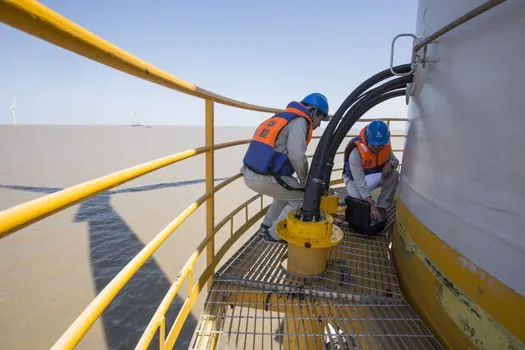
Installation orientation is a selection criterion because some check-valve designs are not suitable for both horizontal and vertical installation [S2]. Confirm the flow direction arrow, body orientation, hinge geometry, accessible cover, and clearance required to remove the disc and inspect the seat [S2][S4].
Bolted-cover swing construction is listed among check-valve products offered for desalination applications, while single-plate and dual-plate wafer constructions address different installation envelopes [S3]. For a swing valve, record whether open or closed indication is required; lever-and-weight or lever-and-spring accessories can provide visual monitoring, while digital feedback requires additional engineered components [S5].
Maintenance planning should address hinge and seat inspection, corrosion, sediment, biological fouling, and access to the closure element [S4]. Do not assume that a full-bore design removes deposited solids from the body, hinge region, or seat. Pretreatment backwash and intake service need more attention to fouling and solids than a clean product-water line [S2][S4].
Know when not to specify a swing check valve
Do not select the mainstream swing check valve when the duty requires rapid closure to limit damaging reverse flow, very low head loss at partial flow, controlled closure over 5 to 30 seconds, or elimination of reverse flow to a strict limit [S1][S4]. These requirements point toward spring-assisted, dashpot-assisted, or another engineered non-return arrangement, subject to transient analysis.
Raw sewage, debris-laden intake flow, and high-solids backwash can impair hinge movement or seat sealing, so ball or another self-cleaning design may be more appropriate after a site-specific review [S2][S5]. A low-pressure lined valve should also not be substituted into a high-pressure RO line merely because it appears on the same desalination project [S4].
Use the swing check valve fundamentals for the basic mechanism, compare it with the lift check valve where closure speed dominates, and assess a dual-plate check valve when compact installation and spring-assisted control are priorities.
Build the procurement shortlist from verified service data

A defensible desalination shortlist should state the service location, design flow, normal and minimum flow, design pressure and temperature, allowable head loss, fluid chemistry, solids content, installation orientation, leakage class, corrosion allowance, closure requirement, and referenced transient analysis [S2][S4]. The material proposal must identify each wetted grade and liner, while the data sheet should state valve size, pressure class, flow-capacity basis, seat arrangement, and allowable orientation.
Final acceptance should confirm that the selected swing valve closes before the reverse-flow limit imposed by the pump and piping study, without creating an unacceptable pressure rise. The next trackable signals are the approved hydraulic transient case and the vendor’s seawater-material compatibility statement for the exact temperature, chloride, velocity, and chemistry shown on the piping datasheet [S4].