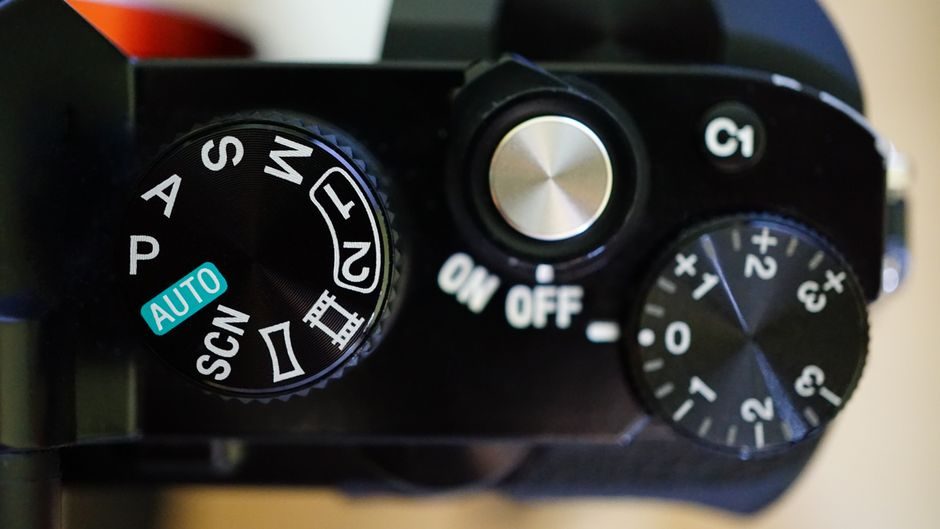
A 22 mm panel-mount selector switch with EN60947-5-1 AC-15 3 A at 240 VAC rating, IP66 front-of-panel sealing, and 500,000-operation mechanical life is the mainstream workhorse for 2026 industrial control panels, exemplified by the OMRON A22NS/A22NW family with UL508 Type 4X, 13 and CCC GB/T 14048.5 approvals [S3].
Selector switches sit between limit switches and load-break switches in the control hierarchy: they command logic, not power, and a wrong gate (notch count, contact block, IP rating) silently defeats the whole panel.
Mounting Hole and Bezel Geometry: The First Hard Gate
Mounting hole diameter is non-negotiable because the bezel, anti-rotation ring, and panel cut-out are tooled to one of three sizes — Ø16, Ø22, or Ø30 — and once a panel is punched, switching the family requires reworking the cut-out [S2]. The Ø22 family is the dominant industrial default (OMRON A22NS, IDEC HW, Schneider XB5), with Ø16 reserved for compact or hand-held equipment and Ø30 for harsh-environment or 30.5 mm legacy panels (Allen-Bradley 800T, Eaton M22).
Shape is the secondary filter: rectangular, square, or circular — all three are stocked in the MISUMI Ø16/Ø22/Ø30 selector catalogue (31 part numbers, including SB1/SB2/SB3 series) [S2]. Bezel depth also drives rear-of-panel clearance: 45.5 mm, 48.9 mm, 61 mm, 63 mm, 74.4 mm, and 83 mm options appear on the same spec sheet, and shallow depths (≤48.9 mm) are mandatory when the cabinet depth is constrained [S2].
Position Count, Throw, and Operator Type
Position count and operator type are coupled, and the spec must lock both before the contact block is sized. The mainstream catalog offers 2-notch (maintained or spring-return) and 3-notch selectors with 45° or 90° step angles; safety key selectors (OMRON A22TK) add a direct-opening mechanism for guard-door and E-stop duty per EN60947-5-1 [S3][S5].
Keylock operators are specified where mode selection must be tamper-proof (Manual/Off/Auto on HVAC or fire-pump controllers) and add a removable key in 2- or 3-position variants [S2]. Standard knob selectors — the 16 mm OMRON A165S/W detachable-knob series — carry UL 5 A at 125 VAC / 3 A at 250 VAC (general use) and 3 A at 30 VDC resistive, with TÜV EN60947-5-1 covering the low-voltage directive [S4]. Lighted variants (A22NW) integrate an LED block (6-240 VAC/DC, ~5-12 mA) and cost roughly 1.3-1.5× the non-lighted equivalent [S3].
Contact Block Configuration: 1a, 2a, 1c, 2a2b, and Why It Matters
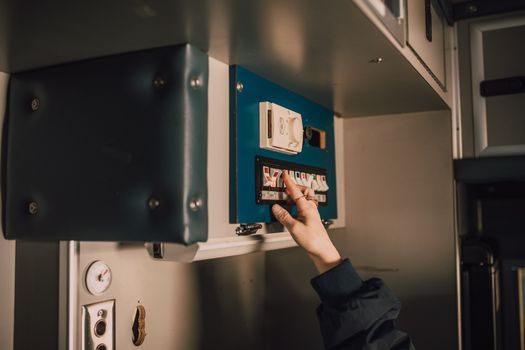
Contact configuration determines how many conductors the switch can command, and every extra pole adds depth. The MISUMI catalog lists six common blocks — 1a (SPST-NO), 2a (DPST-NO), 1c (SPDT), 2c (DPDT), 1a1b, and 2a2b — with 1a/1c/2a/2c as the production-run staples [S2]. The OMRON A22NS block is rated 10 A carry current, 600 V insulation voltage, and minimum applicable load 10 mA at 5 VDC — the dry-circuit floor below which a gold or silver-alloy crossover block is mandatory to avoid contact oxidation [S3].
For selector logic, the practical rule is one pole per interlock: 2-position selectors typically need 1a or 1c, while 3-position Manual/Off/Auto selectors need 2a or 2c to drive two independent loads (e.g. forward/stop/reverse on a small DOL starter) [S2][S3]. The same hole geometry hosts up to 6 contact blocks on deep-bezel variants, but most panels stop at 2-3 blocks to keep wiring serviceable.
Electrical Rating: AC-15 / DC-13 Utilization Categories
EN60947-5-1 utilization categories AC-15 (inductive AC, solenoid/contactor coils) and DC-13 (inductive DC, relay coils) are the binding metric for control-circuit switches, not the resistive AC-12 number. The OMRON A22NS A22NW is certified AC-15 3 A at 240 VAC and DC-13 4 A at 24 VDC by TÜV and CCC, with UL508 Type 4X, 13 listing at 6 A 240 VAC / 10 A 120 VAC (general use) [S3].
The MISUMI Ø16/Ø22/Ø30 catalog caps AC-110 V current at 1 A, 1.5 A, or 10 A depending on the part family, and 24 VDC current at 1, 3, 6, or 8 A — a 10:1 spread that maps directly to whether the load is a logic input or a small motor contactor [S2]. Resistive ratings (AC-12: 10 A at 24/120 V, 6 A at 240 V, 2 A at 380/440 V) appear in the same datasheet but should not be used to size inductive contactor coils [S3]. For higher-power motor disconnect, the device shifts category to a load-break switch or isolating switch, not a panel-mount selector.
Ingress, Mechanical Life, and Environmental Gates

IP66 front-of-panel (IEC 60529) is the de-facto minimum for washdown or outdoor panels, achieved with the OMRON A22NS oil-resistant rubber gasket and locking nut; IP40 is acceptable only for sealed cabinets and shows up on the MISUMI SB1R series basic block [S2][S3]. Mechanical life of 500,000 operations (300,000 for 3-position) on the A22NS, tested at 30 operations/minute with cos θ = 0.4 inductive load, sets the spec floor for any new 2026 panel — anything below 100,000 ops is hobby-grade.
Ambient temperature: -25 to 70 °C operating, -40 to 80 °C storage for non-lighted; lighted variants derate to 55 °C max because of the LED block's thermal limit [S3]. Dielectric strength 2,500 VAC at 50/60 Hz for 1 min between terminals and ground, insulation resistance 100 MΩ min at 500 VDC, and PTI (tracking) 175 are the IEC 60947-5-1 baseline — quote the numbers, not the marketing copy.
Standards Stack: UL 508, EN 60947-5-1, CCC GB/T 14048.5, CSA C22.2 No.14
A 2026-ready selector switch is typically quadruple-listed: UL 508 (USA), CSA C22.2 No.14 (Canada), EN 60947-5-1 (EU low-voltage + machinery), and GB/T 14048.5 (China CCC) — the OMRON A22NS carries all four [S3]. The safety key selector A22TK adds CCC GB/T 14048.5 at 3 A / 240 VAC and 1.5 A / 24 VDC, with a direct-opening mechanism per EN 60947-5-1 that mechanically forces the NC contact open if the contact block welds [S5].
For machine-safety applications, the safety key selector is preferred over a standard knob because it satisfies EN ISO 13849-1 category requirements when paired with a monitored contact block. ATEX/IECEx ratings are not standard on panel-mount selectors; for Zone 1/2, the switch goes inside an Ex e enclosure, not on the surface — a level switch or industrial switch in hazardous areas follows different enclosure rules. Panel designers who try to use a stock IP66 selector as a Zone 1 device will fail the conformity assessment.
Selection Comparison: Three Realistic Configurations
Three configurations cover roughly 80% of panel-builder demand. (1) Compact hand-held or instrument panel: Ø16 OMRON A165S/W knob, 2-position maintained, 1c contact, 5 A at 125 VAC, IP65, ~3-5 m panel depth [S4]. (2) Mainstream industrial control panel: Ø22 OMRON A22NS, 2- or 3-position, 1a/2a/1c/2a2b block, AC-15 3 A at 240 VAC, IP66, UL/CSA/TÜV/CCC, 50 g non-lighted [S3]. (3) Safety guard or E-stop role: Ø22 OMRON A22TK safety key selector with direct-opening mechanism, 3 A at 220 VAC TÜV, 6 A at 220 VAC / 10 A at 110 VAC UL [S5].
The shortlist logic — start with mounting hole, then operator type, then contact block, then electrical rating, then IP, then approvals — produces a 1-of-3 decision in under five minutes. If the application is Mode selection under fault conditions, go to option 3 (A22TK). If the application is a simple Hand/Off/Auto on a motor starter, go to option 2 (A22NS, 3-position, 2a2b). If the panel is space-constrained and below 50 V, go to option 1 (A165S/W). Specifiers who start with the approvals list instead of the mounting hole burn hours in cross-reference work and end up with the wrong cut-out. For related control-component selection logic, the isolating switch selection spec gates and switch-disconnector coordination logic guides follow the same gate-first discipline.
Track these three signals through end of 2026: (a) OMRON and IDEC catalog refreshes for A22NS successor part numbers with push-in terminals becoming the default rather than the option; (b) CCC GB/T 14048.5 alignment with the next EN 60947-5-1 revision cycle for harmonized utilization-category marking; (c) MISUMI SB-series IP65/IP66 promotion from IP40 baseline as Chinese and Thai panel builders shift to washdown food-grade and outdoor water-treatment enclosures [S2][S3].