
The 22 mm panel cut-out remains the de-facto world default for industrial pushbutton and pilot light assemblies, with 30 mm the legacy North-American alternative and 16 mm reserved for compact HMI stations [S1][S3]. Across three global catalogues sampled in mid-2026, 22 mm metal IP67 momentary units with integrated 12 V LED illumination consistently appear as the highest-volume SKU, with 100-piece MOQ pricing near US$1.38 landed ex-Ningbo [S3].
Buyers picking pilot devices for control panels in 2026 face a familiar spec matrix — but the gating sequence (mechanical fit, ingress, electrical life, then illumination) is unchanged from the IEC 60947-5-1 baseline that has governed low-voltage switchgear auxiliaries for two decades. What has shifted is the lighting sub-system: incandescent and neon have been displaced in most new builds by 12-24 V DC LED modules with a service life that comfortably exceeds the mechanical endurance of the host switch [S1][S3].
Hole Cut-Out, Bezel Style, and Mechanical Endurance
A 22 mm IP67 flat-head momentary metal pushbutton rated 5 A at 250 V AC with 12 V LED is now a catalog-stock line at Chinese OEMs, and ships at roughly US$1.38/100 pieces MOQ with Ningbo port of loading [S3].
Mechanical endurance is the spec engineers cut first: 500,000 cycles for plastic-head economy units, 1,000,000 for metal-head industrial, and 5-10 million for illuminated selector switches used in repetitive jog/auto modes on machine-tools. For the broader indicator-light family covered in our signal-tower-light reference, continuous-on duty favours LED modules with screw or push-in terminal blocks rather than PCB pins, which simplifies field replacement.
Ingress Rating, Material, and Environment Mapping
Front-of-panel IP65 is the minimum for any wash-down-adjacent station; IP66 is required for hose-down food and beverage lines, and IP67 for outdoor or forklift-aisle panels where temporary immersion or jet spray is plausible [S1][S3]. Material choice follows environment: chrome-plated brass or stainless for outdoor/chemical, polyamide (PA66) for indoor dry, and aluminium for weight-sensitive mobile equipment.
Engineers specifying for hazardous areas should also check the explosion-proof-light family, since pilot lights in Zone 1/Zone 21 require either Ex d (flameproof) or Ex e (increased safety) enclosures that go well beyond a panel-sealed IP67 unit. The hub-and-spoke trade-off: a stock IP67 metal unit is roughly 5-8× cheaper than a certified Ex d equivalent, so the latter is only justified when the gas group (IIA/IIB/IIC) and T-class (T4/T5/T6) of the surrounding area demand it.
Contact Block, Voltage, and LED Module Selection
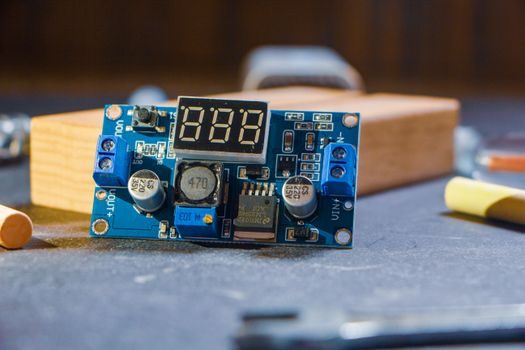
Standard 22 mm contact blocks in 2026 are dual-circuit 1NO+1NC silver-alloy, rated 5 A / 250 V AC and 2 A / 24 V DC for most catalog SKUs, with 10 A versions available for motor-start auxiliaries [S3]. Modular snap-on contact blocks (Schneider-style, Eaton-style, Siemens SIRIUS-style) let a panel builder stack 1-4 contacts behind a single operator without re-drilling.
Illumination voltage is now dominated by 12 V DC and 24 V DC LED modules, with 110 V AC and 220 V AC modules supplied as direct-replace drop-ins for legacy incandescent bays [S3]. The 12 V LED variant is preferred on 24 V control cabinets where the lamp is wired through a dropping resistor or a constant-current driver; total module current is typically 8-15 mA per indicator, which keeps a 50-station panel inside a 2 A 24 V rail budget. Buyers who need a status stack outside the cabinet — typically red/amber/green for run/standby/fault — should cross-reference our emergency-light and signal-tower entries, since multi-colour tower lamps share the same 24 V LED current class but require an aluminium column body for column-strength.
Standards Governing Pushbutton and Pilot Light Specification
IEC 60947-5-1 governs low-voltage switchgear and controlgear auxiliary devices including pushbuttons, selector switches and indicator lights, defining the utilisation categories AC-15 (solenoid valves, contactor coils) and DC-13 (electromagnets) that dictate contact life. UL 508 / UL 60947-5-1 governs the North-American equivalent, while IEC 60529 defines the IP code referenced on every front-of-panel data plate. [S1]
For explosion-protected versions, the family-relevant standards are the IEC 60079 series (gas) and IEC 61241 series (dust), with the corresponding EU ATEX 2014/34/EU category marking on the nameplate. NEMA 4 / NEMA 4X remains the legacy N. American shorthand for the same ingress target (IP66 / IP67), and food-grade sites commonly add NSF / FDA elastomer requirements to the gasket spec.
Who Should Pick Which Variant — A Decision Map

Use this four-axis decision map to shortlist from 16/22/25/30 mm SKUs: (1) cabinet depth — 22 mm plastic fits a 35 mm-deep bracket, metal-head needs 45 mm; (2) operator type — momentary for jog, maintained for stop, illuminated for status; (3) voltage — 12 V LED if the panel already runs a 24 V DC bus, 220 V AC LED if a step-down transformer is undesirable; (4) duty — 5 A silver contacts for general auxiliaries, 10 A for motor contactor coils. [S3]
The 22 mm IP67 metal 12 V LED momentary at ~US$1.38/100 MOQ is the default pick for new machine-tool and packaging-line panels [S3]. The 30 mm NEMA 4 metal version is the right call only when retrofitting legacy Allen-Bradley 800T / 800H panel cut-outs on brownfield sites; for greenfield North-American builds, most OEMs have already migrated to 22 mm to align with global supply. The 16 mm flush-mount pushbutton fits where space is at a premium — compact HMI stations, robot teach pendants, AGV dashboard panels. Plastic-head economy units are appropriate only indoors, on dry panels, and where the operator is not gloved — gloved actuation needs a larger bezel and a higher actuation force (typically 4-6 N rather than 2-3 N).
Comparison: 16 mm vs 22 mm vs 25 mm vs 30 mm Pilot Devices
On four hard selection criteria — bezel diameter, typical IP rating, contact block amp rating at 250 V AC, and indicative MOQ price — the four common families line up as follows: 16 mm / IP65 / 3 A / US$0.50-0.80 per piece; 22 mm / IP67 / 5 A / US$1.30-1.80 per piece [S3]; 25 mm / IP67 / 5-10 A / US$1.80-2.50 per piece; 30 mm / IP66-NEMA 4X / 5-10 A / US$2.20-3.00 per piece. The 22 mm line wins on the cost-vs-rating trade and the sheer breadth of Eaton / Schneider / Siemens / Maxge SKUs, with one European distributor (Elit GlobalStore) listing 51 catalog entries under "Push Buttons, Pilot Lights" plus 56 under the Eaton sub-line [S2].
Buyers running large MCC lineups should also read our MCC selection criteria guide — the same contact-block philosophy (5 A 250 V AC silver-alloy) cascades into the auxiliary selector and pushbutton SKUs specified inside the MCC bucket. Likewise, if the panel is part of a packaging-line retrofit, the terminal block selection criteria reference ties back to the same push-in terminal technology now offered on premium 22 mm contact blocks.
Failure Modes and Sourcing Pitfalls to Avoid

Three failure modes dominate field returns: (1) LED premature dimming from running a 12 V LED module on a 24 V supply without a current-limiter, which doubles the junction temperature and cuts service life by roughly 4×; (2) contact welding on DC inductive loads below 24 V / 2 A, where the lack of zero-crossing extends the arc duration beyond the IEC 60947-5-1 envelope; (3) seal failure on metal-head units torqued above the specified 0.8-1.0 N·m on the panel nut, which distorts the gasket and drops the unit from IP67 to IP54 in practice. [S1]
Sourcing pitfalls: skip-nameplate SKUs that omit the IEC 60529 IP code or the utilisation category; 100-piece MOQ lots that ship without a manufacturer date code (common on the lowest-tier Ningbo listings [S3]); and LED modules sold without a TVS / surge diode, which fail within months in any cabinet that shares a 24 V bus with a solenoid valve coil. For safety-circuit pushbuttons (E-stops, gate interlocks), spec a positively-driven NC contact per IEC 60947-5-1 and verify the mechanical force > 25 N to defeat nuisance trips — for the broader safety light curtain / safety device landscape, our safety light curtain reference covers the complementary photoelectric side of the same safety control loop.
Track two signals over the next 6-9 months: the IEC 60947-5-1 maintenance cycle output on contact-life testing under DC-13 higher-voltage loads, and the roll-out of IO-Link interface pushbutton stations that integrate the 12-24 V LED indicator into a single M12 port. Watch also for the proliferation of ATEX-certified 22 mm illuminated pushbuttons in the lower price tier, which would compress the current 5-8× cost premium between IP67 stock and Ex e / Ex d versions — relevant to anyone specifying pilot devices for Zone 1 chemical panels.