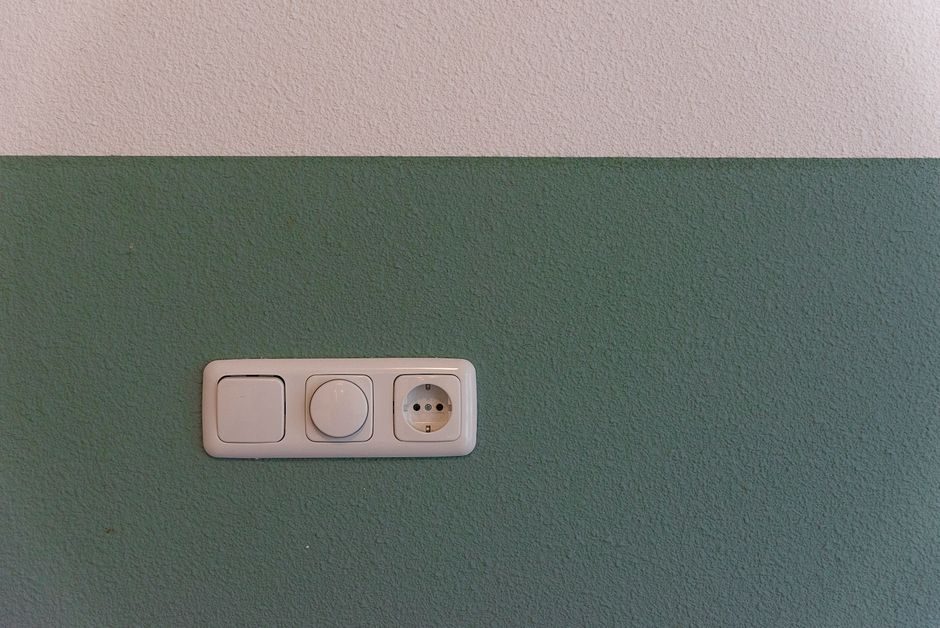
Isolating switches (disconnectors) carry no load current during operation and exist primarily to provide visible isolation, safe maintenance access, and switching of small incidental currents — a duty fundamentally different from a circuit breaker or a load switch [S2].
Selection is governed by four hard gates: rated insulation voltage (Ui), rated operational current (Ie) at the site ambient, utilization category (AC-20/21/22/23 per IEC 60947-3), and short-circuit withstand (Icw or Icm). Choosing a device without locking down all four is the single most common cause of field failure and warranty disputes [S7][S9].
Low-Voltage DIN-Rail Isolators (Modular, ≤125 A)
Modular 1P/2P/3P/4P DIN-rail isolators in the Ych7-125 family are rated AC 230/400 V at 50/60 Hz with a 125 A ceiling and mount on a 35 mm rail — the standard SKU for distribution boards and machine control panels [S5].
Typical pricing sits in the US$0.44–0.63 per-piece band at 500–1,000 piece MOQ for 16–125 A ratings, making them a cost-default for OEM panel builders [S5]. For household and similar fixed installations, GB 16915.5-2012 defines the isolating switch as a device that isolates equipment from the supply and carries / cuts all phase-pole currents — the functional baseline these modular parts inherit [S9].
Pick this family when: the upstream is already protected by an MCB or MCCB; switching frequency is low; visible isolation and padlock-off are the main safety need. Do not pick it for: any DC photovoltaic string > 60 V without a DC-rated equivalent, or for inductive loads with high inrush where an industrial switch with AC-23 duty is the correct call [S1][S7].
Molded-Case and Glass-Fiber-Reinforced Isolators (100–1600 A)
The HGL-1600 series from Jiangsu People Electric illustrates the next tier: a glass-fiber-reinforced saturated-polyester enclosure, indoor mounting, designed for infrequent manual make/break of distribution circuits up to 1600 A, and explicitly built to IEC 60947 and GB 14048.3 [S7].
Glass-fiber-reinforced polyester (DMC/SMC) housings give these parts a tracking-resistance and temperature index that beats standard ABS, which is why they appear in switchgear cubicles rather than domestic boards. Compliance with both IEC 60947-3 and GB 14048.3 is the cross-market acceptance signal — GB 14048.3 is the Chinese equivalent of IEC 60947-3 for low-voltage switchgear [S7].
At this rating tier, the short-circuit withstand (Icw) becomes the deciding number: 1-second Icw values of 8 kA, 15 kA, 25 kA, and 35 kA are common breakpoints. A 1600 A disconnector with 25 kA/1 s Icw will coordinate cleanly with most 630–1600 A ACBs upstream; below that, the upstream breaker must be downrated or you risk contact welding during a fault.
High-Voltage Outdoor Disconnectors (12 kV – 1100 kV)
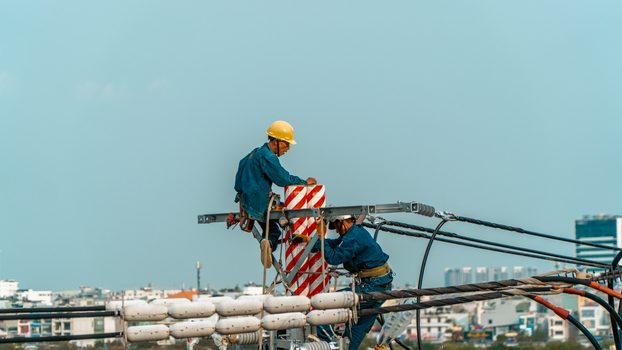
The HV disconnector family runs from distribution-class 12–40.5 kV up to UHV 1100 kV. The current Chinese standard set spans GB 1985-2014 (AC disconnectors and earthing switches) and GB/T 1985-2023 (the 2023 revision), with GB/T 24837-2018 covering the 1100 kV AC class and GB/T 25091-2010 covering HVDC disconnector and earthing switch duty [S3].
Outdoor HV products from Zhejiang-based manufacturers carry model patterns like HGW9-10kV (10 kV outdoor) and ship with vacuum-circuit-breaker integration options for gas-insulated switchgear (GIS) bays [S1][S6][S10]. The 40.5 kV and 24 kV outdoor AC classes are covered by group standards T/YIIEE 02-2023 and T/YIIEE 11-2021 respectively, while mining flameproof disconnector conversion boxes sit under T/QGCML 196-2021 [S3].
For 1100 kV UHV builds, GB/T 24837-2018 (which superseded GB/Z 24837-2009) sets the mechanical endurance, ice-load, and short-time current tests that separate a transmission-grade disconnector from a sub-transmission part. Earthing-switch integration is mandatory on this class — the three-position (main / off / earth) design is the standard configuration in Chinese substation practice [S3].
Photovoltaic and DC Isolators (Up to 1500 V DC)
Solar-PV isolating switches are a separate sub-family because DC has no zero-crossing to assist arc extinction. Products on the Made-in-China platform carry SAA approval for the Australian market and pair with PV combiner boxes, where string isolation under load (or near-load) is the stated duty [S1].
Look for the DC-PV specific markings: rated DC voltage (typically 1000 V or 1500 V), DC-21B or DC-PV utilization category, and a polarity-safe enclosure rated to IP65 for rooftop service. The Kse340 IP65 waterproof isolator on the same platform is a representative SKU for outdoor PV strings, with CE marking for the EU market [S1]. For rooftop combiner boxes in Australia, AS 60947.3 and the DC-PV test requirements of IEC 60947-3 Annex B are the gating standards.
Selection Criteria Comparison Across Families
A spec-driven shortlist logic: cross-reference four decision axes — voltage class, continuous current, utilization category, and Icw/short-circuit duty. Modular DIN isolators cover ≤125 A at 400 V AC, AC-20/21/22, no Icw requirement upstream. Molded-case 100–1600 A parts cover 400–690 V AC, AC-22/23, Icw 8–35 kA/1 s. HV outdoor disconnectors cover 12–1100 kV, AC disconnect duty only, short-time current 25–63 kA/3 s. DC-PV isolators cover up to 1500 V DC, DC-21B/DC-PV, IP65 for outdoor [S3][S5][S7][S9].
The most-failed engineering call: specifying a 125 A DIN-rail isolator on a 100 A motor load driven direct-on-line, where the AC-23 inrush category demands a 160 A or larger part, or migrating to a true load switch with motor ratings. If your downstream is a motor control centre, a limit switch inside the contactor logic handles position feedback, not the disconnector duty — keep those roles separate [S2][S7].
Standards Compliance and Sourcing Notes
For LV gear crossing borders, insist on dual-line documentation: IEC 60947-3 (international), GB 14048.3 (China), UL 1087 or UL 98 (North America for LV), and AS 60947.3 (Australia) [S7][S9]. For HV gear, GB 1985-2014 / GB/T 1985-2023, DL/T 486-2021, and CSA C22.2 No.58 are the most commonly cited reference numbers in active procurement specifications [S3].
China Customs HS code 8536 3000 00 covers LV apparatus for protecting electrical circuits rated ≤ 1000 V, which catches most of the DIN-rail and molded-case isolator SKUs above; declarations on this code carry a CIQ code of 999 (circuit protection device) and require CCC certification for many domestic-sale flows [S4]. For a related selection logic on adjacent LV distribution hardware, see the distribution cabinet vs dry-type transformer spec map and for switch-disconnector coordination logic, the switch-disconnector selection spec gates article walks through utilization-category numerics in detail.