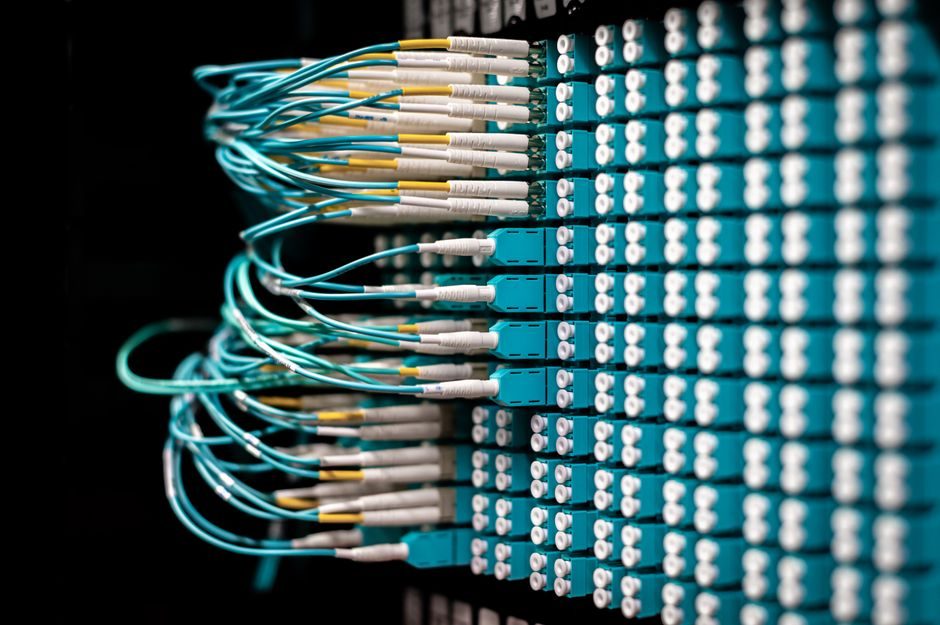
A serial device server wraps RS-232/485/422 bytes inside TCP or UDP sockets without altering the payload, exposing one to sixteen physical serial ports as virtual COM ports or TCP listeners on the Ethernet side [S1]. A protocol gateway does the transport job and then re-encodes the application layer: a Modbus RTU request coming in on RS-485 can be issued on the wire as Modbus TCP, EtherNet/IP, PROFINET, or DeviceNet, depending on the gateway's loaded protocol stack [S5].
The decision is driven by three measurable variables: whether the master and slave already share a protocol, how many slave nodes sit on each serial leg, and whether the plant backbone is Ethernet/IP, PROFINET, or a classical fieldbus. Choosing wrong costs commissioning weeks, not dollars, because every register map and every function-code path has to be re-validated.
What Each Box Actually Does on the Wire
A serial device server is a transparent pipe. It buffers UART bytes, frames them as a TCP or UDP stream, and ships them to a fixed remote IP and port. PUSR's N510, for example, presents one RS-485 port as a TCP listener that supports MQTT, SSL/TLS, and a web configuration channel, but the bytes between the SCADA and the instrument remain untouched Modbus RTU [S1]. Because the payload is unchanged, the SCADA still has to run a Modbus RTU master on top of TCP, or use a virtual COM port driver, and every register polling cycle is limited to a single half-duplex turnaround on the RS-485 trunk.
A protocol gateway terminates the field protocol on one side and re-issues it on the other. Deutschmann's UNIGATE MB DeviceNet, for instance, takes a serial Modbus RTU slave and exposes it as a DeviceNet group-2-only server on the CAN side, so a DeviceNet scanner can read the device's registers without ever knowing they originated as RTU [S5]. The gateway holds a mapping table, typically configured with a PC tool, that decides which Modbus register appears at which DeviceNet assembly object. This translation layer is what justifies the price premium over a plain server.
Selection Criteria: Protocol Match, Port Count, and Backbone
The first decision axis is protocol symmetry. If the master (PLC, SCADA, HMI) already speaks the same Modbus variant the field device uses, a serial device server is the smaller, cheaper, and faster-to-commission choice; PUSR lists 1-, 2-, 4-, and 8-port RS-485 server models such as the N510, N520, N540, and N580 covering the common density points [S1]. When the master speaks EtherNet/IP, PROFINET, or DeviceNet and the field device only supports Modbus RTU, no amount of TCP tunneling will make the registers readable, so a protocol gateway that supports the exact master protocol is mandatory.
The second axis is port and node count. A single-port server such as the PUSR N510 or DR302 drives one RS-485 trunk, on which up to 32 unit loads can sit in classic Modbus RTU; a 4-port unit like the N540 effectively quadruples that node ceiling, and the 16-port N716 edge gateway pushes it to roughly 512 logical slaves before bus capacitance becomes the limit [S1]. Edge gateways that combine serial ports with MQTT and JSON reporting, for example the N720 series with an SD card and up to 1000 data points, sit between a server and a full gateway in capability [S1]. For wider I/O diffusion across an Ethernet plant bus, the comparison between a serial concentrator and a network switch is detailed in remote I/O vs industrial Ethernet switch selection.
Comparison Matrix: Server, Edge Box, and Protocol Gateway
Lining the three options against the four criteria that drive most retrofit decisions shows where each one earns its keep. A single-port PUSR N510 serial server is the lowest cost and the lowest integration effort, but it cannot translate Modbus RTU into EtherNet/IP on its own, and it cannot buffer more than the on-board RAM during a network outage. A PUSR N720 edge gateway adds MQTT, JSON, SSL/TLS, and 1000 data points of local buffering to the same Modbus RTU to Ethernet path, which is enough for cloud telemetry but still not for full PROFINET or EtherNet/IP master emulation [S1]. A Deutschmann UNIGATE MB DeviceNet adds that final translation step, presenting the Modbus RTU slave as a native DeviceNet group-2 server, but costs more and requires PC-tool configuration of the register-to-assembly mapping [S5].
For fieldbus-heavy plants the same logic extends to PROFIBUS, PROFINET, and EtherNet/IP; the role of the fieldbus gateway is exactly to bridge between these and a serial Modbus tail, and the Moxa Modbus conversion FAQ is the standard reference for picking between a server and a gateway in mixed-vendor Modbus rollouts [S4]. Microsoft's Windows.Devices.SerialCommunication.SerialDevice API, documented for UWP app developers, defines the same transparent-virtual-COM-port model the server exposes, which is why SCADA packages can attach to either a physical COM port or a server's TCP listener without code changes [S3].
Use-Case Recommendations and Failure Modes
For a single Modbus RTU energy meter sitting on a 4-wire RS-485 trunk and being polled by a SCADA that already runs a Modbus RTU master over TCP, a 1-port RS-485 server such as the PUSR N510 or the DIN-rail DR302 is the correct tool; commissioning is a static-IP assignment, a virtual COM driver on the SCADA, and the existing Modbus poll table [S1]. For a rack of ten Modbus RTU power meters that an Allen-Bradley CompactLogix needs to read over EtherNet/IP, the same RS-485 trunk can be aggregated through a 4-port N540 and then handed to a PROFINET or EtherNet/IP gateway such as the UNIGATE MB family, with the gateway's mapping table tying each meter's holding register to an input assembly [S1][S5].
The most common failure mode for a serial device server is RS-485 bus contention: because the server is transparent, every TCP-attached master will still try to drive the half-duplex trunk, and a missing inter-frame delay or a wrong UART direction-control timer produces silent data corruption that no protocol layer will flag. The most common failure mode for a protocol gateway is mapping drift: when a Modbus register is re-scaled in the field device firmware, the gateway's static assembly mapping still points at the old address, and the discrepancy only surfaces during a process upset. Both classes of device share the same security exposure: the TCP listener is open by default on most entry-level servers, so a firewall rule or an SSH/TLS wrapper is mandatory before the box leaves the cabinet, and PUSR's SSL/TLS option on the N5xx line is the minimum baseline for any external-network deployment [S1].
Standards, Sourcing, and Trackable Signals
No IEC or ISO standard governs the wire format of a serial device server; the relevant transport is plain TCP or UDP over Ethernet, and the field protocol stays whatever the original instrument used, classically Modbus RTU over RS-485 or RS-232 [S1][S4]. The protocol gateway side sits closer to the IEC 61158 fieldbus family and to ODVA's CIP volumes, and any DeviceNet-conformant gateway such as the UNIGATE MB is built to be tested against the relevant conformance profile [S5]. For commercial buyers, the IndustrialNetworking.com category page groups these under "Serial Device Servers & Protocol Converters" with price-sortable SKUs, which is the cleanest single source for cross-vendor comparison and the place to confirm stocking on a specific part number before issuing a PO [S2].
Two signals are worth watching through the rest of 2026: whether the major server vendors complete their PROFINET and EtherNet/IP certification cycles, which would let one box replace the current two-box server-plus-gateway pairing, and whether edge gateways such as the PUSR N720 line add native OPC UA Pub/Sub over UDP, which would shorten the path from an RS-485 sensor to a cloud historian by one protocol hop. Moxa's Modbus FAQ and Deutschmann's UNIGATE datasheet remain the reference documents to keep on file for any audit where the choice between server and gateway has to be justified in writing [S4][S5].