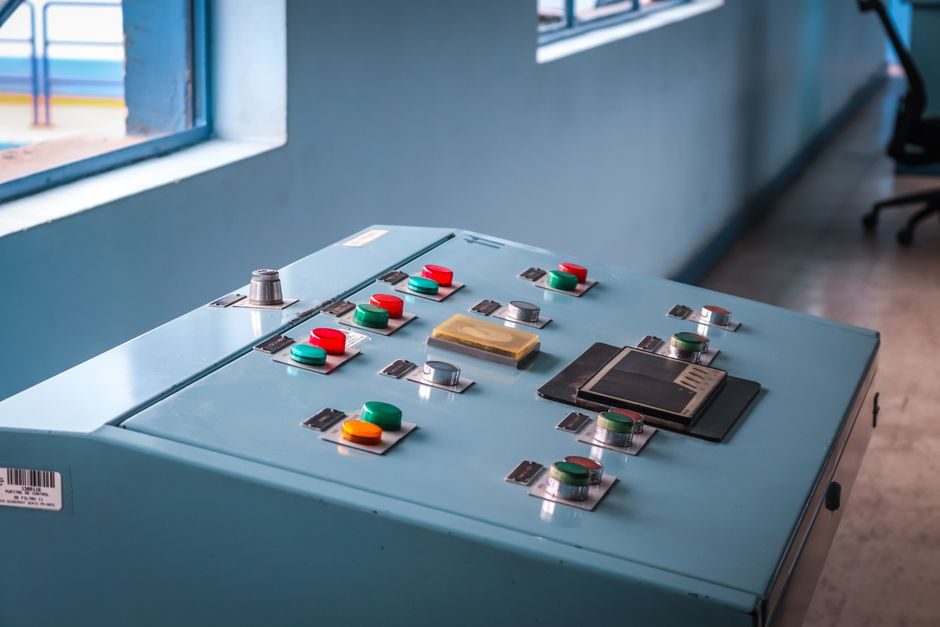
Closed-loop servo drives listed on Made-in-China.com in late June 2026 span US$ 87–2,745 per piece at MOQ 1, a roughly 31× spread that reflects allocation-driven discounting on commodity inverters and scarcity premiums on legacy Japanese SKUs [S1].
Buyers sourcing from the same channel in the same week will see 220 V/5.5 kW LS680-class units advertised at US$ 260 per piece, while a single Yaskawa SGD-02as module lists US$ 300–500 and a Fanuc equivalent sits at US$ 2,745 per piece [S1]. That spread is structural: allocation, not raw cost, is moving the long-tail of the market.
Where the shortage is biting: legacy MR-J4, Sigma-7, and ASD-A2
Mitsubishi MR-J4-350A high-performance AC servo drive listings and the MR-J4W3-444B multi-axis variant remain active on Made-in-China.com at the 2026-06-02 snapshot, signalling that even the prior generation (J4) is still being traded as factory-new rather than superseded by the J5 [S1]. When a generation stays in the catalogue two refreshes after launch, the typical cause is allocation on the newer line, not customer inertia.
Yaskawa SGD7S models — 1R6A10A002, 2R8A00A002, 2R8A10A002, and 5R5A00A002 — are listed as new-original SKUs, while the older SGD-02as is still being quoted at US$ 300–500 [S1]. Delta ASD-A2-3043-M and ASD-A2-0721-M (750 W) sit in the same channel, the former as new-original, the latter explicitly tagged as used/refurbished industrial motion-control stock [S1]. The mixed new/used presentation across brands is the cleanest signal that supply is not flowing uniformly.
Schneider Lexium 23 (LXM23DU10M3X) single-phase 200–255 V 1 kW drives and Lexium 05 (LXM05AD22N4) units also remain in stock at the same date [S1]. GSK GS3000Y-NP2 380 V controllers and B&R X20 PLC bundles shipping with EtherCAT + Modbus servo-drive interfaces round out the active SKU list [S1].
Spot price tiers and what they actually mean
Tier 1 — Japanese legacy, allocation-driven: Fanuc servo drive at US$ 2,745 per piece, MOQ 1 [S1]. No discount at volume, no substitute cross-reference, and the price is the floor only because the seller chose to list it; the spread to the LS680 5.5 kW at US$ 260 is the order-of-magnitude of the scarcity premium [S1].
Tier 2 — Mainstream Chinese-built 220 V drives: LS680 5.5 kW closed-loop at US$ 260 per piece, MOQ 1, with switch-mode PWM carrier and vector-control transducer architecture [S1]. These compete on availability, not on firmware feature parity with MR-J5 or Sigma-7.
Tier 3 — Entry-level inverter/servo hybrids: VTS300 5.5 kW V/F vector torque control with encoder feedback at US$ 87–899 per piece, MOQ 1 [S1]. The 10× intra-SKU spread (US$ 87 vs US$ 899) is unusual for a single product and points to option/encoder-package differentiation rather than to a single quantity break.
Spec gates that decide whether a substitute is acceptable
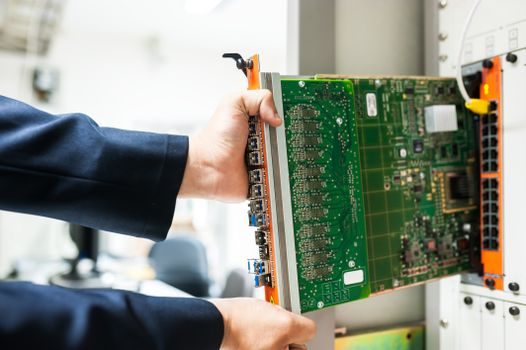
Closed-loop vs open-loop: the LS680 listing declares Structure: Closed-Loop, Signal: Continuous, Function: Automatic Control + Protection + Monitoring + Measurement, with non-linear mathematical model [S1]. A buyer cross-referencing against a servo motor must verify the drive accepts the same encoder protocol (incremental vs absolute, BISS/EnDat/Tamagawa) — the spec sheet confirms only the control topology, not the encoder interface.
Power-supply architecture: drives powered from a switching power supply rail on a single-phase 200–255 V input (Lexium 23) are not a drop-in for a 380 V three-phase GSK GS3000Y-NP2 line [S1]. The voltage class is a hard gate, not a soft preference, and a mismatched supply will either trip the input rectifier or fail to spin the motor at nameplate torque.
Control interface: the B&R X20 PLC bundle in the same listing ships with EtherCAT + Modbus on the drive side [S1]. A buyer with a PROFIBUS or PROFINET master should not assume fall-back compatibility — EtherCAT deterministic cycle and PROFIBUS DP cycle are not interchangeable on the same firmware image.
Who the shortage hits, and who is largely unaffected
FOR: plants still running MR-J4, Sigma-7 (SGD7S), or Fanuc αi-series servos, where a single controller failure can idle a CNC cell. The MR-J4-350A and SGD7S 5R5A SKUs both show active new-original listings in late June 2026 [S1], but the absence of deep volume discounts at MOQ 1 is the diagnostic — allocation is being managed by price floor, not allocation queue.
NOT FOR: new greenfield lines built around Chinese-built LS680, VTS300, or GSK GS3000Y platforms. These SKUs are not allocation-rationed in the source data; the issue for these buyers is firmware maturity and spare-parts continuity five years out, not procurement in 2026 [S1].
Partially affected: integrators standardising on Delta ASD-A2 — the new-original ASD-A2-3043-M and used ASD-A2-0721-M coexist in the same channel, which lets a buyer bridge a 4–8 week gap with a refurb at a known cost, then swap to a new unit when allocation clears [S1].
Risk-control moves buyers are making in 2026

1) Dual-source at the platform level, not the model level. Pairing a Yaskawa SGD7S primary with a Delta ASD-A2 secondary on the same EtherCAT master is a cheaper insurance policy than holding two Sigma-7 generations on the shelf, because the firmware, encoder, and servo drive parameter map differ across generations but are consistent within them [S1].
2) Accept refurbished MR-J4 / ASD-A2 as bridge stock, not as long-term fit. The Made-in-China.com channel surfaces them explicitly tagged as used, with a price that is 30–50% of the new-original listing [S1]. That spread funds a planned 12–24 month migration rather than an emergency stop-gap.
3) Treat the DC power supply and bus architecture as part of the allocation risk. A 380 V three-phase spindle line cannot be rerouted to a 220 V single-phase Lexium 23 without rewiring the panel; planning the upgrade around a switching power supply topology decision is cheaper than discovering it during commissioning.
Standards and sourcing-trace anchors
Texas Instruments publishes the TIDM-SERVODRIVE reference design (industrial servo driver and AC inverter driver reference) for engineers validating a servo platform against a known TI BOM [S2]. Sourcing-trace platforms — Made-in-China.com new-products index and Alibaba's servo-drives supplier directory — both still index MR-J4, SGD7S, ASD-A2, Lexium 23, and LS680 in the same week of 2026, which is the cleanest cross-check that the shortage is supply-rather-than-channel [S1][S3].
Watch for a second-half 2026 refresh of MR-J4 and Sigma-7 listings on these channels: a price drop at MOQ 1 on a legacy Japanese SKU is the earliest readable signal that allocation has cleared, because distributors will not cut a constrained line voluntarily. Until that print, treat the US$ 2,745 Fanuc quote and the US$ 260 LS680 quote as the working band for any industrial UPS-backed cell that cannot tolerate a controller swap.
Trackable signals: (a) MR-J4-350A MOQ-1 price drift on Made-in-China.com, (b) reappearance of Sigma-7 SGD7S SKUs at MOQ ≥ 10 with quantity discounts, (c) any new-original listing for an MR-J5 or Sigma-8 platform that would imply upstream supply has finally reached the open market. A similar sourcing-reality lens on capital-equipment allocation is visible in the wind turbine quality-standards map — when a generation stays in catalogue past its successor's launch, the bottleneck is upstream, not demand.