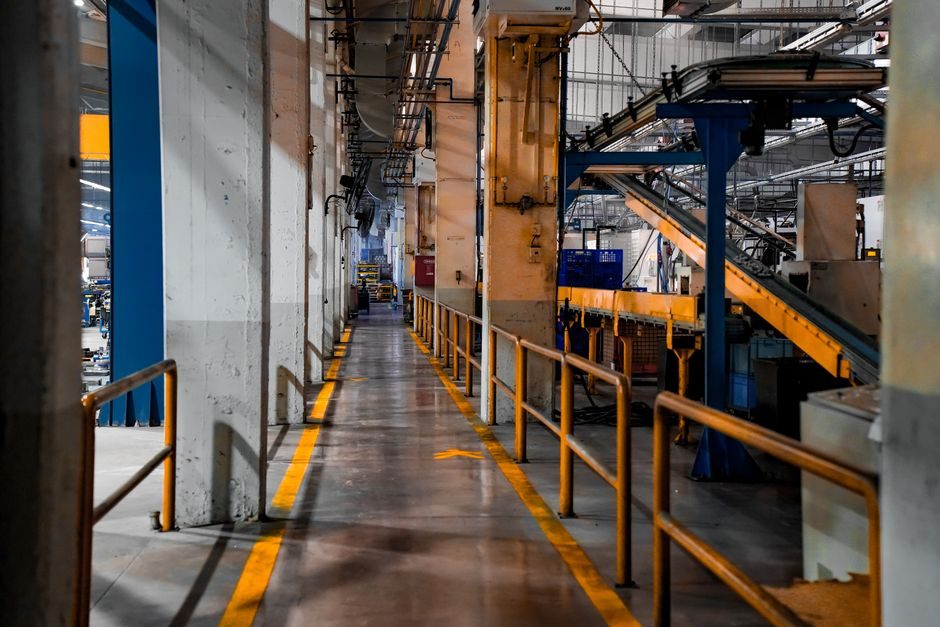
Servo drives from major OEMs cover 30 W to 55 kW in two voltage families, with single-phase 200–230 VAC units up to 1.5 kW and three-phase 400 VAC units from 450 W to 55 kW, per the Yaskawa Sigma-II datasheet [S3].
Upstream, the servo drive depends on rare-earth permanent magnets, incremental/absolute encoders, IGBT power stages, and DSP/FPGA control silicon; downstream, the same drive family feeds articulated robots, CNC spindles, semiconductor handlers, packaging lines, AGVs/AMRs, and hazardous-area drilling motors such as the Moog G495L [S9].
Upstream component stack: magnetics, power semiconductors, and feedback devices
The upstream bill of materials for a digital servo amplifier is dominated by four sub-categories: Neodymium-Iron-Boron (NdFeB) magnets or samarium-cobalt segments in the rotor, IGBT or SiC power modules in the inverter bridge, serial-encoder feedback devices, and DSP/FPGA control silicon that runs the current, velocity and position loops [S3][S9].
The Yaskawa Sigma-II SGDH series uses single-phase full-wave rectification, IGBT/PWM sine-wave current drive, and serial encoder feedback (incremental or absolute), with continuous output current ratings from 0.44 Arms at 30 W to 11.6 Arms at 1.5 kW single-phase, and 0.91 Arms to higher values across the three-phase 400 V range [S3]. The same source documents peak torque up to 300 % of nominal for 3 seconds and online autotuning across 10 rigidity levels, both of which place hard performance demands on the upstream magnetic and encoder chain [S3].
For hazardous-area oilfield servos such as the Moog G495L, the bill of materials extends into stainless or coated housings, pressure-balanced cable entries, and explosion-protection certification, all of which raise the upstream content per kilowatt well above a general-purpose factory-floor drive [S9]. Procurement teams evaluating servo motor magnet supply should treat NdFeB grade selection, temperature coefficient, and encoder resolution as a single coupled spec set, not independent line items.
Drive-platform landscape: Sigma-7, Omron G5, and Delta ASDA-A3 compared
The mainstream AC servo drive market in 2026 is anchored by three platforms with distinct positioning: Yaskawa Sigma-7, Omron G5 (R88D-KT), and Delta ASDA-A3. [S5]
Yaskawa Sigma-7 codes per-axis capacity using the 3rd digit — 1R6 = 200 W, 2R8 = 400 W, 5R5 = 750 W, 7R6 = 1.0 kW on three-phase 200 V — with a separate modelcode for higher-power axes and an HWBB (Hardware Base Block) function option for functional-safety architectures [S10]. The Omron G5 datasheet shows that drives at R88D-KT20 and smaller are UL-Listed while R88D-KT30 and larger are UL-Recognized, a distinction that matters when an OEM is building a UL-listed control panel versus a recognized-component sub-assembly [S4]. Delta's ASDA-A3 is positioned as an advanced general-purpose drive and is one of the families Delta publicly lists under its AC Servo Motors and Drives product group on the corporate site [S5][S8].
For selection, the cross-platform decision criteria most often used by control engineers are: (1) power range and voltage family, (2) feedback type and resolution, (3) supported fieldbus / EtherCAT cycle, and (4) safety architecture (STO, SS1, HWBB). On those criteria, Sigma-7 leads on power headroom and safety-option depth, Omron G5 on PLC-integrated commissioning via Sysmac Studio tooling, and Delta ASDA-A3 on cost-per-kilowatt for high-volume Asian machine-builder accounts [S5][S8][S10].
Downstream end-uses: robotics, CNC, packaging, and oilfield motion control
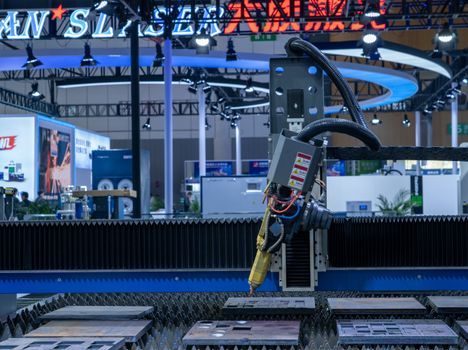
Celera Motion's technical brief on servo drives for industrial robotics states that multi-axis robotic systems require tight integration and optimised heat dissipation, with ultra-precise servo drives delivering high performance and efficiency while limiting energy loss through heat [S6]. That requirement directly drives the encoder resolution, bus cycle time, and thermal interface choices made upstream.
CNC machine tools, semiconductor wafer handlers, and electronic-assembly pick-and-place platforms are the densest downstream clusters for the sub-1.5 kW class represented by the SGMAH and SGMPH motor families paired with the SGDH-A3 through SGDH-08 drives [S3]. Packaging machinery, converting lines, and metal-forming presses typically sit in the 750 W to 7.5 kW band where the SGMSH and SGMGH motor families are specified, with servo motors rated at 2.84 Nm to 95.4 Nm at 1500 min⁻¹ or 3.18 Nm to 15.8 Nm at 3000 min⁻¹ [S3].
Outside the factory floor, Moog's G495L dynamic brushless servo motors target managed-pressure drilling (MPD) on land rigs and offshore platforms, where hazardous-area certification and continuous-duty torque under shock loading are the gating specs — a downstream niche that consumes far fewer units than robotics but at a much higher average selling price per axis [S9]. Procurement teams mapping warehouse-automation demand should align this drive taxonomy with the warehouse robotics sourcing map, where multi-axis servo stacks reappear as the actuation layer beneath every AMR and ASRS shuttle.
Stepper, VFD, and adjacent drive technologies: where servo does and does not win
Servo, stepper drive, and VFD architectures are not interchangeable; each has a load envelope where it wins on cost per axis. The historical VIX microstepping drive from COMPUMOTOR, for example, was packaged at 4.9 × 1.65 × 3.35 in and delivered up to 8 A RMS continuous output across 200 to 51 200 steps/rev at 24 to 80 V, which is a fundamentally different operating point from a 400 V three-phase 15 kW Sigma-7 axis [S2].
At the hobby/educational end of the spectrum, the Hitec HS-422 hobby servo lists 4.8–6 V operation, 60° in 0.21 s at 4.8 V, and 3.3 kg·cm stall torque at 4.8 V — orders of magnitude below industrial drives and useful only as a baseline for what "servo" means outside the factory [S7].
The practical rule process engineers apply: closed-loop servos for any axis needing dynamic response, sub-millimetre repeatability, or torque beyond a few N·m; steppers for low-speed, open-loop, hold-position duty; and VFDs for variable-speed AC induction loads where rotor position feedback is not required. The Sigma-7 datasheet's HWBB option is the dividing line for safety-rated servos used in collaborative-robot and press-brake guarding [S10].
Selection criteria, sourcing signals, and supply-chain constraints

The most common engineering gates on a 2026 servo-drive purchase are: (1) input-voltage family and UL/CE/KC marking, (2) continuous and peak current with peak duration (3 s is the Sigma-II baseline [S3]), (3) feedback type and resolution, (4) supported fieldbus — MECHATROLINK-I/II, DeviceNet, PROFIBUS, EtherCAT — and (5) safety-function coverage (STO minimum, SS1 or HWBB for press and robot cells).
Upstream supply signals worth tracking through the rest of 2026: NdFeB magnet pricing and export licensing, IGBT/SiC wafer allocation, and encoder-sensor lead times — all of which feed directly into servo drive cost-per-amp. Downstream, the verifiable next nodes are new Sigma-7W/-7C variants under the HWBB option manual SIEP S800001 72 [S10] and ongoing ASDA-W3 / ASDA-A3 stock rotation through Delta's authorised distributor channel [S8].
For teams who already buy motion control alongside electrical safety tooling, the insulated tools installation spec gates checklist and the anti-static equipment TCO breakdown offer adjacent reading on the same factory-floor risk envelope.