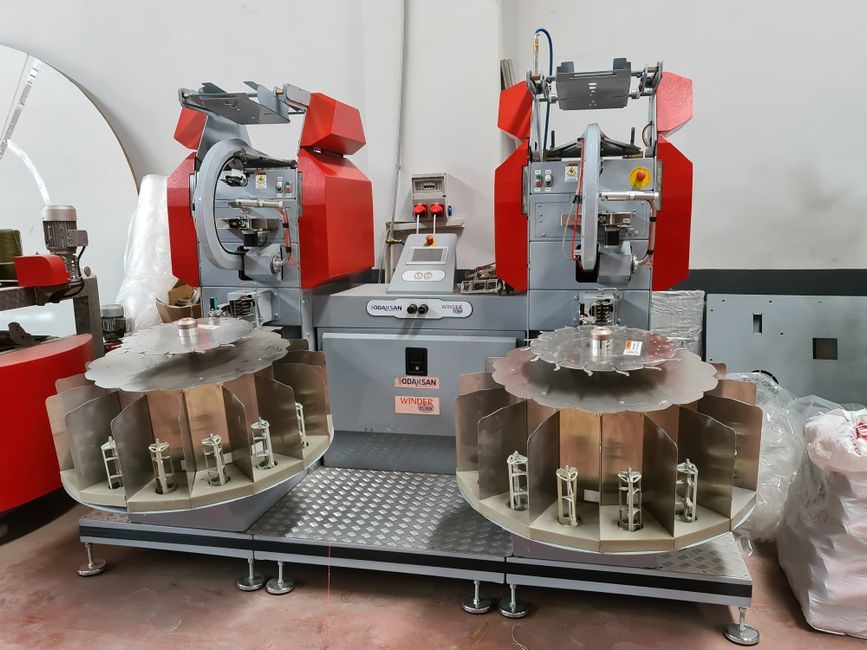
New shell core shooter quotes in 2026 cluster in two distinct bands: entry-level pneumatic bench units from Indian and Chinese OEMs start around ₹50,000 per piece (≈$600) for 5–10 kg shot weight [S6], while mid-to-large foundry-class machines with 25–100 kg shoot capacity and integrated sand-bin heating run ₹1,200,000–₹3,500,000 (≈$14,500–$42,000) depending on platen size, cure station, and automation package [S6].
The spread is governed by four engineering knobs — shot weight in kilograms, platen dimensions, shell-cure heating class (electric, gas, or hot-box dual), and the level of PLC/HMI integration — not by the "core shooter" nameplate alone [S6][S7]. A buyer who locks those four numbers first can usually screen 80% of unsuitable quotes in one pass. The technology itself is straightforward: compressed air expands rapidly inside a sealed sand tank and accelerates resin-bonded sand into a heated core box, where the phenolic resin skins the sand into a hollow shell before the operator tips out a dimensionally stable core [S7].
Price Bands by Shoot Weight and Machine Class
Quote clustering on Indian B2B exchanges in mid-2026 puts small bench-type pneumatic shell core shooters (5–10 kg shot, 220 V single-phase, 50 Hz, mild-steel frame) at ₹50,000–₹120,000 per piece, with the typical entry unit weighing 700–1000 kg and supplied with a 1-year warranty [S6]. Mid-range floor-standing units in the 15–25 kg shot class move into the ₹400,000–₹900,000 band once a heated platen and sand-bin agitation are added [S6].
Heavy foundry-class units in the 40–100 kg shoot class, frequently built to a horizontal-parting layout and integrated with a through-feed cure oven, sit in the ₹1,500,000–₹3,500,000 bracket and are typically quoted against multi-piece export orders rather than per-piece retail [S6]. Custom-engineered shell core machines with servo-actuated sand compaction, robotic core handling, and full Allen-Bradley or Siemens PLC cabinets break the ₹5,000,000 line and are usually PO'd against an RFQ pack [S6].
The Four Cost Levers That Move a Quote
Shot-weight capacity is the single largest price driver: every additional 10 kg of usable shot volume usually adds 30–50% to the base price, because the sand tank, platen, and clamping force all scale together [S6]. Platen size is a close second — foundries producing engine-block water-jacket cores or differential housings routinely spec platens above 700 mm × 700 mm, and that step alone can double the structural fabrication cost.
Heating class matters as much as shot weight on this list of equipment. A bare electric platen rated to 250 °C is the cheapest configuration; gas-fired cure stations that hold ±5 °C uniformity across a 100 kg core push the quote into the upper band because the burner train, exhaust duct, and safety interlocks are all additional line items [S7]. Automation level rounds out the four: a hand-loaded machine with a push-button cycle is the entry SKU, while a servo-indexed unit with HMI recipe storage and fault diagnostics is the value-add that foundries running three-shift production will pay for. The underlying working principle — compressed air injecting resin-coated sand into a heated corebox — is shared across all four cost tiers, and is documented in Chinese foundry-engineering references as the standard shooting-type (shoot-and-squeeze) layout [S7].
Shell Core vs Hot Box vs Cold Box: A Cost-and-Fit Comparison
Shell core shooters occupy a specific cell in the foundry-core cost matrix. Against the hot-box variant, the shell process trades faster cycle time (typically 15–30 s vs 40–90 s for hot box) for higher per-core resin consumption and a higher tool-heat bill; the cost crossover usually lands at foundries running above ~150 cores per shift where the cycle-time saving offsets the energy overhead. [S1]
Versus the cold-box amine-cured process, shell core shooters win on core storage simplicity (phenolic-bonded shells are stable at ambient for days) but lose on tooling cost — shell process tooling must be hardened tool steel rated for 250 °C+ continuous service, where cold-box tooling is typically aluminium or epoxy-faced cast iron [S7]. For a foundry that already runs a hot-box line, adding a shell core shooter is usually justified only when the part geometry has deep draws or thin trailing walls that hot-box sand struggles to pack. Buyers weighing the three should anchor the decision on three criteria: resin cost per kilogram of finished core, tooling refurbishment interval, and cure-station energy draw per core — not on headline machine price.
Where Indian OEMs Sit vs Imported Lines
Indian suppliers — clustered in Kolhapur, Belgaum, Coimbatore, and Rajkot — dominate the ₹50,000–₹900,000 bracket and ship the bulk of small and mid-sized pneumatic shell core shooters to Southeast Asian and African foundries [S6]. Lead times in this tier are typically 4–8 weeks ex-works, and 90-day payment terms on letter of credit are common.
European (German and Italian) and Japanese (Sinto, ACME) lines hold the ₹3,500,000+ band and differentiate on shot-weight repeatability (±0.5% vs the typical ±2% on Indian pneumatic units), PLC recipe memory, and CE / ATEX / UL-certified electrical cabinets [S6]. Foundries producing safety-critical castings — hydraulic valve bodies, brake components, compressor housings — typically pay the 2–4× premium for the imported line because the documentation pack and the process-window data shorten PPAP and customer audit cycles. Chinese OEM lines have moved aggressively into the mid-band since 2023 and now sit between the two: comparable shot weight to Indian units but with Japanese-style PLCs as standard. For a hands-on read of how a similar decision matrix plays out on an adjacent machine class, the hot box core shooter 2026 buying guide walks the same spec-gates approach against a different cure process.
Hidden Cost Items That Inflated Quotes in 2025–2026
Three line items routinely catch first-time buyers out. First, the corebox (tooling) is almost never included in the machine price — a hardened steel shell-process corebox for a 20 kg core routinely costs ₹150,000–₹600,000 and has an 8–14 week lead time of its own, so the effective cost of going into production is closer to 1.5× the headline machine quote. [S2]
Second, compressed-air demand scales non-linearly with shot weight: a 50 kg shell machine typically needs a 2,000–3,000 cfm receiver tank and a 100 hp+ compressor package, and that auxiliary is rarely called out in the per-piece price [S6]. Third, gas-fired cure stations require a regulated gas train (regulator, flash-back arrestor, solenoid bank, and exhaust duct) that adds ₹200,000–₹500,000 to a mid-band quote and is the single most common reason a "good price" turns into a stalled commissioning. Buyers who spec these three adders into the RFQ up front typically shave 10–15% off the final PO versus buyers who treat the machine price as the project cost.
What to Lock in the RFQ — and What to Leave Open
Lock four numbers in writing before the first quote goes out: (1) maximum shot weight in kg, (2) platen size in mm with a tolerance band, (3) cure temperature class (electric / gas / dual) with the set-point accuracy you need, and (4) cycle-time target at full shot weight. These four decide roughly 70% of the price spread between competing quotes and are the items a foundry engineer can defend in front of procurement [S6].
Leave open for negotiation: PLC brand (Siemens vs Allen-Bladley vs Mitsubishi), sand-bin capacity above the minimum, and any automation above hand-load / hand-unload. Those three are the dealer's margin, and pushing on them rarely moves the headline price by more than 5–8% — but it can drag out delivery by 3–4 weeks if the dealer has to source a non-standard cabinet. For buyers cross-shopping the shell core machine category against a shell molding machine line, the same four-number RFQ discipline applies, and the cure-station adder is the line item most often miscounted. Foundries that write the RFQ this way typically receive three comparable quotes within ten working days and close PO inside 30; foundries that send a one-line "shell core shooter price" inquiry usually get a price spread of 5× or more back.
Verifiable Next Signals to Watch
Buyers with a fixed start-up date should write delivery penalties for ≥2 weeks of slippage into the PO; without that clause, the small-tier market has no commercial reason to prioritise one order over another. [S3]