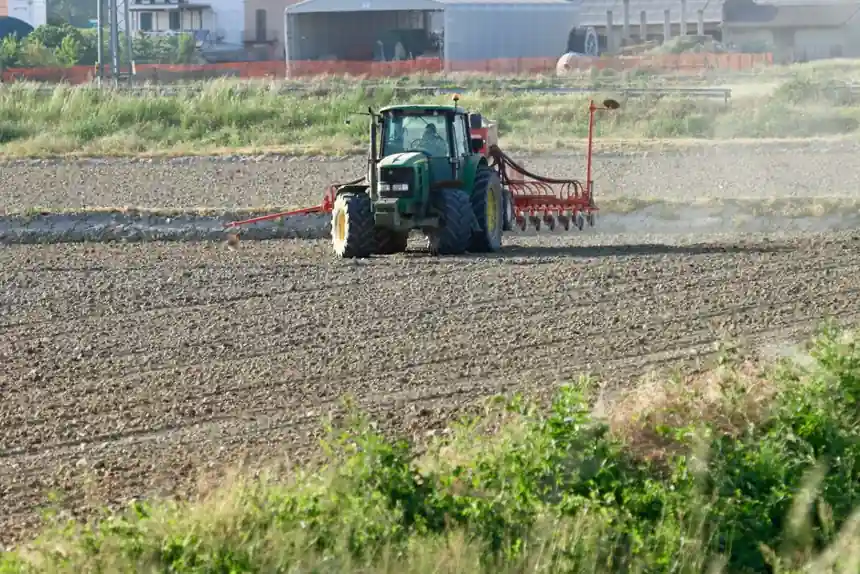
Agriculture-machinery castings (gear housings, hub carriers, plough shares, pump bodies, PTO yokes) cluster in the 5–20 kg core weight band, which maps directly onto the horizontal or roll-over shell core shooter class running 4–6 bar blow pressure on 440 V 3-phase supply [S2].
Foundries supplying tractors, combine harvesters, and tillage implements are scaling horizontal shell core shooter fleets because the cycle-time and tool-clamp force required for thick-wall agricultural castings differ from the thinner-wall, cosmetic-surface parts typical of pump-and-valve work [S3].
Core weight, blow pressure and platen size for farm-machinery castings
Agriculture-machinery cores from gear blanks to hydraulic-valve bodies sit in the 5–20 kg shot-weight window, the band where the bulk of 2026-vintage shell core shooter models are configured [S2]. Within that band, platen sizes of 500×600 mm to 600×600 mm cover most single-cavity farm-machinery cores; high-volume ductile-iron gear-housing programs typically run horizontal shooters with 600×600 mm platens, with a parallel 500×600 mm unit for shorter cores [S3]. Blow pressure on this class sits at 4 bar for lighter cores up to 10 kg, climbing to 5–6 bar for the 10–20 kg range to keep shooting density and shell thickness inside process windows [S2]. The shell core shooter class is the right framing reference when comparing these machines against cold-box or hot-box alternatives for the same part mix.
Horizontal, vertical, and roll-over mounting: which fits which farm part
Horizontal core box mounting dominates the 5–20 kg agricultural casting class, because it lets the sand shoot along the parting line and keeps thick-wall sections fully compacted against gravity; it is the configuration INMASA specified when modernising their cast-iron line that includes agricultural parts [S1]. Vertical mounting is reserved for symmetric, shorter cores where straight-down sand flow avoids sidewall bridging, and is typically deployed as a small sub-fleet (2 units in the case of one 2026-vintage facility) rather than as a workhorse line [S3]. Roll-over machines, configured at 10–20 kg core weight, 6 bar blow pressure, and electric core-box heating, are the third option when a complex multi-section core has to be cured in one shot and inverted for ejection without distortion [S2]. For foundries running the shell molding machine workflow end-to-end, the roll-over option typically pairs with a dumpbox or fuser downstream to keep mould and core handling in sync.
Heating, controls, and energy profile

Electric core-box heating with digital temperature control is now standard on the 2026 class of agriculture-machinery shell core shooters, and is delivered on 440 V 3-phase supply at the machine terminals [S2]. Higher-end units add a sand-level sensor, individual temperature controllers for each core-box half, and a SCADA / Industry 4.0 link so that cure time, blow profile, and tool wear can be trended part-by-part [S2]. PLC-based control with Mitsubishi systems is the most common platform in the 5–20 kg class, and the same platform is also the reference architecture for cold-box and hot-box fleets housed in the same foundry, which simplifies spares and operator training [S2]. For more on the wider machine class and how it sits inside construction machinery and equipment supply chains, the cross-industry spec map is a useful frame.
Selection criteria for agriculture foundries
The first cut is shot weight: cores under 10 kg from thin-wall pump bodies and gearbox covers can run on a 4 bar / 5–10 kg horizontal unit, while thicker gear-housing and axle-bearing cores above 10 kg need 5–6 bar and a 10–20 kg shooting-capacity head [S2]. The second cut is mounting geometry: horizontal for long parts, vertical for symmetric short cores, roll-over for complex multi-section cores that must cure in a single shot [S2][S3]. The third cut is automation depth: foundries producing over a few hundred cores per shift should specify PLC control with sand-level sensing, individual zone temperature control, and a SCADA link; lower-volume job shops can accept a simpler fully-automatic PLC unit without SCADA [S2]. A useful cross-check is the shell core machine reference, which covers how the same selection logic plays out for thin-wall pump and valve cores that sometimes ship into agricultural hydraulic systems.
Comparison: horizontal vs vertical vs roll-over for 5–20 kg farm parts
On four decision criteria, the three configurations line up as follows for the 5–20 kg agriculture core range. Shot weight: horizontal 5–20 kg, vertical typically up to ~10–15 kg depending on platen, roll-over 10–20 kg [S2][S3]. Blow pressure: horizontal 4–6 bar, vertical similar, roll-over 6 bar [S2]. Platen / core-box size: horizontal up to 600×600 mm, vertical around 500×500 mm, roll-over sized to the core envelope [S3]. Best-fit part: horizontal for general farm castings, vertical for symmetric short cores, roll-over for complex multi-section cores requiring single-shot cure and inversion [S2][S3]. For foundries running a mixed book of thin-wall hydraulic and thick-wall gear-housing cores, the core machine reference class is worth reading alongside the shell-specific data.
Limits, failure modes, and what to watch on the shop floor
Blow pressure under 4 bar on a 10–20 kg shot leaves the sand mix under-compacted and produces low green-strength cores that distort during handling; the 2026 specification floor for the heavier class is therefore 5–6 bar [S2]. Over-pressurising above 6 bar risks core-box wear and tool deflection on long thin-wall sections, especially on horizontal machines with a cantilevered box, so the upper clamp is the tool-design limit, not the compressor limit [S2]. Vertical shooters at 500×500 mm are easily overloaded by long gear-housing cores that exceed the platen depth, so core envelope must be measured against platen before the machine is shortlisted [S3]. Roll-over machines add a moving mass on every cycle and need a robust pit foundation and guarding; foundries retrofitting a roll-over into an old pit have to re-check floor loading [S2]. Cold-box amine gas and shell-process resin fumes are both subject to local ventilation rules, and any retrofit that adds horizontal shell core shooter capacity inside a building without a scrubber typically fails the permitting step.
Standards, sourcing, and supplier landscape
Quality systems expected by European agriculture OEMs typically run to ISO 9001, and the INMASA case study explicitly cites this certification as a procurement pre-condition when they replaced an obsolete core shooter with a new horizontal unit [S1]. Indian suppliers, who supply a large share of the global agriculture castings trade, are also organised around ISO 9001 quality systems and tend to publish platen size, core weight, blow pressure, and PLC platform as the headline specs rather than cycle-time and energy-per-shot [S3][S4]. A practical sourcing rule: ask for a 600×600 mm or 500×600 mm platen horizontal unit with 4–6 bar blow pressure, 440 V 3-phase supply, electric core-box heating with individual zone control, PLC + SCADA option, and a published shot-weight window of 5–20 kg, then validate against a sample of production cores before sign-off [S2][S3].
Trackable signals to watch next: any 2026-vintage tender from a European tractor OEM that bundles a horizontal shell core shooter line with a SCADA upgrade, and any hot-box core shooter retrofit announcement from an Indian foundry converting thin-wall valve cores into a shell process. Foundries looking for cross-industry sizing logic on similar shot-weight classes can also benchmark against the aerospace shell core shooter sizing spec map and the shell core shooter spec map for automotive parts, both of which use the same 5–20 kg horizontal-and-roll-over envelope discussed above.