
Industrial shock absorbers are sized to convert a moving load's kinetic energy into heat within one controlled stroke, with selection driven by effective mass, impact velocity, propelling force, cycle rate and the permissible reaction force on the machine frame [S7].
For a horizontal stop on a pneumatic or electric axis, the energy per cycle equals ½·m·v², and the chosen absorber must dissipate that energy stroke-by-stroke without bottoming out [S7]. Enidine (Orchard Park, NY) lists separate Adjustable, Non-Adjustable, Large Bore and Rate Control families, while SMC's selector surfaces the RB (standard), RJ (soft), RBL (coolant-resistant) and RBQ (short-stroke) pneumatic families as the four core series for cylinder-driven applications [S1][S2].
Step 1: Define Mass, Velocity, Propelling Force and Cycle Count
The first numeric gate is the kinetic energy per cycle, E = ½·m·v², computed from the moving mass m (kg) and impact velocity v (m/s) at the moment the absorber is engaged [S7]. For a 50 kg transfer load driven to 1 m/s that is 25 J per cycle, and the required absorber must be rated at or above E / η once efficiency is applied [S7].
Cycle rate, expressed in cycles/hour or cycles/minute, is the second gate: hydraulic units generate heat proportional to E·cycles, and an oil-reservoir unit that handles 25 J once per minute will cook its seal pack if re-rated to ten cycles per second without derating [S6][S7]. RoyMech's design notes flag that the propelling force (the cylinder thrust, spring preload, or gravity component) also determines whether self-compensating (adjustable) units are mandatory, because fixed-orifice non-adjustable types only behave correctly near their design point [S7].
Reaction force transmitted back to the frame is the third gate, and SMC's SAMSS selector treats permissible reaction force F_R as an explicit input alongside mass, velocity, stroke and cycle count [S2]. Engineers who skip this input typically size by energy alone and discover too late that a correctly rated absorber is mechanically destroying the structure it is bolted to [S2][S7].
Step 2: Pick a Family — Hydraulic Adjustable, Non-Adjustable, Gas-Spring or Elastomeric
Hydraulic adjustable shock absorbers are the default for high-cycle, repeatable industrial automation because an adjustable needle valve lets the same unit be tuned in-situ to match real mass and velocity, a critical feature when the line is producing multiple SKUs on one conveyor [S1][S2]. Enidine groups these under Adjustable Shock Absorbers, and SMC codes the standard pneumatic-family equivalent as the RB series [S1][S2].
Non-adjustable units are cheaper, sealed, and tuned at the factory to a specific E and v; SMC's RBQ short-stroke, RBL coolant-resistant, and RJ soft variants all sit in this category and are specified where the duty cycle is fixed and the absorber is treated as a consumable [S2]. Large Bore Shock Absorbers (Enidine) and Enidine's WEAR / viscous-damper lines handle the heavy end: rolling-mill stops, steel-conveyor transfer cars, amusement-ride braking and nuclear seismic restraints, with absorber bores commonly in the 50–200 mm range and per-cycle energies in the kilojoule class [S1].
Gas-spring (nitrogen-over-oil) and elastomeric products serve different physics: a gas spring stores energy and re-extends the load, while an elastomeric pad or wire-rope isolator (Enidine Compact Wire Rope, Wire Rope, Circular Wire Rope families) trades stroke for high-frequency vibration isolation, not impact absorption [S1]. On a rotary-hinge seat recline or eVTOL rotor mount, the engineering intent is vibration attenuation across 5–500 Hz, not stopping a 1 m/s linear mass — confusing the two produces grossly oversized hardware [S1].
Step 3: Validate With Vendor Software and Match the Catalog Code

SMC's SAMSS model-selection software is the public reference for pneumatic-axis sizing: the user enters mass, velocity, stroke, cycles/hour and allowable reaction force, and the tool returns a specific RB, RJ, RBL or RBQ catalog code plus a tuning-screw starting position [S2]. The 25A-RB and 25A-RJ series are listed as the secondary-battery-compatible soft and standard variants for cleanroom and Li-ion cell handling lines where contamination and outgassing are controlled [S2].
Enidine's Enisize tool performs the same function for the wider Enidine catalog, including Large Bore, Rate Controls and the aviation/rail specialty lines, and is downloadable from the manufacturer's resource library rather than the public web [S1]. For MATLAB/Simulink users, the Shock Absorber block parameterizes the same physics as a spring k, damper b, Coulomb friction F_c and a hard-stop in parallel, and is the right place to validate the absorber model before committing to a catalog code [S6].
Cross-checking in two tools is the cheap way to catch a 30% undersize; the more common failure is over-sizing on energy and under-sizing on cycle rate, where the catalog code passes the E-check but the seal pack fails in 200 hours [S1][S6]. For machine frames referenced in industrial motion-control systems, pair the absorber selection with a quick review of the linear guide life calculation, because a hard stop on a 25 J cycle also loads the carriage and rail with a peak force set by the absorber's deceleration profile [S7].
Step 4: Duty Environment, Compliance and Failure Modes
Coolant, wash-down, food-grade and outdoor environments change the catalog code before the dimensions do: SMC's RBL series is built for coolant exposure, while stainless and sealed units are mandatory for pharmaceutical, semiconductor and white-goods assembly lines where hydraulic oil leakage would fail a quality audit [S2]. Temperature also matters: standard mineral-oil hydraulics thin above roughly 60 °C, and the catalog has to be re-validated for foundry, paint-shop or under-hood automotive cells where ambient regularly exceeds that ceiling [S7].
Common failure modes to design against are rod-seal blow-by (over-temperature, contamination), bottoming-out (undersized stroke, viscosity drop), tuning drift (vibration loosening the needle valve) and side-load wear (misaligned mount) [S6][S7]. For nuclear, refinery and bridge-infrastructure applications, Enidine groups the qualification under Viscous Dampers and WEAR Restraints, and the engineering case studies on the Enidine site cover bridge seismic dampers and howitzer recoil systems with documented qualification histories [S1].
Shock absorbers should be distinguished from motion-control components that share vocabulary. A shock absorber dissipates energy; a crossed-roller guide positions a carriage; a pressure transmitter only sees the hydraulic pressure if the absorber is instrumented for condition monitoring. Mixing those roles in a spec sheet is a common procurement error on turnkey automation lines [S1][S7].
Step 5: Use Cases and Sourcing Tiers
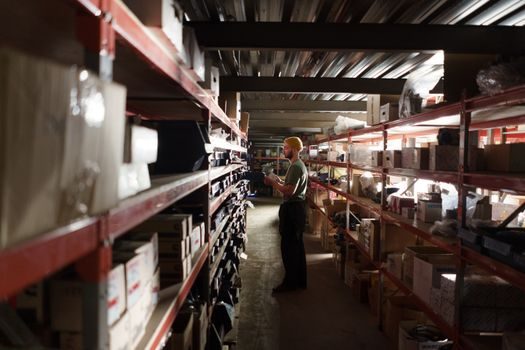
Automotive welding robots, AS/RS transfer cars, PET blow-molding carriages and turn-table stations are the four canonical high-cycle applications where Enidine's Adjustable and Large Bore families dominate the OEM bill of materials, and where 5–10 million cycles between overhauls is the realistic target with proper lubrication and alignment [S1]. In civil aviation, eVTOL rotorcraft and rail, the same vendor's Wire Rope Isolators, HCL Bearings and Hydraulic Control Dampers cover vibration isolation across 5–500 Hz, which is a different duty profile from a linear-impact stop [S1].
Sourcing breaks into three tiers: tier-one Western/Japanese OEMs (Enidine, ITT, SMC, Parker) with full engineering documentation and sizing software; tier-two regional automation brands (Panasonic Industrial's multifunctional shock absorber line, plus Korean and Taiwanese pneumatic vendors) for cost-down on volume builds; and tier-three Chinese-volume manufacturers such as Zhejiang Wenda Shock Absorber Co. (Ruian, founded 1996, account registered on made-in-china.com since 2009) supplying two- and four-wheeler shock absorbers rather than industrial hydraulic units [S3][S4]. Specifying a tier-three supplier for a steel-mill conveyor stop is a category error — Wenda's catalog is motorcycle-parts, not adjustable hydraulic industrial [S3].
For pneumatic pick-and-place and conveyor lines under roughly 100 J/cycle, the SMC RB/RJ/RBL/RBQ range is the lowest-friction path because the sizing tool, the global stocking distribution and the spare-parts cross-reference are all in one place [S2]. For energy work above 1 kJ/cycle, custom Enidine Large Bore or rate-control units are the standard answer and lead times of 8–14 weeks are normal even on the standard catalog [S1].
Step 6: Limits, Spec Gates and Procurement Discipline
The hard limits that gate a procurement decision are: maximum energy per cycle, maximum equivalent mass at given velocity, stroke length, maximum cycle rate at rated energy, and reaction force at full compression [S2][S7]. Any vendor datasheet that does not list all five with a defined test condition should be treated as marketing material, not a spec [S1][S2].
Side-load rating, mounting-footprint tolerance and the availability of a tuned-to-order variant (Enidine's "Rate Controls", SMC's 25A-RB for battery lines) separate a real industrial catalog from a parts-store catalog [S1][S2]. For a working engineer's map of how an industrial shock absorber fits next to driveline and motion components, the field-level reference at fluid coupling sizing and selection and the drivetrain-focused universal joint sizing and selection cover adjacent decisions on the same machine train, while the brake resistor sizing reference handles the regenerative-stop side of the same energy budget.
Trackable next signals are the public release notes of SMC's SAMSS selector and Enidine's Enisize tool, the update cadence of which is the leading indicator for new size ranges in 2026; secondary signal is the appearance of new 25A-RB/RJ secondary-battery-rated part numbers on SMC's downloads page, which is how new compliance boundaries enter the public catalog [S1][S2].