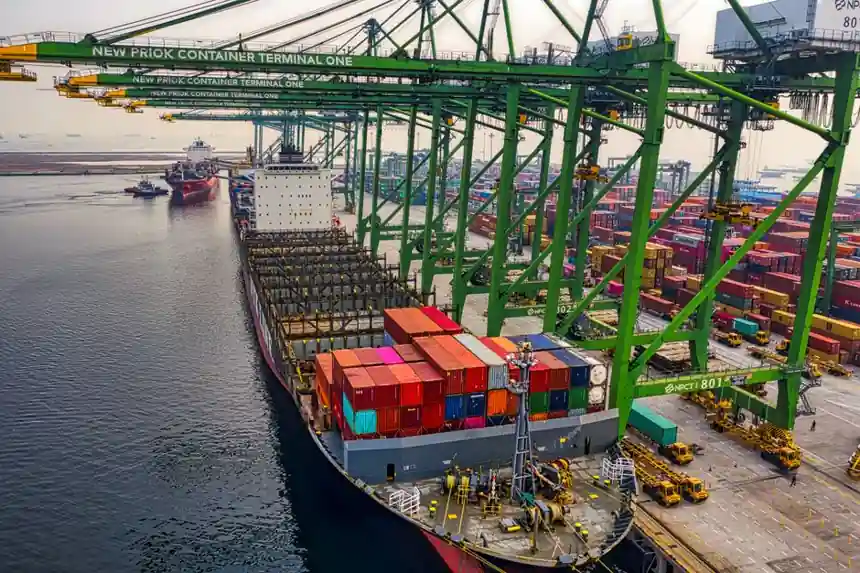
Pallet shuttle systems store chemical pallets inside deep-lane racks using autonomous, battery-powered carriers, replacing forklift drive-in loops with lane-internal horizontal motion and a lift at the rack face [S1][S2].
The geometry shifts from 2-deep drive-in bays to lanes 10-30+ pallets deep, with shuttle dwell time, charge cycle, and chemical-rated lift mechanism driving throughput more than nominal rack height [S1][S5].
Shuttle Topologies and Where Each Fits a Chemical Warehouse
Three topologies are sold for chemical pallet storage: semi-automated 2D pallet shuttles (FIFO or LIFO, single-direction), 4-way shuttles that change lanes without external lift, and full Pallet ASRS where stacker cranes interface with shuttles at every level [S1][S3][S5].
For a 10,000-pallet chemicals warehouse with mostly full-pallet outbound, a 2D FIFO shuttle plus external reach truck or stacker crane is the common baseline, with cycle times of 30-90 s per pallet move at the rack face [S1][S6]. A 4-way shuttle is justified when the building footprint is irregular, when SKUs share lanes, or when same-floor pick faces must be replenished without committing a full aisle to one SKU [S5]. Full Pallet ASRS layers stacker cranes on top of the shuttle to remove forklifts from the floor entirely, which is a fit for ATEX-classified chemical zones where spark and ignition control drives equipment choice [S2][S3].
Decision Criteria for Chemical-Service Shuttles
Specifying a shuttle for chemical shipping hinges on six criteria: pallet size and payload, lane depth, throughput in pallets per hour, rotation policy (FIFO vs LIFO), hazardous-area classification, and compatibility with existing racking or WMS [S1][S5].
Standard chemical pallets are 1200x1000 mm or 1200x800 mm, with payloads commonly 1000-1500 kg including drums and IBCs; shuttle drive and lift must be rated for the worst-case loaded pallet including shift on the forks [S1][S5]. Chemical sites with flammable vapors require ATEX or IECEx zone-rated shuttle chassis, lift motors, and battery compartments, with the shuttle supplier documenting the full equipment group and category rather than just the lift truck [S2]. FIFO is the default for expiry-sensitive intermediates and finished chemicals, which forces a single-load, single-unload lane layout; LIFO is acceptable for raw-material buffers where age is not critical [S3][S4].
Comparison: 2D Shuttle vs 4-Way Shuttle vs Pallet ASRS for Chemicals

On four decision axes the three topologies line up as follows for a typical 5,000-15,000 pallet chemicals warehouse [S1][S3][S5]:
Density: 2D shuttle and Pallet ASRS are roughly comparable at 60-80% of theoretical rack volume; 4-way shuttle typically loses 10-15% to cross-aisle access geometry but gains lane-mixing flexibility [S1][S3][S5]. Throughput: Pallet ASRS leads, then 2D shuttle paired with a stacker crane, then 4-way shuttle; the gap widens above roughly 80 pallets/h inbound plus outbound [S3][S5]. Hazardous-area fit: all three can be specified for ATEX/IECEx zones, but only a Pallet ASRS fully removes forklifts from the floor and is the practical choice for Zone 1 areas handling flammables [S2][S3].
Integration With Conveyors, WMS, and Stacker Cranes
A shuttle lane is the storage layer, not the transport layer: pallets still need a way to get to the rack face, which is where conveyor and stacker crane selection interlocks with shuttle selection [S1][S3].
Chain conveyors are the workhorse for pallet handoff between inbound dock, shuttle lane, and outbound staging, and a 2026 spec map for chain conveyor sizing pairs naturally with shuttle lane decisions on pitch, load, and speed [S1][S3]. For a chemical shipping hub, the chain conveyor selection spec map covers drive sizing, corrosion-rated chain, and zone-classified motor enclosures that a shuttle project also has to reconcile. Stacker cranes interface directly with shuttle lanes in a Pallet ASRS layout, and the pharma spec map for stacker crane selection is a useful reference for similar clean-environment, high-rack warehouses handling regulated SKUs. A shuttle fleet is run by a Warehouse Control System that talks to the shuttle fleet manager, conveyor PLCs, and the warehouse management system; without that integration, lane assignment and charge scheduling become manual and throughput collapses [S3].
Failure Modes, Safety Constraints, and Maintenance Windows

The dominant failure modes in shuttle installations are shuttle-battery depletion mid-lane, lift-mechanism wear from contaminated or off-spec pallets, and rack-rail damage from misalignment on long lanes [S1][S6].
Chemical environments add corrosion, vapor ingress, and spill exposure that drive the shuttle chassis to stainless or coated finishes, sealed connectors, and IP65 or higher enclosure ratings, with motor and brake specs documented against ATEX 2014/34/EU group II cat. 2 or 3 [S2]. Maintenance windows are typically planned as preventive service every 6-12 months on lift, drive wheel, and battery contactor, with reactive spares kept on site for shuttle and conveyor critical wear parts [S2][S5].
When Not to Specify a Shuttle
A shuttle system is the wrong choice for a chemical warehouse with fewer than roughly 2,000 pallet positions, irregular non-palletized SKUs, or a building that cannot accept 10+ m racking heights [S1][S5].
If the throughput requirement is below roughly 30 pallets/h combined in and out, a conventional reach-truck drive-in racking layout is cheaper to install and easier to reconfigure when SKUs change, even though it underperforms the shuttle on density [S1][S4]. For a chemical plant with many drum, tote, and non-palletized IBC moves, a shuttle dedicated to pallets still leaves a parallel manual-handling problem, and the pneumatic conveying spec map for chemical shipping addresses a different part of the same facility. Likewise, sites that need fine-grained tote picking, not full-pallet storage, are better served by a tote shuttle or mini-load ASRS layer rather than a pallet shuttle [S7].
Sourcing and Standards Discipline
Shuttle specs for chemical service should always be checked against the rack supplier's load tables, the shuttle OEM's ATEX/IECEx certificate, and the WMS-WCS interface specification, with each item cross-referenced before purchase [S2][S5].
Track the supplier's published cycle-time curve against the actual loaded pallet weight and lane length, because vendor cycle times are usually quoted on a 1000 kg reference pallet at 2-3 positions deep [S1][S3]. Verify that the shuttle's hazardous-area certificate covers the full assembly (drive, lift, battery, sensors), not only the motor nameplate, and confirm the battery chemistry is documented for the on-site charging station ventilation design [S2]. The next signal to watch is the supplier's release notes for firmware that ties shuttle telemetry to the WCS in real time, which is the feature that separates a 2026-class shuttle from an older 2D shuttle that still relies on barcode scans at the lane mouth [S3].
For component-level specifications, see shuttle system, chemical anchor, and chemical material.