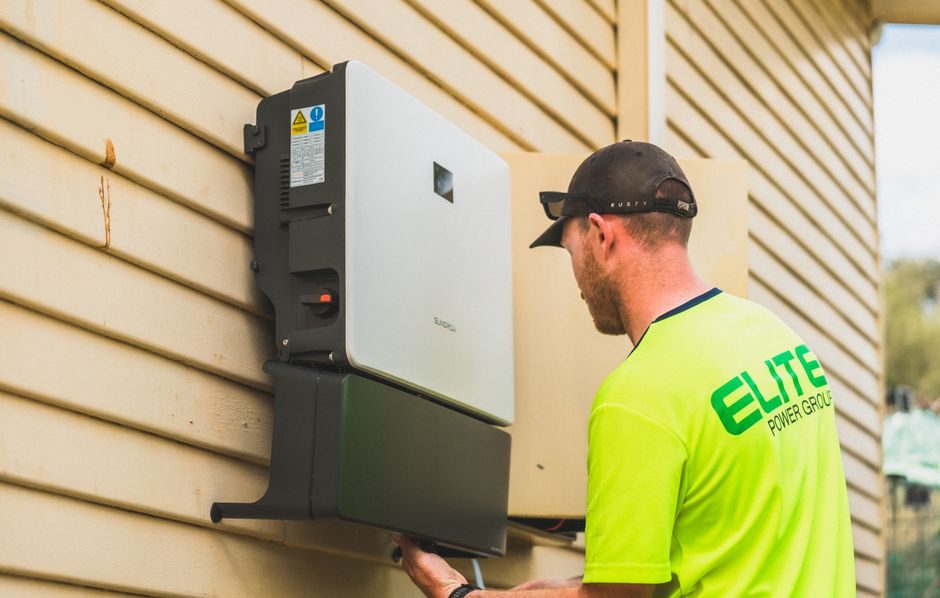
A 2026 solar inverter production line moves from incoming component inspection and SMT PCB assembly through power-module integration, enclosure assembly, firmware loading, and a final burn-in aging test, with residential hybrid units shipping in the 1.2–24 kW band, three-phase C&I PCS at 29.9–125 kW, and large-scale energy storage PCS reaching 235–500 kW [S1]. Shenzhen SOSEN Innovation Technology Co., Ltd., the listed-parent-backed specialist, runs a 70,000 m² production base in Shenzhen with end-to-end in-house assembly and aging capacity [S1].
Shenzhen Senergy Technology Co., Ltd., the wholly-owned solar subsidiary of Asian Power Devices Inc. (APD), spans grid-tied PV inverters from 2 kW up to 125 kW in the SE 100/110/125KTL-M3 commercial three-phase model, with hybrid inverters covering 3.6–30 kW and a maximum efficiency of 98.3% on its single-phase residential series [S2]. Foshan MILE SOLAR Technology Co., Ltd. focuses on the off-grid branch, with single-phase inverters from 500 W to 40 kW, split-phase units from 1–12 kW for Central America, and three-phase industrial output extending 6–200 kW [S3]. Together these three vendor footprints define the dominant process variants on a 2026 solar inverter shop floor.
Process map: SMT, power stage, enclosure, firmware, burn-in
A 2026 solar inverter is built in five sequential stages: incoming material inspection, SMT PCB assembly, power-stage integration, mechanical enclosure and wiring, and final test plus burn-in aging [S1]. The first stage covers IGBT or SiC device traceability, busbar inspection, magnetic-component batch checks, and PCB bare-board AOI. Stage two runs surface-mount placement and reflow for the control board, then wave or selective soldering for the high-current busbars and through-hole magnetic terminals.
Stage three integrates the power module: a 70 kW commercial PCS in the SOSEN line uses full-SiC (silicon carbide) switching devices, while smaller residential hybrid units from Senergy still use IGBT power stages sized for 500 W / 600 W+ high-power PV module strings [S1][S2]. Stage four covers IP-rated enclosure assembly, heatsink mounting, and the harness between power board, control board, AC/DC contactors, and the display or communication module. Stage five is firmware flashing, dielectric and ground-bond testing, and a full-load burn-in aging test designed to surface infant-mortality failures before shipment [S1].
Power-stage technology split: IGBT vs full-SiC
Residential 1.2–24 kW hybrid inverters and most 2–30 kW grid-tied units continue to use IGBT power stages, which is sufficient for the current and switching frequency bands those products operate in [S2]. At 29.9 kW and above, SOSEN specifies full-SiC (silicon carbide) MOSFET modules in its C&I PCS line, citing higher efficiency and the thermal headroom needed for high-voltage battery interfaces [S1].
For 100–125 kW commercial three-phase inverters, Senergy uses an upgraded string-current input stage specifically to handle 500 W / 600 W+ PV modules without DC-side clipping [S2]. The 200–235 kW PCS and the 125–500 kW all-in-one hybrid inverter at the top of the SOSEN range add paralleled SiC power stages and liquid- or forced-air thermal management; MILE SOLAR's industrial three-phase band runs 6–200 kW and relies on the same IGBT topology scaled up [S1][S3]. Concretely, the 2026 split is: IGBT for ≤30 kW, SiC for ≥30 kW C&I PCS, with paralleled SiC stages at the 200 kW+ tier.
Spec bands, efficiency and grid-code compliance
Senergy's residential single-phase SE 2/3/3.6/3.68/4KTL-S1/G3 family tops out at 98.3% maximum efficiency and is compatible with high-power 500 W / 600 W+ PV modules across the 2–15 kW band [S2]. The Senergy commercial SE 100/110/125KTL-M3 anchors the upper end of the grid-tied line, while the SE 12/15/20/25/30KHB family covers three-phase hybrid storage up to 30 kW [S2]. MILE SOLAR's off-grid hybrids, the WI series 1–12 kW and an IGBT-based 8–40 kW power inverter-charger line, accept AGM, gel, LiFePO4 and other customised battery chemistries, with MPPT voltage windows that match 12/24 V, 12/24/48 V auto, and 48–96 V battery banks [S3].
On the compliance axis, SOSEN's residential, C&I, and micro-grid products carry CE, UL, and TÜV certifications, and the split-phase hybrid inverter has also obtained CSA North America certification, with the company accredited as a DEKRA CTF Stage 1 testing laboratory for in-house pre-compliance [S1]. MILE SOLAR offers OEM branding and ODM design services, with technical specs adjusted to the buyer's market — exactly the build path a regional distributor or EPC needs when the destination grid code changes [S3]. Senergy builds to ODM on top of APD's 35 years of power-electronics heritage, with WiFi/LAN-R communication dongles as the standard accessory line [S2].
ODM/OEM service model and 2026 sourcing logic
The 2026 solar inverter market splits into three sourcing models. SOSEN Innovation is specialized in R&D and manufacturing of energy storage inverters, offering a 1–500 kW range from a 70,000 m² production base, supported by over a decade of power-electronics expertise through its listed parent SOSEN Group (Stock Code: 301002) [S1]. Tier 2 is OEM/ODM hybrid; Senergy's parent APD provides 35 years of power-electronics IP, and Senergy executes inverter-specific ODM on top, with the SE model code pattern (KTL for grid-tied, KHB for hybrid, suffix codes for grid code region) used as the configurable SKU backbone [S2]. Tier 3 is OEM branding with light ODM customisation; MILE SOLAR's model accepts buyer brand labels and technical-spec adjustments, suited to regional off-grid distributors [S3].
This is comparable to the CPU OEM vs ODM manufacturing split documented for 2026, where Tier 1 fabs control design IP and Tier 2/3 lines customise around it. The same logic drives the lithium-cell OEM vs ODM bands for 2026, where the cell chemistry, the formation cycle, and the certification stack are the levers a buyer can or cannot pull. A solar inverter buyer, by contrast, negotiates on the power-stage silicon, the firmware grid-code package, and the enclosure IP rating — the BMS and cell choices live inside the battery pack, not the inverter.
Burn-in, aging and reliability audit anchors
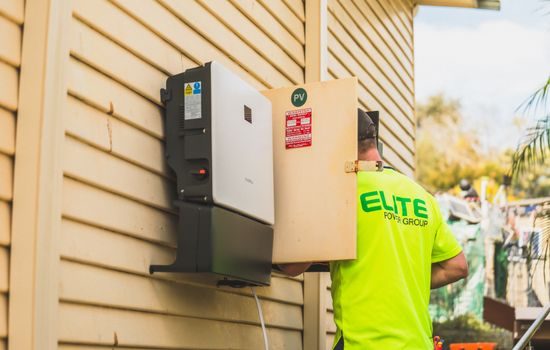
The aging test is the single most important reliability gate on a 2026 solar inverter line. SOSEN's "How a SOSEN Hybrid Inverter Is Made" disclosure describes a final integration plus aging test stage run on the 70,000 m² base, framed as the gate that catches infant-mortality defects before shipment [S1]. For a residential hybrid unit that means full-power AC and DC operation at elevated ambient, typically a 4–8 hour burn-in at rated load; for a 125–500 kW PCS the same test extends to longer durations and includes grid-fault ride-through scenarios.
The supporting audit anchors a process engineer can verify in 2026: incoming IGBT/SiC lot traceability and AOI on bare PCBs; reflow profile records and selective-solder validation; dielectric-withstand and ground-bond test logs on every unit; firmware version and grid-code parameter checksum; and the burn-in chamber temperature, load, and duration log [S1]. A 70,000 m² production base with state-of-the-art manufacturing and testing facilities, in SOSEN's own description, is the scale at which these records are kept per-unit rather than per-batch [S1].
Limitations and what the data does not say
The public 2026-07 vendor pages confirm process stage order, power band, and certification status, but stop short of publishing exact burn-in duration, MTBF figures, and IGBT vs SiC part numbers per model [S1][S2][S3]. Yield rate, first-pass-test pass rate, and field-failure ppm are also not disclosed. For a process engineer this means the public spec sheet is enough to compare power bands, efficiency, and certification, but a sourcing decision at the Tier 1 ODM tier still requires an on-site audit of the burn-in chamber, the AOI station count, and the per-unit traceability system.
The vendor pages also do not state cycle-life, peak inverter efficiency at part load, or THD behaviour at the AC output — values that matter for grid-code compliance in regions such as South Africa, Germany, and California. Buyers who need those numbers must request the test report tied to the specific SE, SOSEN, or MILE SOLAR model code, not rely on the marketing page. A practical trackable next step is to pull the per-model datasheet and the CSA / TÜV / DEKRA certificate ID for the target SKU, and to ask the supplier for a 12-month field-failure ppm number before releasing a purchase order.
For component-level specifications, see additive manufacturing material, multifunction process calibrator, and v process line.