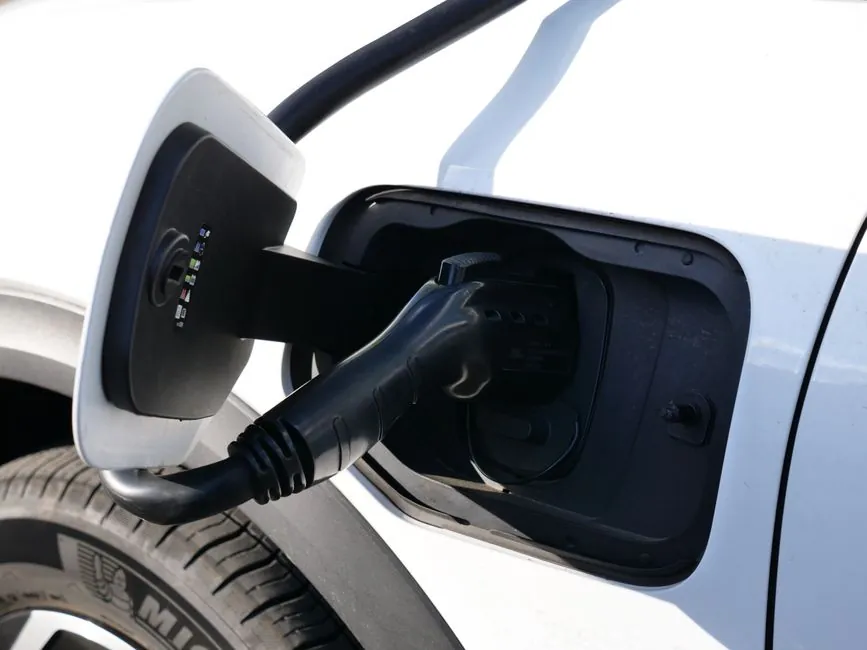
Chinese DC fast charger makers ship across five connector ecosystems, with power output stepping from 30 kW DC wallboxes to 1600 kW megawatt charging systems (MCS) for heavy-duty trucks, and the dominant specification tier for commercial CPO rollouts sits inside the 60-180 kW band [S4][S9].
Buyers who skip the grid-side math typically discover, after purchase, that transformer and medium-voltage work can match the cost of the dispenser itself: a single 480 kW unit can require a dedicated 630 kVA transformer before the first bolt is torqued, while 120 kW units stay below the 250 kVA per-site threshold that simplifies interconnection [S2][S7].
Power Band Selection: Match kW to Site Engineering, Not Marketing
The 30-60 kW band suits fleet depots and factory loading bays where dwell time is naturally long; a 60 kW unit pushes a 60 kWh pack from 20% to 80% in roughly 35-40 minutes, which is slower than a highway coffee stop but faster than any AC wallbox [S2].
The 60-180 kW band is the volume workhorse for urban plazas and retail fast-charging hubs, with at least one Chinese vendor's Mode 4 line explicitly stepping through 60, 90, 120, 150, and 180 kW models on a shared platform, which simplifies spare-parts pooling across mixed-fleet sites [S4]. The 240-420 kW band is the highway corridor envelope where liquid cooling becomes necessary rather than optional, because pushing 500 A through an air-cooled cable would require roughly 50 mm cross-section copper weighing over 15 kg on a 4 m reach [S2]. Above 480 kW, the megawatt class targets heavy-duty trucks, electric aircraft tow tractors, and bus depots, with Chinese OEMs offering 480 kW, 960 kW, and 1600 kW MCS configurations on a common satellite architecture [S4].
Connector Ecosystem: CCS2 Dominates, NACS Rising, GB/T Regionally Locked
Chinese-built dual-stack dispensers typically combine CCS2 and CHAdeMO on a single cabinet, with a 22 kW Type-2 AC fallback port integrated for sites that cannot justify a separate AC pedestal [S4]. CCS2 (IEC 62196-3 Type 2 DC) is the de facto standard across Europe, the Middle East, Africa, and most of Asia-Pacific, while GB/T 20234.3 DC remains mandatory for the domestic Chinese market, and CHAdeMO is in decline but still present in Japan and legacy Nissan Leaf fleets [S2][S9].
For U.S. deployments, NACS (SAE J3400) has moved from announcement to volume production across 2025-2026, and many U.S. buyers now require NACS plus CCS1 dual-inlet configurations on the same dispenser, while adapter SKUs (CCS2 to CCS1, GB/T to CCS2, GB/T to CHAdeMO, GB/T to Tesla) remain necessary for cross-region export fleets still running GB/T vehicles on Tesla Superchargers [S5][S9]. Vendors that omit ISO 15118 Plug and Charge support are being delisted from an increasing share of European public tenders, because ISO 15118 is the contract layer that lets vehicles authenticate and bill without an app or RFID card [S7].
OCPP, ISO 15118, and the Back-End Lock-In Risk
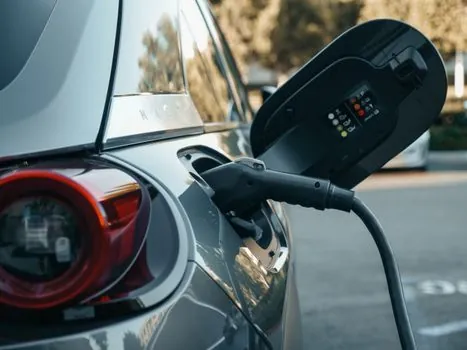
OCPP 2.0.1 is the default management protocol for 2026 OEM offerings, and at least one Chinese vendor lists compliance across the entire catalogue from the 30 kW wallbox to the 1600 kW MCS unit, which means a CPO can run a single back-end integration across depot and highway assets [S4]. ISO 15118 Plug and Charge plus V2G (Vehicle-to-Grid) readiness is now specified at the 30-60 kW DC wallbox tier as well, signalling the protocol's migration downward from luxury highway stops into depot hardware [S4].
Spec sheets that list only OCPP 1.6J lock the buyer into a narrower pool of back-end vendors and exclude Plug and Charge contract authentication, which is increasingly the default billing flow at highway-corridor sites [S1][S7]. Confirm OCPP 2.0.1 support and ask for the vendor's published JSON message catalog before signing the PO, because "OCPP compatible" without a version stamp has historically meant 1.6J-only in many Shenzhen catalogues [S1][S10]. A useful upstream comparison of back-end protocol behaviour is the same DC power supply front-end topology, where the controlled rectifier and DC-DC stage determine whether the dispenser can hold the 200-1000 V DC bus steady under ISO 15118 handshake [S4][S7].
Compliance and Certification: The Line Items That Get Retro-Fitted Expensively
For the EU, a DC fast charger needs CE under the relevant directives, plus RED (Radio Equipment Directive) for any radio-bearing module such as RFID, Wi-Fi, or 4G backhaul; for North America, UL listing is typically required, and retrofitting compliance after the units ship is the single most expensive mistake first-time CPOs make [S1][S5]. The U.S. market is shifting decisively toward NACS adoption, while CCS1 remains common in existing installations, so a 2026 fleet buyer is usually specifying a CCS1 plus NACS dual-inlet dispenser rather than a CCS1-only unit [S5].
Power-conversion inside the dispenser is typically built on IGBT or SiC MOSFET modules fed from a 400 V AC three-phase grid, with active front-end rectification and an isolated DC-DC stage [S7]. Common configuration parameters seen on 2026-vintage catalogues include 150 kW output, liquid-cooled cable, RFID authentication, 7-inch touch screen, OCPP 1.6 protocol, dual-gun output, 1000 V maximum, and 95% efficiency as a typical headline figure, with Type B RCD protection and dynamic load balancing becoming standard checklist items [S6].
Vendor Comparison: Western Integrators vs Chinese OEMs on Decision Criteria

For fleet procurement in 2026, four decision criteria separate the dominant vendors: maximum power output, regional service footprint, back-end interoperability, and unit price band. Western system integrators (ABB, Siemens, Schneider) handle utility-side turnkey projects, with one major Western vendor spanning 50-350 kW units and OCPP 1.6/2.0.1 back-end integration confirmed on the vendor's product page updated June 2026 [S4]. Chinese OEMs (iocharger and peers) ship modular units from 30 kW DC wallboxes to 1600 kW MCS targeting heavy-duty truck fleets, all OCPP 2.0.1 compliant as of July 2026 [S4].
The price-per-kilowatt gap remains substantial: Chinese-built units ship at a fraction of Western OEM list price, though total landed cost narrows once grid-connection engineering and service contracts are added, and the 2.5x price spread between functionally identical Alibaba spec sheets is mostly explained by which vendor is quietly bundling the cooling system, the OCPP back-end licence, and the type-test certificates [S2][S4]. ABB's E-mobility line ships with CCS1/CCS2 and CHAdeMO variants selected per delivery region via the vendor's published configurator, while Chinese vendors typically ship CCS2 plus CHAdeMO dual-stack units for export and a CCS1 plus NACS variant for the U.S. market [S4][S5].
Site Engineering: The Half of the Equation the Spec Sheet Hides
Specifying a DC fast charger is a power-electronics exercise first and an automotive problem second, and the dispenser is roughly half the total project cost once the upstream switchgear, transformer, and grid-interconnection work are added [S2][S4]. The DC front-end is a controlled rectifier stage converting three-phase AC grid input (typically 400 V or 480 V at 50/60 Hz) to a regulated 200-1000 V DC bus, with the DC-DC converter stage then stepping that bus to the 150-920 V window the vehicle's BMS requests [S4][S7].
For U.S. fleet buyers, the regulatory alignment checklist now includes NACS readiness, Buy America provisions on steel enclosures for federally-funded NEVI sites, ADA reach requirements on the dispenser handle, and NEC 625 wiring rules for the 480 V three-phase feed; the grid-connection engineering alone can add five or six figures to the site buildout before the first charger is bolted down [S2][S5]. The reliability signal to track across 2026-2027 is whether SiC-based power modules achieve the same third-year uptime as the legacy IGBT designs, because DC-DC converter topology choices in the dispenser determine both the cable thermal load and the lifetime of the electrolytic bus capacitors under continuous 80% nameplate duty cycles [S4][S7]. For a deeper walk through adjacent EV infrastructure procurement, the DC Fast Charger Procurement Guide: Power Bands, Connectors, Compliance map and the China EV Charger Sourcing: Clusters, Specs and Tariff-Era Compliance digest cover the upstream transformer sizing and tariff-era shipping terms that this guide does not repeat. The transformer behind the dispenser is sized using the same dry-type transformer reference curves that govern industrial rectifier feeds, so a 630 kVA unit at a 480 kW site is the realistic floor rather than the exception [S2][S7].
Spec-level background on the components involved: linear guide.