
Steel fiber for concrete reinforcement is specified through five hard gates — aspect ratio, tensile strength, end-hook geometry, raw-material grade, and conformance to published steel-fiber concrete standards [S4].
These gates map directly to what suppliers and concrete producers quote, and to the test methods used in acceptance: HAREX publishes a 65/13 stainless fiber with 0.2 mm ± 0.005 mm wire diameter, 13 mm ± 10% length, and 304/316/316L raw material options, illustrating the kind of dimensional and metallurgical data a buying decision rests on [S6].
Gate 1: Aspect Ratio (L/D) and Why 45/35, 45/50, 55/60 Are Not Random Numbers
Aspect ratio — fiber length divided by wire diameter — is the single most quoted parameter in a steel-fiber datasheet, and Dramix® 3D part numbers encode it directly: 45/35 = 0.75 mm × 35 mm, 45/50 = 0.75 mm × 50 mm, 55/60 = 0.90 mm × 60 mm [S3].
Higher aspect ratio raises pull-out resistance but also raises the risk of balling during mixing; the part-number convention lets a concrete producer match fiber to aggregate size and dosage rate without reading the full catalog [S3]. Harde and HAREX use the same length/diameter encoding style on stainless product lines, confirming the convention is industry-wide rather than a single-OEM invention [S1][S6].
Gate 2: Tensile Strength, Hook Geometry, and the Loose-Fiber vs. Glued-Plate Question
Tensile strength is the second hard gate: loose Dramix® 3D fibers are supplied with declared tensile values for each geometry, and the BL suffix marks loose (bulk) product versus glued plates that disperse in the mixer [S3].
End-hook geometry is the third gate — hooked-end fibers develop mechanical anchorage inside the crack, raising post-crack residual strength over straight fibers, and the 3D designation in Dramix® 3D refers to a deformed end profile optimized for that anchorage [S3]. Stainless variants are available in the same hooked geometry when corrosion exposure rules out carbon steel: HAREX lists 65/13 stainless with 304/316/316L options at 0.2 mm wire diameter for that exact use case [S6].
Gate 3: Raw Material, Coating, and Corrosion Environment
Raw material and coating drive service-life, not initial cost: Harde supplies stainless steel, galvanized, and engineering-grade carbon steel fibers as separate product lines for construction use [S1].
For tunnel linings, marine decks, and chemical-plant slabs where chlorides or acids contact the concrete, 304/316/316L stainless eliminates the corrosion allowance that has to be added to carbon-steel fiber service life; for industrial floor slabs on stable subgrade, galvanized or plain carbon-steel Dramix® 3D in 45/50 BL remains the default [S1][S3][S6]. Sino Sources Tech positions its factory output under the Belt and Road construction-materials channel, which is worth flagging because the same nominal Dramix®-style part number can be quoted from Chinese, U.S., and European mills at very different price points [S2].
Gate 4: Standards Compliance and Test Methods
Standards compliance is the gate that gets skipped most often at quote time: Antpedia indexes 15 published standards under the steel-fiber-concrete classification, spanning construction-materials test methods and product specifications [S4].
ASTM A820 (steel fibers for fiber-reinforced concrete) covers the carbon-steel fiber family, and EN 14889-1 covers steel fibers for structural use in Europe; the [S4] index is the right starting point to confirm which standard edition the project specification references [S4]. For a project that will be handed to a QA inspector, the fiber supplier's mill certificate has to show the standard, the test method, and the lot traceability — not just a generic compliance statement.
Gate 5: Dosage Rate, Mixing Method, and Pumpability
Dosage rate and mixing method are the operational gate: longer hooked-end fibers at 50–60 mm raise flexural toughness but demand larger aggregate, higher mixer shear, and sometimes a glued-plate format to avoid balling [S3].
For shotcrete and pumped mixes the 35–45 mm fibers with the BL loose format disperse more cleanly; for slab-on-grade pours where dosage runs 20–40 kg/m³ the 50–60 mm variants are typically specified [S3]. Sourcing-side decisions that look like fiber selection are often really aggregate-curve and pump-pressure decisions, which is why a hardened QC plan should include a trial mix before a full truck load is committed.
Comparison: 35 mm vs. 50 mm vs. 60 mm Hooked-End Carbon Steel vs. 13 mm Stainless
On a 2×4 decision matrix, 35 mm Dramix® 3D 45/35 BL is the safest pick for pumped concrete and shotcrete, 50 mm 45/50 BL sits in the middle for industrial slabs, and 60 mm 55/60 BL wins on flexural toughness where the aggregate and mixer can take it [S3].
Stainless 13 mm fibers (HAREX 65/13 in 304/316/316L) trade aspect ratio and crack-bridging for corrosion immunity, and belong in chemical, marine, and tunnel-lining mixes where carbon steel would force an over-design of cover or a corrosion-inhibitor additive [S6]. CoMar's U.S.-made Dramix® line, Harde's engineering fiber catalog, and Sino Sources Tech's Belt-and-Road channel together cover the three sourcing paths a procurement engineer is most likely to be quoted from [S1][S2][S3].
Who Steel-Fiber Selection Is For — and Who It Is Not For
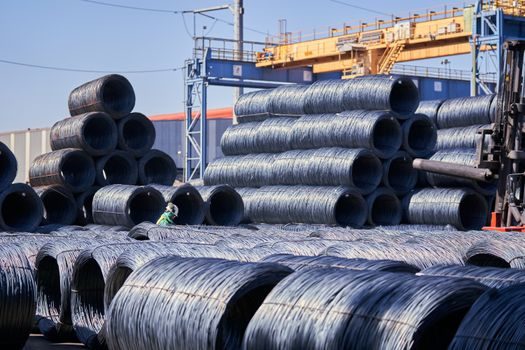
This five-gate workflow fits ready-mix producers, precast plants, shotcrete crews, and tunnel/segmental lining contractors who need a defensible fiber spec and a mill certificate their inspector will accept [S1][S3][S4].
It does not fit small residential slab pours where wire mesh is cheaper, and it does not replace rebar design for primary structural reinforcement — steel fiber reinforces the concrete matrix and controls crack width, it does not substitute for bar reinforcement in beams or columns [S4]. For procurement teams who only need a price sheet, jumping straight to a published steel fiber part-number cross-reference and a concrete fiber datasheet PDF is faster than running the full gate workflow. Buyers comparing a fiber quote against a glass fiber alternative for non-structural panels should treat the corrosion and toughness criteria as decisive, not the headline price. Engineers who want a wider material context can read the related fiber converter and fiber optic sensor reference pages, but those belong to a different spec problem and should not be conflated with steel-fiber concrete reinforcement.
Trackable signals for the next sourcing cycle: lot-traceable mill certificates tied to the standard referenced in the project spec, and a 2026-06-22 list of Dramix® 3D and HAREX 65/13 SKUs that confirm wire-diameter and length tolerances against the values quoted at issue [S3][S6]. Standard-classification updates on Antpedia's 15-item steel-fiber-concrete index are the second watch-item, since any revision changes the test method the inspector will demand [S4].
For related coverage, see Coordinate Measuring Machine Selection: 4 Gates That Decide the CMM Class.