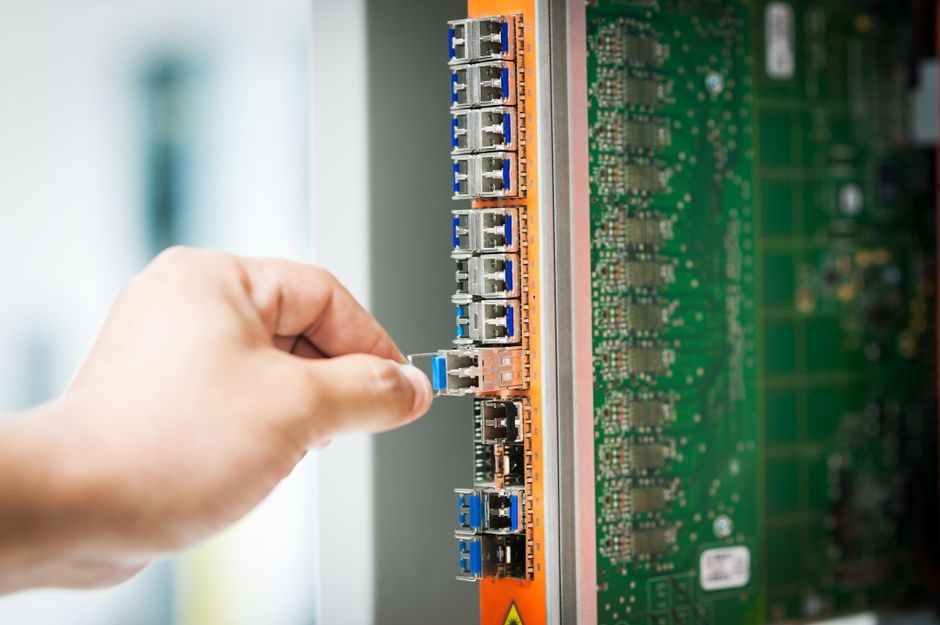
A 250 A JVD2-250 main isolator built to IEC 60947-3 / GB 14048.3 is listed on Made-in-China at US$3.65 per piece on a 110-piece MOQ with 10,000 units/month capacity [S5]; Pepperl+Fuchs' Ex d IIB EJB series flameproof units — aluminium enclosure, IP66, Ex d and Ex tb certified for Zone 1/2/21/22 — sit in a different price tier entirely, with 0-I labelling and configurable pole counts [S4].
DirectIndustry indexes 18 industrial disconnectors with NH-fuse options across IEC and VDE certifications, with vertical (4) and horizontal (2) mounting layouts alongside closed-circuit (5) variants [S2]. The contrast between the two price tiers — sub-US$5 modular isolators versus explosion-protected cast-aluminium gear — defines every buying decision in the category, and the gap is driven by four levers: current rating, fuse technology, enclosure/ingress protection and hazardous-area certification.
Price Bands by Current Rating and Fuse Class
Modular 250 A main switch-disconnectors built to IEC 60947-3 / GB 14048.3 anchor the entry tier at US$3.65–10 per piece on MOQs of 100–500 units out of Chinese OEM lines shipping 10,000 units per month [S5]. NH-fuse disconnector switches — the dominant European pattern for 63–630 A circuits — sit one tier above the unfused modular design because the fuse-holder assembly, phase barriers and DIN-rail or backplate footprint add both metal content and assembly labour; DirectIndustry lists 18 such products with closed (5), vertical (4) and horizontal (2) mounting as searchable cutouts [S2].
Ex d IIB cast-aluminium flameproof switch-disconnectors carry a step-change in unit price that is structural, not negotiable: aluminium enclosures machined to Ex d / Ex tb certification, IP66 sealing and individual certified 0-I labelling add material and test cost that do not scale down at high MOQ [S4]. For plant buyers, the rule of thumb is that a Zone 1 unit costs several times the price of an equivalent-rated non-Ex modular device before any installation premium is added.
Four Cost Levers That Move the Quote
Current rating is the dominant lever: ABB medium-voltage indoor switch-disconnectors are defined by their rated normal current, short-time withstand current and rated peak making current under IEC 62271-103 / IEC 60947-3 logic, where the device must carry, make and break rated load current and carry, for a defined duration, short-circuit current contributed by the network [S1]. Higher ratings require larger contacts, wider creepage and more robust arc-quenching, so a 630 A unit is materially more expensive per pole than a 160 A unit with the same fuse class.
Fuse choice (NH00, NH1, NH2, NH3 vs BS88 vs UL Class J) determines the holder size, the phase-barrier geometry and the busbar terminations, and it interacts with the short-time withstand current rating. Enclosure material and IP rating form the third lever: an IP2x indoor modular housing in polycarbonate is a small cost add over a DIN-rail bare device, while an IP66 cast-aluminium Ex d enclosure with breather/drain and certified cable entries is a separate cost class entirely [S4]. The fourth lever is certification scope: IEC-only is baseline; adding VDE, UL, CCC or ATEX/IECEx Zone coverage stacks documentation, witness-test and audit fees onto the unit price [S2][S4].
Selection Criteria: Who Needs What

A factory-floor control panel builder specifying a 63–250 A main isolator for a motor-control centre will land on the IEC 60947-3 modular tier — 230/400 V AC, 50 Hz operation as switch-disconnector for power distribution and motor operation, with or without NH-fuse holder, at unit prices in the low single-digit USD range at MOQ [S5]. A petrochemical, pharmaceutical or offshore operator needing Zone 1 isolation must specify Ex d IIB or Ex d IIC cast-aluminium enclosures with IP66, Ex tb dust certification, and labelled 0-I operating positions, accepting the cost-class jump that comes with the explosion-protection certification [S4].
For secondary distribution rooms and indoor MV substation incomers, ABB positions indoor switch-disconnectors as the standard isolation device where the function is to carry, make and break load current and to carry short-circuit current for the protected duration, with short-time and peak-making current values quoted on the nameplate as the design contract [S1]. In all three profiles, the device is NOT a protective device on its own — overcurrent protection is delegated to fuses or a upstream breaker — and that boundary is what keeps switch-disconnectors in a stable price band rather than competing with circuit-breaker pricing.
Comparison: Modular vs NH-Fuse vs Ex d Flameproof
Across three decision criteria — unit price at MOQ, installation footprint and hazardous-area eligibility — the three dominant constructions diverge sharply. Modular unfused main isolators (e.g. 250 A JVD2-250) win on unit price at US$3.65/110 MOQ and on panel-builder DIN-rail ergonomics, but they are restricted to non-Ex industrial areas and need upstream short-circuit protection [S5]. NH-fuse disconnectors (18 products indexed on DirectIndustry) add integrated short-circuit protection through the fuse-links, with IEC and VDE certification as the common cut-outs, at a moderate price premium over the unfused modular tier [S2]. Ex d IIB flameproof units (e.g. Pepperl+Fuchs EJB series) are the only option for Zone 1/2 gas and Zone 21/22 dust, and they carry the structural price premium of aluminium enclosures, IP66 sealing and certified 0-I labelling [S4].
Lead-time and MOQ behaviour also differ: Chinese modular OEM lines publish 10,000 units/month capacity and 110-piece MOQ on trading platforms [S5], while Ex d lines are typically built to order with project-batched production runs and longer certification lead times. NH-fuse lines sit in between, with the EU-domestic manufacturers offering shorter logistics chains for European buyers and Chinese/Asian OEM lines offering lower FOB prices for volume.
Sourcing Realities, Standards and Lead-Time
Standards discipline is what keeps a switch-disconnector quote comparable across vendors: IEC 60947-3 is the global umbrella for low-voltage switch-disconnectors including ratings, terminal markings and 0-I positions; GB 14048.3 is the equivalent Chinese national standard that allows Chinese-built units to be specified to IEC equivalent values [S5]. For medium-voltage indoor duty, IEC 62271-103 covers the higher voltage range, and the device's two declared ratings — rated normal current and rated short-time withstand current — are the contract between manufacturer and buyer [S1]. For hazardous areas, the certification chain is ATEX 2014/34/EU in Europe and IECEx globally, with Ex d (flameproof) and Ex tb (dust) as the typical protection concepts for the cast-aluminium tier [S4].
For a deeper dive on the spec-and-fuse selection workflow, the Switch-Disconnector 2026 Buying Guide walks through fuse-class matching, terminal torque and short-time-withstand coordination. The Surge Protective Device 2026 buying guide covers the upstream coordination step that any switch-disconnector upstream of a SPD must respect. Buyers comparing enclosure-driven cost steps can cross-reference the Overhead Conveyor Price & Cost Guide 2026 for the same enclosure/lead-time/FOB pattern on a different equipment family, since the buying logic — modular tier, integrated tier, hazardous-area tier — repeats across industrial product lines.
Limitations and Failure Modes That Change the Price
Three failure modes routinely drive a switch-disconnector price back up after initial purchase. Contact welding under stalled-motor switching occurs when the device is used outside its utilisation category (AC-23 vs AC-3) — IEC 60947-3 utilisation category must match the load type, and a motor-rated switch-disconnector costs more than a general-purpose isolator at the same current [S5].
Insulation breakdown in humid or outdoor service pushes buyers from IP2x indoor modular enclosures to IP66 cast enclosures with breather/drain, which is the same step that takes a unit from the modular price tier to the Ex d tier even in non-hazardous outdoor service [S4]. Third, fuse-link unavailability — particularly for NH00/NH1 in regions where only BS88 or UL Class J is stocked — strands an installed base on a single supplier and erodes the price advantage of a competitive tender; standardising the fuse class at specification time is the cheapest line item on the entire bill [S2].
The next trackable signals to watch: ATEX Notified Body capacity in EU 2026 (affects Ex d lead times), copper and aluminium LME spot pricing (drives contact and enclosure cost), and the IEC 60947-3 maintenance cycle for fuse-holder dimensions that lock in or release second-source supply. Allied Market Research's 2033 disconnector-switch forecast [S3] sits behind a paid report wall, so its specific growth figures cannot be quoted; what is verifiable from the free preview is that the category is still tracked as a discrete market, which confirms ongoing OEM investment rather than commoditisation.
For component-level specifications, see switch disconnector, linear guide, and crossed roller guide.