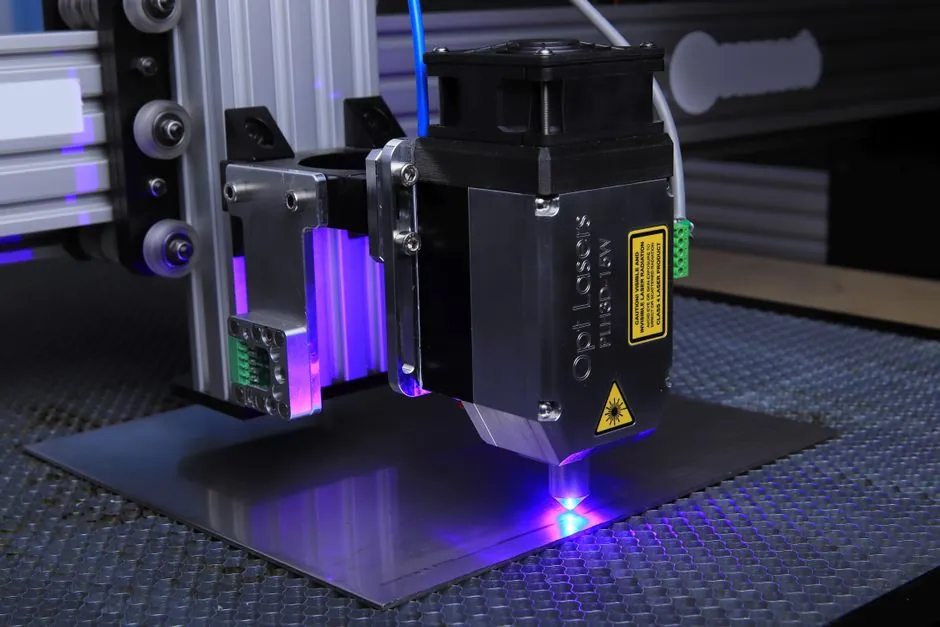
An explosion-proof stepper motor marked T4 must keep its external surface at or below 135°C under the worst-case certified load, while a T6-rated stepper must stay at or below 85°C, a 50°C gap that is the single largest design lever between the two classes [S1][S3].
Stepper motors in hazardous areas lose more headroom than induction motors because holding torque, microstepping, and resonance-tuning can all push the winding temperature upward at standstill, so the T-class selected governs the permissible duty cycle, the available torque, and often the encoder option [S1][S4].
T4 and T6 Numbers, Side by Side
The IEC 60079-0 temperature table used across ATEX and IECEx schemes is fixed: T1 ≤ 450°C, T2 ≤ 300°C, T3 ≤ 200°C, T4 ≤ 135°C, T5 ≤ 100°C, T6 ≤ 85°C [S1][S3][S4]. For stepper motors, the practical meaning of T4 versus T6 is not just a label but a thermal budget that the motor designer must prove with a nameplate test, including the locked-rotor case where the rotor is stationary and the winding is fully energized.
Wheatstone Motor notes that T5 (≤100°C) is "dangerously close" for several low-AIT media, while T6 gives a real 15°C safety cushion against T5 and a 50°C cushion against T4 [S6]. The same source frames the 85°C T6 limit as a hard ceiling under fault conditions, not a nominal operating point [S6].
Which Gases Each Class Actually Covers
Auto-ignition temperature (AIT) drives gas-to-class assignment, and the AIT-vs-T-class table from exknowledge.com shows the real-world fit: diethyl ether at 175°C AIT needs T4, acetaldehyde at 140°C AIT needs T4, carbon disulphide at 95°C needs T5, and ethyl nitrite at 90°C AIT needs T6 [S4]. A T6 stepper is acceptable in every T1 through T6 environment because the surface stays at or below the lowest AIT threshold, while a T4 stepper cannot be used where CS₂ or ethyl nitrite may be present [S4].
For most oil & gas and petrochemical stepper applications, the gas mix sits well above 135°C AIT (methane 537°C, propane 470°C, n-hexane 233°C), so T4 is usually sufficient, and T3 is the most-commonly specified class in upstream and refining per exknowledge.com [S4]. T6 only becomes mandatory for pharmaceutical, fine-chemical, or solvent-handling lines where diethyl ether, acetaldehyde, or other low-AIT media appear, which is why T6 stepper motors are a niche, premium configuration rather than a commodity.
Why "T1 to T6" on a Datasheet Is Not a T6 Motor

Many stepper motor catalogues list "T1~T6" as a family capability, which jiweiauto.com flags as a range, not a single certification: it means the product family offers variants for each class, not that one unit is certified to all six [S1]. Selecting the wrong variant is one of the most common errors in hazardous-area stepper selection because the nameplate, not the brochure, is the legal document.
Practical consequence: a buyer who reads "T1~T6" and assumes the motor is intrinsically safe on any gas line must still verify the T-class on the certificate matches the worst-AIT gas in the area, and recheck the ambient range, which is typically -20°C to +40°C for Ex stepper motors unless the certificate states otherwise [S1][S3].
Spec Trade-Offs: Cost, Torque, Duty Cycle
None of those ratios are in the public research, so any quoted figure should be treated as vendor-specific; what is established is that the lower the T-class ceiling, the lower the allowable continuous dissipation in the same enclosure. [S2]
Duty cycle is where T4 wins: a T4 stepper on a 50% on / 50% off cycle in 40°C ambient can usually hold full holding torque, while a T6 stepper in the same spot may need a 30% on / 70% off profile to stay under 85°C surface. Sizing logic from the explosion-proof motor reference confirms that the thermal time constant of the winding, not the rated current, sets the real ceiling for an Ex stepper.
Decision Matrix: When to Pick T4 vs T6
For a stepper drive on a typical refinery or upstream gas train where methane, propane, n-hexane, or gasoline (AIT 200-537°C) is the worst credible release, T4 is the correct economic choice: the 135°C surface limit covers all of those gases with margin, and the motor can run standard cycles. The T-class also has to be read together with the gas group (IIA, IIB, IIC), which is a separate explosion-protection axis covering spark ignition energy, not surface temperature [S3].
For pharmaceutical API lines, solvent recovery, paint booths, or any process where diethyl ether (AIT 175°C), acetaldehyde (140°C), carbon disulphide (95°C), or ethyl nitrite (90°C) is present, T6 is mandatory, and T4 is not acceptable [S4]. Designers should also factor in adjacent equipment: an explosion-proof distribution panel feeding the stepper must be rated for the same or higher T-class, otherwise the system is non-compliant even if the motor alone is correct. The wider explosion-proof reference covers the ATEX / IECEx framework behind these markings.
Common Mistakes During Selection
Three errors recur on stepper motor T-class projects: trusting "T1~T6" marketing text as a T6 certification, ignoring the gas group (IIC) when a low-AIT gas is also spark-sensitive, and specifying T6 "to be safe" without checking the thermal derating impact on torque and cycle time [S1][S3]. Sizing a T6 stepper as if it were a T4 unit will overheat the winding under any sustained load, even though the surface temperature reading stays below 85°C, because the insulation class (typically Class F, 155°C) is unchanged, but the allowable I²R loss is.
Another pitfall is reading T4 or T6 as ambient temperature, which it is not; T-class is the maximum surface temperature, while ambient is a separate spec on the certificate, usually -20°C to +40°C for ATEX-certified stepper motors [S3]. For hazardous-area cabinets and explosion-proof electrical interfaces, the same surface-temperature discipline applies, which is why the T-class marking has to be re-evaluated whenever the enclosure, heatsink, or duty cycle changes.
Cross-Reference: Related Enclosures and Controls

For stepper motors installed alongside Ex de GRP control stations, the T-class of the control enclosure must match or exceed the motor, since a cooler motor in a hotter enclosure is still a system-level non-conformance. In Zone 21 dust environments, the dust-layer insulation effect on the enclosure means the T-class surface limit applies with a further de-rating, which the Ex tb cable glands reference covers for the cable entry side of the same installation. Operators also have to plan for the explosion-proof button and HMI stations on the same skid, because human-machine interfaces near a T6 stepper inherit the same surface-temperature discipline. [S3]
Two trackable signals for the next spec cycle: ATEX-certified stepper motor families are now appearing with selectable T3/T4/T6 variants on the same frame, which collapses the spares list but forces buyers to lock the T-class at order time, and IEC 60079-0-aligned manufacturers are publishing locked-rotor surface-temperature curves instead of single-point numbers, which gives a more honest view of the T4 vs T6 trade-off in real duty cycles [S4][S6].