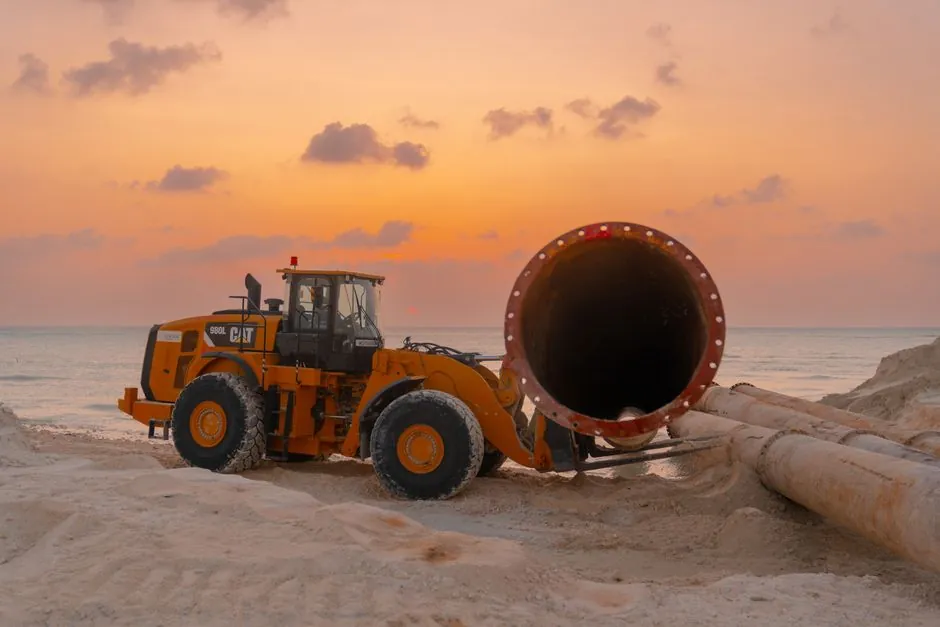
In pipeline right-of-way operations, the tank container is chosen first by cargo hazard class and T-code instruction, then verified against the pressure rating, material of construction, and the unloading adapter set that mates with the spread's pipeline pump train.
For a typical 20 ft ISO frame (20'×8'×8'6"), nominal capacity sits in the 21,000-26,000 L range depending on specific gravity, with the dangerous-goods fill window constrained to 80-95% to prevent liquid surge and to leave room for thermal expansion [S5]. The vessel is built to an approved pressure vessel code (most commonly ASME Section VIII), and the frame is constructed in accordance with ISO 1496-3 [S7].
Match the T-code to the pipeline product, not the other way around
The T-code system in the IMDG Code identifies portable tank instructions T1 through T23, governing test pressure, shell thickness, pressure relief device setting, and whether top or bottom opening is permitted [S4]. T11 is the most widely deployed code for non-refrigerated hazardous and non-hazardous liquids, with a minimum test pressure of 4 bar, and commonly carries alcohols, solvents, detergents, and general industrial liquids [S3].
T14 is the upgrade path when the pipeline product needs thicker shell construction, higher pressure capability, and additional protective equipment, and is frequently used for more hazardous chemicals that demand increased containment integrity during loading, transport, and discharge [S3]. The dangerous-goods list maps each UN number to a specific T-instruction, so the pipeline commodity's UN number effectively dictates the tank before any other selection axis [S4].
Pressure, temperature, and material compatibility as the secondary filter
Once the T-code is fixed, pressure level defines tank strength and safety rating, and temperature conditions dictate whether insulation or a cryogenic design is required [S1]. The tank vessel is manufactured from corrosion-resistant stainless steel (most commonly 304/304L for general chemicals, 316/316L for chloride exposure), and the shell must be validated against the specific cargo's chemical compatibility, because pressure rating alone does not determine suitability for a particular substance [S3].
Selecting compatible construction materials is therefore essential to prevent deterioration that could eventually lead to leakage or equipment failure [S3]. For hydrostatic-test water, brine, or low-viscosity pipeline flush media on a typical spread, a standard 304 stainless T11 with bottom discharge is the default; for sour-service chemicals or products with elevated chlorine content, 316L or a lined vessel is the minimum defensible spec. Cryogenic cargoes (LNG, liquid nitrogen for pipeline pigging, liquid CO2) move to a separate cryogenic ISO tank with vacuum insulation, not a standard chemical T-code frame [S1].
Field-level integration: adapters, valves, and the pump train
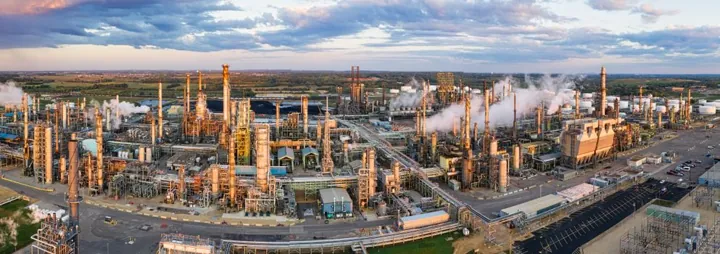
To load or unload a T14 chemical tank, the correct adapters must be selected based on the pipeline connections at the spread, because mismatch at the coupling is the most common field-failure point on multi-product spreads [S9]. Unloading is typically done via bottom discharge with venting through the top airline or vapor return, and any heating requirement (steam coil, electric trace, or none) must be specified before the tank arrives on site to avoid extra cleaning or dwell costs [S4].
On the construction side, the unloading hose or hard line ties directly into the suction side of a pipeline pump skid, so flange size, pressure class, and gasket material (PTFE for most chemicals, flexible graphite for hydrocarbons) need to be aligned between the tank's bottom valve and the pump suction. A 4 bar minimum test pressure on a T11 tank container gives ample margin against pump suction vacuum spikes during discharge, but a T14 is required if the cargo's vapor pressure at the highest expected field temperature would push relief-valve activation on a T11 [S3].
Dynamic loading and structural considerations for rail and road delivery
Sandwich-component retrofit in the bottom of a standard ISO tank frame has been shown, in peer-reviewed work published 2025-11-06, to reduce the dynamic load on the tank by 12-18% during rail transport, depending on the energy-absorbing material's characteristics [S2]. The same study's modal analysis confirmed that safe operation during transportation is maintained, with the first eigenfrequency of the standard tank at 13.8 Hz, well clear of typical rail and road excitation bands [S2].
For pipeline projects where tank containers arrive by rail to a transload yard and then truck the last miles to a remote right-of-way, that 12-18% dynamic-load reduction is most relevant to older fleets built before current fatigue-life assumptions, and to high-tonnage routes where cumulative cycle counts dominate service life. The takeaway for a project procurement team: confirm the tank's manufacturing date, last periodic inspection, and frame-fatigue history before specifying it for a long-haul leg of a pipeline supply chain.
Decision matrix: T11 vs T14 vs cryogenic for pipeline construction
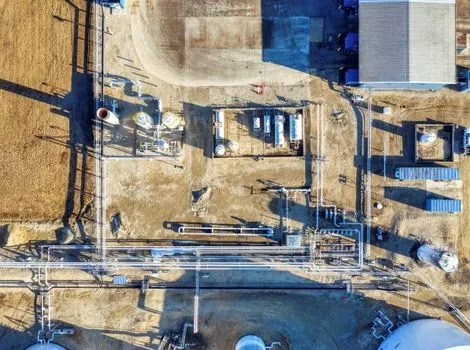
Three options cover the practical selection space. (1) T11 stainless (4 bar min test pressure): for non-refrigerated, non-corrosive industrial liquids, hydrostatic-test water, and most pipeline cleaning fluids; lowest lease cost, broadest fleet availability. (2) T14 stainless (higher test pressure, thicker shell, additional PRD): for hazardous chemicals with elevated vapor pressure, and for cargoes whose UN number mandates T14 under IMDG; mid-tier cost, narrower fleet availability, mandatory for many Class 3 and Class 6.1 substances. (3) Cryogenic ISO tank: for LNG, liquid nitrogen, liquid CO2 used in pipeline commissioning or pigging; vacuum-insulated, separate regulatory track, not interchangeable with chemical T-codes [S1][S3].
The selection rule is simple: fix the T-code from the IMDG dangerous-goods list entry for your pipeline product, then verify material compatibility, then verify the bottom-discharge adapter set matches the pipeline pump suction flange. If any of those three checks fails, escalate to the next-higher T-code or a different alloy; do not relax any of them. The same framework applies to adjacent specs such as rough terrain forklift selection for handling the tanks at the staging yard, where lift capacity, mast height, and attachment interface (fork sleeve vs. tank container lifting beam) drive the matching calculation.
Inspection, filling window, and operational limits
Every ISO tank must be filled between 80% and 95% capacity to prevent surge and allow room for expansion during transport, and the verified gross mass must be displayed before the unit moves on road or rail [S5]. Before each use, a compatibility check for cargo, tank, and equipment is required, and the minimum and maximum degree of filling is read from the IMDG code against the countries the tank will transit [S4].
After discharge, tanks need to be drained properly to avoid extra cleaning costs at the depot, where cleaning, inspection, and the equipment interchange report are issued against the tank container operator's criteria, with the operator monitoring test validity and arranging periodic inspections and tests [S4]. For a multi-spread pipeline contractor running the same tank type back-to-back on adjacent sections, that depot turnaround is usually the hidden schedule constraint, not line-fill time on the right-of-way.
The next signal to watch: any 2026 revision to the IMDG Code's T-instruction table for hydrogen and hydrogen-blend pipeline products, since current T-codes were not written for routine road and rail movement of compressed hydrogen at the volumes a pipeline construction spread would consume. Track the UN Sub-Committee of Experts on the Transport of Dangerous Goods meeting outputs and the ITCO Technical Handbook updates, which are the two sources that move the T-code first, before any national regulator picks it up.
For related coverage, see Overhead Bridge Crane Selection for Tunneling: Duty Class, Span, and Service Pattern.