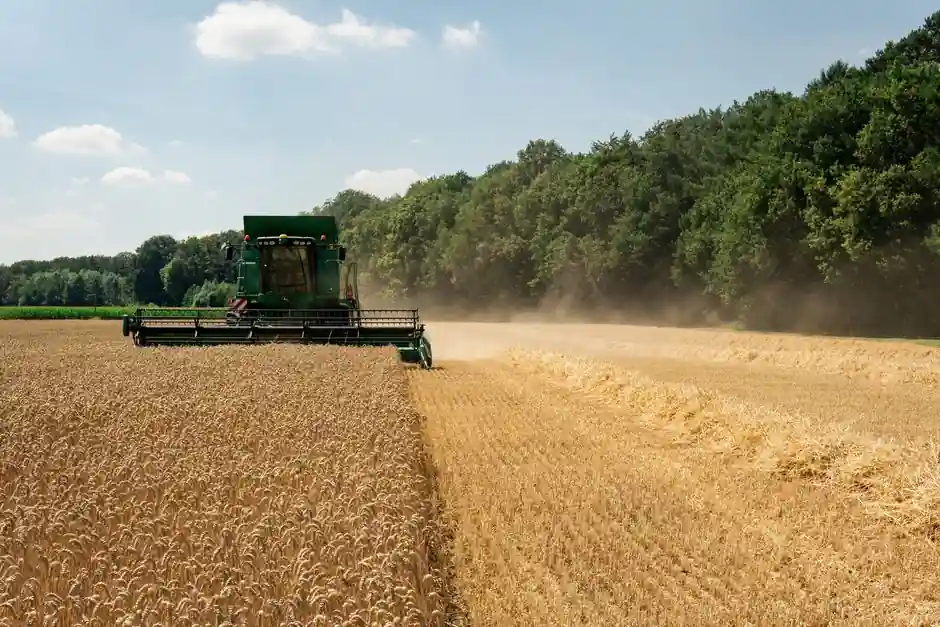
Taper bushings in 2026 are spec'd by bore series and mounting family first, environment second: standard Taper Lock (1008-5050), QD, or Double Split Taper [S3][S5]. For agricultural drives, the dominant load path is a V-belt sheave or roller-chain sprocket on a 24-80 mm implement shaft, and 80% of the time that resolves to a standard Taper Lock [S3][S4].
A taper bush is a flanged, externally tapered sleeve that mates with an identical internal taper machined into a hub (sheave, sprocket, coupling, weld-on hub). Tightening axial cap screws draws the bush axially into the taper, expanding it radially against the shaft and locking the assembly without a keyseat [S4][S8]. That keyless clamp is the reason the part dominates farm equipment, harvesters, augers, and PTO-adjacent conveyors: a stripped keyseat in a remote field does not stop the season if the bush can be removed with two cap screws and a hex key [S1][S4].
Bore series and the three mounting families
The 2025-09 B&B Manufacturing guide lists three main types: Taper Lock, QD (Quick Disconnect), and Double Split Taper, each with different mounting and alignment behaviour [S3]. Taper Lock uses a single row of cap screws on the front flange; QD uses a larger flange with two rows of screws and a separate removable sleeve, which makes QD faster to swap on legacy American-standard drives; Double Split Taper is a two-piece design that clamps via through-bolts, useful where the hub cannot be slid axially onto the shaft [S3][S4].
Standard Taper Lock sizes run 1008, 1108, 1210, 1215, 1610, 1615, 2012, 2517, 3030, 3535, 4040, 5050, with bore capacities roughly tracking the series number, so a 1210 covers ~10-30 mm shafts while a 5050 covers up to 125 mm [S4][S8]. Alphatronic Machinery's 2026 product range quotes 239 bore/size combinations across the Taper Lock family, a useful proxy for the cross-vendor envelope: if your shaft size is not in the table, you are either looking at a custom bore or the wrong bushing family [S2].
Selection criteria an engineer must lock down first
ChinaTransmissions' Feb 2026 selection flowchart puts shaft diameter as the first gate, followed by hub bore availability, then required torque, then environment [S5]. That ordering is correct for farm equipment: a 2517 Taper Lock on a 45 mm shaft will not save you if the sheave you are clamping only has a 1-3/8" pilot. Confirm pilot bore before confirming bush.
The four hard constraints to record before picking a part are: shaft diameter (mm or in), hub bore series the mating component is machined for, peak torque at the driven element (combine harvester feeder shafts regularly see 2-3x nominal shock loads at slugging), and axial direction of mounting, since Taper Lock and QD are designed for through-shaft assembly while Double Split Taper handles blind shaft ends [S3][S5]. A practical decision matrix looks like this:
Selection criteria, three families compared:
Standard Taper Lock (1008-5050): 1) Bore coverage wide (10-125 mm across the range), 2) Mounting access needs front-of-hub axial clearance, 3) Reusability good, 4) Typical cost per piece: lowest of the three [S3][S4].
Double Split Taper: 1) Bore coverage typically 1" to 6" plus metric, 2) Mounting access allows blind-shaft or limited-clearance installs, 3) Reusability good, 4) Typical cost per piece: mid-range, with a labour saving on assembly that often offsets the unit price [S3][S4].
Material and finish for farm-duty environments
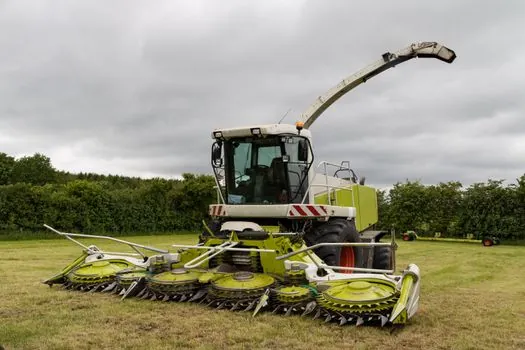
BEP Ltd's April 2023 guidance, still the reference quote in 2026, recommends stainless-steel taper bushes for high-humidity or corrosive environments, and that maps directly to dairy barns, manure spreaders, fertilizer hoppers, and any drive within 5 m of a wash-down zone [S6]. Standard catalog Taper Lock bodies are machined from grade 250 cast iron or C45 carbon steel depending on bore size; zinc plating, powder coat, or stainless upgrade is a separate SKU at the distributor [S2][S6].
For dry crop duty (grain augers, baler belt drives, harvester header shafts), standard cast-iron or phosphated-steel Taper Lock is the default and represents the lowest cost-per-hour metric because the bore is repairable: a scored shaft can sometimes be reclaimed by stepping to the next size bushing in the same series, an option that does not exist with a shrink-fit or keyed arrangement [S2][S4]. Where the drive sees seasonal water immersion (rice paddy equipment, pivot-irrigation drive towers), stainless upgrade pays back in one corrosion cycle [S6].
Agricultural use cases and where each family wins
Conveyors, augers, and V-belt drives inside any agricultural operation are the headline applications; these impose shock load and dust ingress rather than continuous high torque, so a Taper Lock 2517 or 3020 with a standard nitrile-sealed sheave is the workhorse combination [S1]. For chain-sprocket drives on a roller chain (e.g., round-bale feeders, mixer wagons), a Split Taper Bushed Sprocket from the same vendor range is usually spec'd because the same bush fits multiple sprocket pitches, reducing spare-part inventory [S1][S9].
Taper Lock is not always the right answer. For very high torque, such as the main PTO countershaft on a large square baler, a QD bushing is often selected because the larger flange spreads the clamping load over a bigger shaft contact area and the removable sleeve speeds in-field changeover between crops [S3]. For applications where the hub cannot be slid onto the shaft, such as a mid-shaft mount on a header auger where both ends of the shaft are already supported, Double Split Taper is the practical choice [S3]. Cross-referencing the catalog Sprockets, V-Belt Sheaves, and QD/Taper Lock V-Belt Sheaves lines confirms that all three bushing families are stocked for agricultural-equipment duty [S1].
Limits, failure modes, and what to check at install
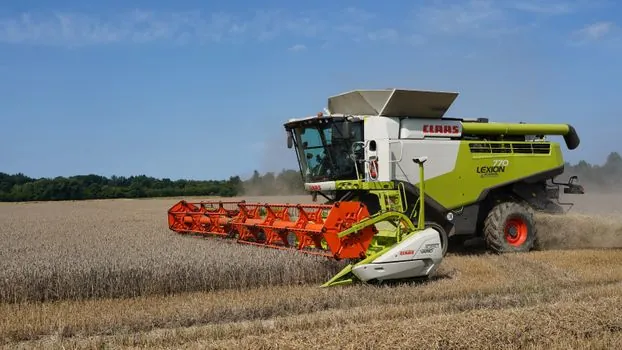
Taper Lock depends on screw torque and bore tolerance, not key contact, so the documented failure modes are: under-torqued cap screws (slip and fret corrosion on the shaft), over-torqued cap screws (cracked flange, especially on small 1008-1108 sizes), wrong-direction mounting (taper reversed, no radial expansion), and shaft hardness below ~180 HB where micro-movement galling has been reported [S2][S4]. Always dry-fit, check axial run-out with a dial indicator (typical spec: under 0.05 mm TIR for sheaves, under 0.10 mm for chain sprockets), and torque cap screws in a star pattern to the value printed on the bush, not the value printed on the hub [S2][S4].
Temperature, dust, and chemical exposure bound the duty envelope. Cast-iron bodies handle -20 to 200 °C continuous; above that the lubrication in any adjacent bearing fails faster than the bush. For grain dust (combustible, Class II Div 1 environments), specify a bronze or stainless bush with non-sparking cap screws per site practice; for ammonia-exposed poultry-shed drives, stainless is the only defensible choice [S6][S9]. Where the design sits alongside gear coupling selection for agricultural machinery, the bushing must be sized for the coupling's bore series, not the coupling's torque rating, since the bush is the bore-adapter, not the torque limiter.
Sourcing, standards, and the 2026 supply picture
Across the 2026 sourcing window, taper bushes are not governed by a single ISO or ANSI performance standard the way bearings are; the dominant references are the manufacturer's bore-and-torque tables (B&B, Dodge, Martin, Fenner, Dunlop) and ISO 9001:2015 quality-system certification at the producing factory [S3]. When ordering, the part number sequence to capture is: family (TL / QD / DST) + size code (e.g., 2517) + bore in mm or inches + material/finish code. That string is what lets a distributor cross-reference [S2][S8].
For 2026 builds, two signals are worth tracking: (a) distributor lead times for stainless-steel Taper Lock bodies in the 2517-3030 range, which have stretched in some regions versus 2024 baselines, and (b) the gradual migration of EU agricultural OEMs to ISO 9001:2015-certified suppliers with REACH and RoHS declarations on file, driven by Proposition 65-equivalent rules in the buyer base [S3]. Watch both before locking a Q3-Q4 2026 part release.
For component-level specifications, see taper bush, construction machinery and equipment, and pressure transmitter.