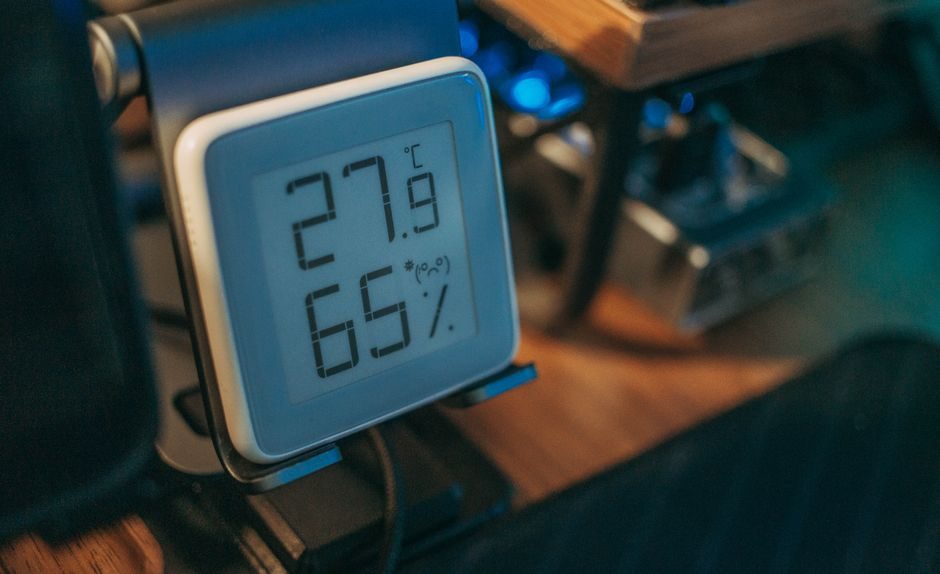
Industrial temperature controller list prices cluster in three concrete tiers: sub-$60 mechanical / analog switches, $80–$400 single-loop digital PID units, and $600–$1,200+ multi-loop or thermoelectric (TEC/Peltier) controllers for laser-diode and chamber applications [S2][S3].
Output current capability is the single most visible price lever — ATI's 2026 lineup ladders from a 14×14 mm SMT module at 3.5 A (TEC14M5V3R5AS) through 6 A DIP standalone units, to 15 A high-power auto-PID controllers, and a 20 A ATFC106D panel-mount chamber controller [S2]. That 3.5 A → 20 A envelope roughly maps to a 3–6× unit-price spread within a single vendor's catalog [S2].
Cost Driver 1 — Output Current and TEC Power Stage
Bidirectional TEC/Peltier controllers carry an H-bridge output stage whose FET RDS(on) and PCB copper area scale with current; ATI cites a single-PWM topology that cuts power loss by 20%, BOM cost by 25%, and PCB area by 35% versus two-PWM conventional designs, protected under U.S. Patent 6,486,643 B2 [S2]. For OEMs integrating a temperature controller into a photonics laser package, the 14×14 mm SMT form factor enables a 0.004°C-precision analog variant (TECA1-xV-xV-DAH) that would otherwise require a benchtop instrument [S2].
For resistive-heater-only loops where bipolar cooling is not required, the bill of materials drops sharply: OMEGA's 17000/18000 cartridge and immersion series and AR/AR-LT bulb-and-capillary thermostats sit in the entry-level price band, suitable for plastic-extrusion barrel zones and tank-immersion duties [S3]. These mechanical and analog-electronic designs avoid MOSFET output stages entirely, which is why they undercut digital PID units by an order of magnitude on unit cost.
Cost Driver 2 — Control Architecture: ON/OFF, PID, and Auto-PID
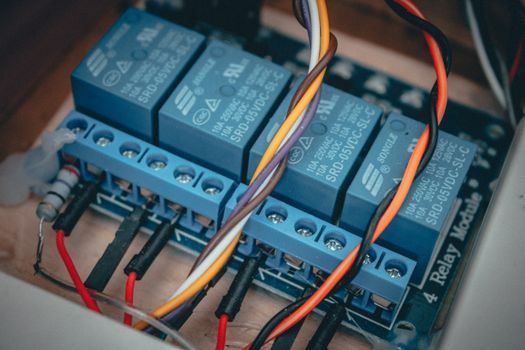
ON/OFF (thermostat) control uses a comparator and a relay or SSR; its hardware cost is dominated by the sensor input conditioning and the switch rating. The OMEGA 17000/18000 and AR series use this architecture and remain the cheapest way to switch a heater or alarm at a fixed setpoint [S3].
Single-loop digital PID with autotune adds an MCU, a DAC-driven analog output (4–20 mA, 0–10 V, or SSR driver), and a user interface — typically a 1/32, 1/16, or 1/4 DIN front bezel with multicolored display. OMEGA's 1/32, 1/16, 1/8, and 1/4 DIN autotune families plus benchtop/wallmount variants, multi-loop controllers, and safety-limit controllers form the mid-band [S3]. For TEC loads, auto-PID firmware on the TEC28V15A / TEC24V10A / TEC18V15A / TEC12V9A / TEC9V7A family removes manual compensation tuning, which compresses commissioning labor cost on stacked-TEC and 48 V telecom/PoE-rail designs [S2].
Cost Driver 3 — Hazardous-Area Certification and Panel Integration
Explosion-resistant thermostats and safety-limit controllers carry a meaningful price premium driven by enclosure certification (UL/CSA Class I Div 2, ATEX Zone 2, or IECEx) rather than by the control electronics themselves; OMEGA explicitly catalogs explosion-resistant thermostats in the same low-cost subsection as their mechanical switches, indicating the certification premium is bounded for simple ON/OFF units [S3]. Where a temperature sensor feed is also required, intrinsic-safety barriers add another line item, and our 2026 safety barrier cost breakdown shows the IS interface and zone fit drive that premium more than the resistor network itself.
Panel-mount chassis (152×76 mm ATFC106D form factor) and AC-mains-powered units move into a higher price band because the enclosure, line-voltage filtering, and agency-listed terminal blocks dominate the BoM versus a 24 V DIN-rail module [S2]. For OEM volumes, China's Haiyan Xushi Electric Control Equipment supplies heating elements, temperature controllers, electric hot plates, and related items as a bundled package, which compresses the per-zone landed cost on plastics and packaging machinery [S4].
2026 Spec Comparison — Controller Classes Side by Side
Across the four common classes, the decision criteria are output current, control mode, package, and price band: mechanical/analog switches (no PID, relay or SSR output, $40–$80 typical), single-loop digital PID 1/16 DIN (4–20 mA / SSR output, $150–$350), multi-loop or panel-mount PID ($500–$900), and TEC/Peltier auto-PID controllers ($200–$1,200+ depending on current and packaging) [S2][S3]. Newport's LDT-5900 Series delivers 5 A and 10 A RS-232/GPIB thermoelectric temperature controllers for high-power laser-diode and fiber-optic temperature control — these are typically specified at the top of the price band because of the GPIB and dual-output stages [S1].
For laser-diode applications specifically, Newport's LDT-5900 Series datasheet notes the 5 A / 10 A current and RS-232/GPIB communications; a separate Newport guide covers a wider range of precision thermoelectric temperature controllers used to maintain stable laser-diode junction temperature [S1][S5]. The 48 V supply rail, ±47.5 V TEC swing, and 15 A capability of the TEC28V15A family address stacked-TEC and 48 V telecom/PoE-rail thermal loads that a 5 V/3.5 A micro controller cannot [S2].
Total Cost of Ownership — Sensor, Wiring, and Commissioning
Purchase price is only one line on a temperature-loop budget. The sensor — thermocouple, RTD, or thermistor — plus extension wire, thermowell, and input isolation often equals the controller cost on a per-loop basis. Commissioning labor scales with control complexity: ON/OFF thermostats need a single setpoint, single-loop autotune PID needs one autotune cycle, and a multi-loop or temperature recorder data acquisition panel needs loop tuning plus data-mapping configuration [S3].
For multi-zone plastic-extrusion, heat-treat furnace, or semiconductor-chamber applications, the TCO argument typically favors a multi-loop controller over a stack of single-loop units: one panel cutout, one power distribution, one network drop, and one configuration tool. For low-zone-count machine builds, the single-loop 1/16 DIN remains the lowest TCO even at a higher unit price [S3].
Who It Is For — and Who Should Not Specify This
A 1/16 DIN autotune PID is the correct fit for most resistive-heater loops between 100 W and 5 kW. A 1/4 DIN or multi-loop controller is justified when the panel footprint savings exceed the per-loop price difference, or when the application needs data logging via a temperature monitor overlay. A TEC/Peltier auto-PID controller in the 7–20 A class is mandatory for sub-ambient or sub-0.1°C stability loads — laser diodes, DNA thermocyclers, and environmental chambers — where ON/OFF or single-loop PID will oscillate [S2].
Engineers should not specify a 1/16 DIN PID for a stacked-TEC 48 V telecom-rail load, nor an explosion-resistant thermostat where a safety-limit controller with relay output and a separate alarm path is required by the process Hazard Analysis [S3]. Mismatched current ratings, missing autotune on slow thermal masses, and undersized SSR or SCR output stages are the most common field failures I see on retrofits.
Trackable 2026 Signals
Watch for 48 V-capable TEC controller releases targeting 5G radio-head and PoE++ liquid-cooled cabinet applications, where stacked Peltier arrays are replacing compressor-based chillers for noise and reliability reasons [S2]. Watch also for ATI's vacuum-potted standalone modules to migrate from space and avionics into ground-based quantum-optics tables, where zero-EMI shielding is a published design requirement, not a marketing line [S2].