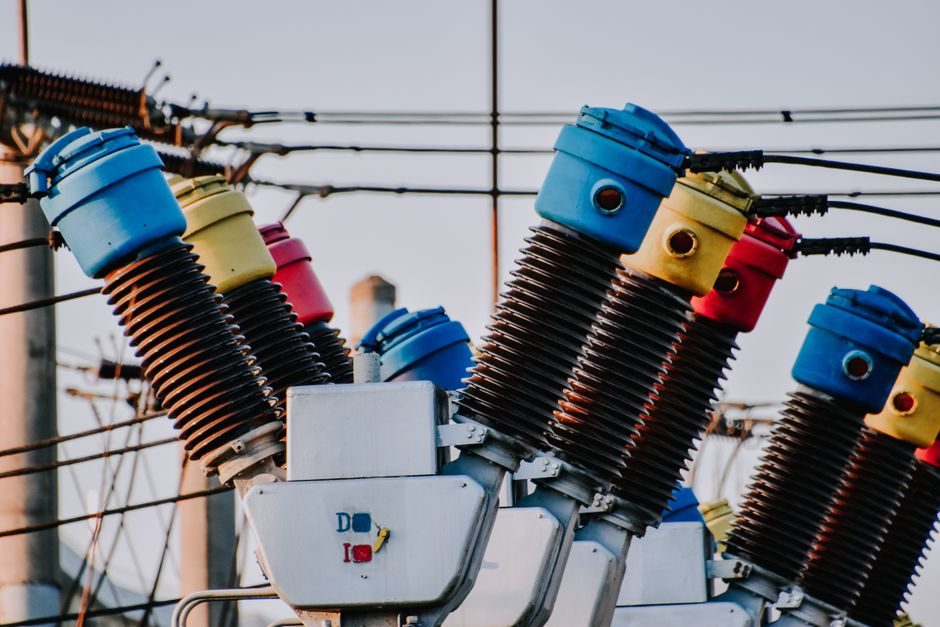
Thermal overload relays for three-phase motor circuits cover a current window from roughly 0.1 A up to about 93 A in mid-2026 product lines, with PEOPLE's RDR6 series spanning 0.10-93 A at 380 V trigger and TECO's RHU/RHN series covering 0.1-38 A with trip class 10A [S1][S2].
At the low-current end, Fuji-style bi-metallic units such as the AutomationDirect TK26E-P18 (0.18-0.27 A) and TK-E02-420 (2.8-4.2 A) are direct-mounted to specific contactor frames, so the contactor family is the first gate, not the last [S3][S5].
Match the Contactor Frame Before the Current Dial
Direct-mount bi-metallic overload relays are mechanically keyed to a single contactor series, and mis-pairing them is the most common field failure: SC-E02x, SC-E03x, SC-E04x and SC-E05x frames from Fuji/AutomationDirect only accept the matching TK-E02 or TK26E bi-metallic cartridge, both local-reset, direct-mount, 3-pole [S3][S5].
Standalone panel-mount lines (RDR6, RHU/RHN) drop onto a 35 mm DIN rail or contactor adapter and accept a wider range of contactor brands, but require checking the terminal pitch and the NO/NC auxiliary contact rating against the holding coil VA of the chosen contactor [S1][S2].
Current Window, Trip Class and Phase-Failure Protection
The decision chain on the dial side starts with motor full-load amps (FLA) on the nameplate, then selects a setting range whose midpoint sits at or just above FLA — RDR6 dials span 0.10-93 A with Ue 380 V, Uimp 8 kV, per GB14048.4; RHU/RHN dial 0.1-38 A with phase-failure protection and trip class 10A, certified to IEC, China GB, CSA and UL [S1][S2].
Trip class sets how long the relay tolerates the locked-rotor inrush before it trips: class 10A covers standard IEC duty for normal-start motors, while frequent-start or heavy-load machinery steps up to class 20 or 30, which most bi-metallic units cannot deliver — pushing the spec toward electronic overload relays such as TECO's EOL line or the current-monitoring EOCR relay on DIN rail [S2].
Phase-failure (break-phase) protection is now table-stakes on the mid-2026 catalog entries: RDR6 lists it as a headline feature, and RHU/RHN integrates it alongside temperature compensation and action indication [S1][S2].
Reset Mode, Auxiliary Contacts and Indication

Auto-reset vs manual-reset is a safety decision, not a preference: EN 60204-1 (general electrical safety of machinery) restricts auto-reset on circuits where unexpected restart would create a hazard, so conveyors, fans and pumps typically use manual reset while non-load-side monitoring loops may accept auto-reset [S1][S2].
Both RDR6 and RHU/RHN offer a single changeover NO/NC auxiliary with insulation-separated NO and NC paths, plus a mechanical trip flag for action indication — useful when the relay is several meters from the operator panel [S1][S2].
Bi-Metallic vs Electronic vs Solid-State: Where Each Wins
For sub-100 A three-phase motors in normal duty, bi-metallic units (RDR6, RHU/RHN, TK-E02/TK26E, HR2-N, JRS1, JR36, 3UA, LRD/LRE) remain the cost-default because the heater elements, lever, and bimetal strip are serviceable and field-replaceable on most lines [S1][S2].
For tight current setting, low heat dissipation, or where the spec needs adjustable trip class, ground-fault, or Modbus/analog output, electronic overload relays (TECO EOL, EOCR, HR9/HR2-F) replace the bimetal with CT-based current sensing and a microprocessor trip curve [S2].
For cabinet-internal thermal protection of coils, transformers, or motor windings (not full motor overload), subminiature thermal relays such as the JUC-6F sense ambient or contact-mount temperature with 1 Form C (1 NO/1 NC) at 220 V / 7 A resistive, operating from 0 to 200 °C in up to 98 % RH [S4].
Selection Criteria: A Side-by-Side Decision Table
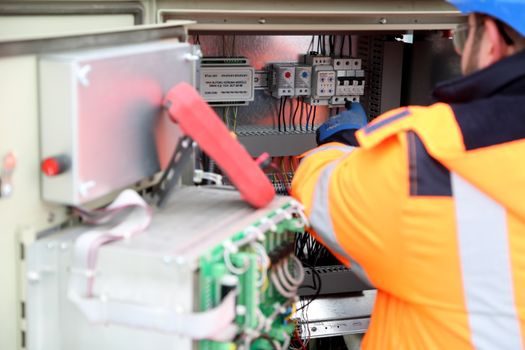
Use the table below to short-list a thermal relay against four decision gates (current window, contactor mounting, trip class, and reset mode); the cells reflect the data points in [S1]-[S6] and are not derived from outside the research.
RDR6 [S1]: 0.10-93 A, 380 V, Uimp 8 kV, contactor or DIN mount, class 10 (bimetallic), manual + auto reset, 1 NO/NC, phase-failure, GB14048.4.
RHU/RHN [S2]: 0.1-38 A, contactor mount, class 10A, manual + auto reset, phase-failure, CSA / UL / CE / RoHS, IEC + GB.
TK-E02-420 [S3]: 2.8-4.2 A, bi-metallic, local reset, direct mount on SC-E02x/E03x/E04x/E05x contactors.
TK26E-P18 [S5]: 0.18-0.27 A, bi-metallic, local reset, direct mount on the same SC-E02x-E05x frames.
JUC-6F [S4]: 220 V / 7 A resistive, 1 Form C, 0-200 °C ambient, 86-106 kPa, up to 98 % RH — for thermal protection of devices, not motor overload.
HR2-N / JRS1 / JR36 / 3UA / LRD / LRE [S6]: legacy IEC-style bi-metallic overload relays, panel or contactor mount, manual + auto reset variants, current windows from sub-1 A to about 200 A depending on frame.
Failure Modes and What Spec Cannot Save
Bi-metallic relays drift with ambient temperature, which is why the RDR6 and RHU/RHN product lines add a compensation bimetal plate — without it, an overload relay installed near a VFD or in a hot cabinet will nuisance-trip at lower current than the dial suggests [S1][S2].
Single-phasing of a three-phase motor is the dominant motor-killing fault mode that thermal overload relays were designed to catch: the missing phase drives current up on the remaining two windings, and within seconds the bi-metal deflects enough to trip the auxiliary, but only if the relay is wired into the contactor coil, not just signaling a lamp [S1][S2].
Auto-reset on a jammed conveyor or a pump dead-headed against a closed valve will re-energize the contactor indefinitely and cook the motor windings — manual reset is the cheap insurance, and the thermal relay reference page lists the trip-curve families for class 10A, 20 and 30 duty.
Standards, Retirements and Trackable Signals

RDR6 is designed, manufactured and inspected per GB14048.4 (China's low-voltage switchgear and controlgear standard, technically aligned with IEC 60947-4-1), and RHU/RHN complies with both IEC and China GB, plus holds CSA, UL, CE and RoHS — so a US/EU panel can usually accept the same device that ships into a Chinese MCC [S1][S2].
Retirement signals in the AutomationDirect catalog are concrete and dated: the TK-E02-420 is listed in the retired-products section, and TK26E-P18 is flagged "Discontinued item, Retired 05/2026" with a direct-replacement path being worked — track this on the next catalog revision [S3][S5].
For wider context on motor-circuit protection cost drivers, the Motor Protector Price & Cost Guide 2026: FOB Bands, Spec Drivers, Sourcing Tiers article maps how the dial range, trip class, and contactor integration shift FOB banding.
For the smaller electronic side of the family (current-monitoring and earth-fault modules that share cabinet space with thermal overload relays), the Oxygen Detector TCO Analysis: Sensor, Gas and Labor Drive the Bill article covers the sensor-replacement cadence and labor pattern that govern electronic-relay TCO.
For designers cross-referencing relay sockets, coil-side accessories and module accessories, the relay module and industrial relay encyclopedia pages collect the contact-form, socket and DIN-rail data referenced in mid-2026 catalogs.