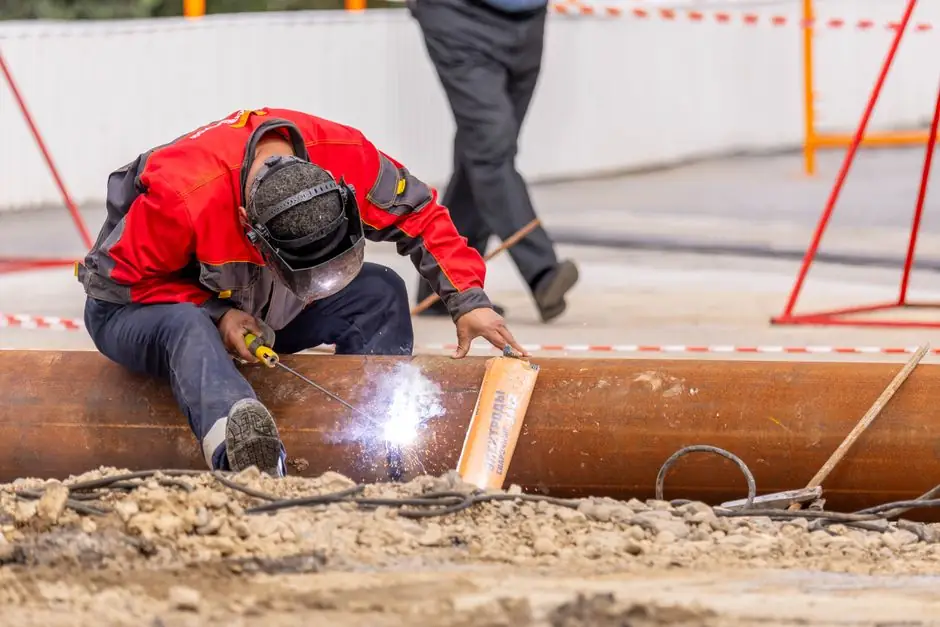
A real TIG welder total cost of ownership analysis covers five buckets: acquisition, shielding gas, tungsten and filler, electricity, and maintenance, and the consumables bucket alone can rival the machine's depreciation over a decade of shop or field use [S2][S5].
Entry-level single-process AC/DC TIG units cluster in the $500 to $2,500 range, mid-tier multiprocess machines sit between $1,000 and $5,000, and professional inverter platforms with pulse, AC waveform control, and high-frequency start stretch from $3,000 up to $15,000 [S2][S4][S5]. Energy efficiency on modern inverter platforms reaches about 85%, a measurable step down from older transformer-based units that drives the electricity line of the TCO model [S2].
Acquisition Cost: What the Sticker Price Actually Buys
The $300 to $800 bracket covers hobbyist 130 to 200 A inverter units such as the AMICO Power TIG-225HF style platform at roughly $400, and these typically ship with a basic torch, regulator, and ground clamp [S3][S5]. Above that, $800 to $1,500 buys mid-tier multiprocess hardware with digital interfaces and Stick or MIG fallback, while $1,500 to $3,500 unlocks higher duty cycles, pulse, and AC balance for aluminum work [S3].
At the top of the catalog, $3,000 to $15,000 buys engineered industrial systems with programmable memory, foot-pedal or remote amperage, HF start, and water-cooled torch packages, all features that move the acquisition line but also move productivity and rework cost in the opposite direction [S5]. A full system quote should always separate the power source, the torch package, the water cooler, and the cart or inverter cart, because suppliers bundle them inconsistently and TCO math gets distorted when one line hides three [S3].
Shielding Gas: The Quiet Line Item That Dominates Year Two
For stainless work, a 90/10 argon/helium or argon/hydrogen mix roughly doubles gas cost per cubic foot but lets the operator run hotter without distortion, and that trade-off often pays back on aerospace and dairy-grade fabrication where rework labor dominates [S5]. A shop welding 40 hours per week of mild steel at 20 CFH can plan on $1,200 to $2,400 per year in argon alone before any backpurging or purge dams are added [S2].
Consumables: Tungsten, Filler, and Nozzle Wear
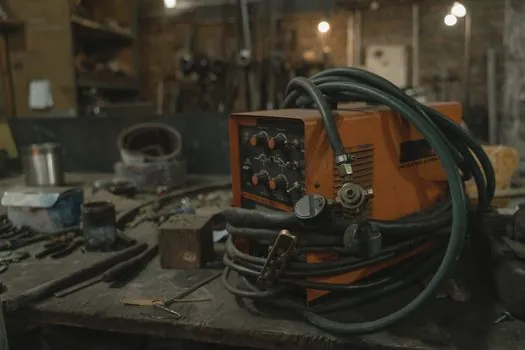
Filler rod cost depends almost entirely on base metal: ER70S mild steel at roughly $0.10 per inch, ER308L stainless around $0.15 per inch, and ER4043 or ER5356 aluminum in the $0.20 to $0.40 per inch range, so a structural aluminum fab cell will spend 3 to 4 times the filler budget of an equivalent carbon-steel cell [S2].
Nozzles, gas lenses, collet bodies, and back caps wear out on a 3 to 6 month cycle in a production environment, and budget $150 to $400 per year per station for replacement consumables on a mid-tier machine, more if backpurge trailing shields and Teflon or polypropylene purge dams are in use [S5]. Compared to MIG, TIG consumables cost more per joint but the reduction in post-weld grinding, slag chipping, and rework often justifies the line for code work and food-grade stainless [S2].
Energy and Duty Cycle: How Inverter Efficiency Changes the Math
A comparable transformer-based Stick or legacy TIG machine wastes 15 to 20% more input power, which is the same reason modern inverter units at 85% efficiency are standard in any current TCO comparison [S2].
Duty cycle drives the realistic per-shift cost more than nameplate amperage. For high-volume cells, water-cooled torches add $800 to $2,500 to the acquisition but extend continuous-on time enough to pay back inside 12 to 18 months on a two-shift operation [S5].
Maintenance, Repair, and Calibration
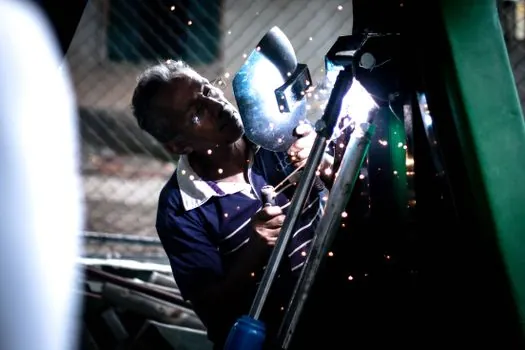
Modern inverter TIG power sources need little more than a clean air filter, a torque-check on panel connectors, and occasional HF starter inspection, with annual maintenance typically running $100 to $300 in either shop time or a service contract [S3][S5]. The expensive failures are torch-side: a broken super-flex cable runs $80 to $200, a torch head rebuild $40 to $120 in parts, and water-cooler pump replacement $150 to $400 every 3 to 5 years depending on coolant discipline [S5].
Annual calibration of amperage, gas flow, and HF start using a contact-tach or flow meter is good practice on code work, and shops that skip it usually discover the drift during a failed ASME or AWS weld coupon, which costs more in scrapped test plates than five years of scheduled cal [S3]. A 7- to 10-year service life is realistic for a mid-tier industrial inverter in a 30 to 40 hour-per-week environment, and the welding equipment cost guide framework used for TCO typically assumes a 10-year straight-line depreciation before resale value is considered [S2][S5].
Who TCO For: A Use-Case Map
A $400 to $800 entry-level TIG unit makes sense for intermittent hobby, automotive restoration under 200 hours per year, or training school labs where uptime matters less than access cost [S3][S5]. Mid-tier $1,500 to $3,500 multiprocess platforms are the sweet spot for general fabrication shops, dairy and food-grade stainless, and field service trucks that need Stick backup, and they usually hit the lowest cost-per-arc-hour in a 20 to 40 hour-per-week duty profile [S2][S3].
Professional $3,000 to $15,000 systems with AC waveform, pulse, and water-cooled torch packages are only justifiable for aerospace, pressure vessel, and high-mix aluminum fab cells where weld appearance, repeatability, and code compliance directly translate to contract eligibility [S4][S5]. For a fleet-oriented view of cost drivers that mirrors this analysis, the concrete groove cutter TCO breakdown applies the same five-bucket structure to a very different tool and is a useful template for fleet managers benchmarking welders against other site equipment.
Comparing Options: Entry vs Mid vs Professional on Decision Criteria
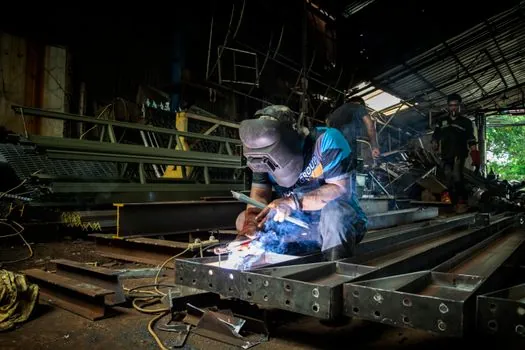
On the four criteria that matter most for a purchasing decision, the spread is wide. Acquisition runs $400 to $800, $1,500 to $3,500, and $3,000 to $15,000 across entry, mid, and professional tiers [S2][S3][S5]. Annual consumable and gas cost tracks roughly $300 to $600, $1,000 to $2,500, and $3,000 to $8,000 per year at 30 to 40 hours of weekly use, with the professional tier higher because of higher flow rates, larger tungsten, and aluminum filler cost [S2][S5].
Expected service life sits at 5 to 7 years, 7 to 10 years, and 10 to 15 years respectively, and energy efficiency at 60% duty cycle is about 80 to 82% for entry, 83 to 85% for mid, and 85 to 90% for professional inverter designs [S2][S3]. Operators who skip straight to a professional unit to "future-proof" usually pay 2 to 4 times the acquisition cost for features they underuse, and the most common TCO mistake in 2025-2026 is over-buying amperage rather than under-buying duty cycle [S2][S3]. For shop managers weighing TIG against a related joining process, the stud welder selection criteria piece covers where drawn-arc and capacitor-discharge stud systems displace TIG on sheet-to-section fastening work.
The verifiable next node for any TIG TCO model is the local industrial gas contract and the duty-cycle rating at the amperage the cell actually runs, since those two inputs swing five-year cost more than the brand or the inverter topology. A second trackable signal is whether the planned workload includes backpurge or trailing-shield argon, because purge gas alone can double the shielding-gas line and is the line most often left out of vendor quotes [S2][S5].
The underlying component specifications are covered under total station.