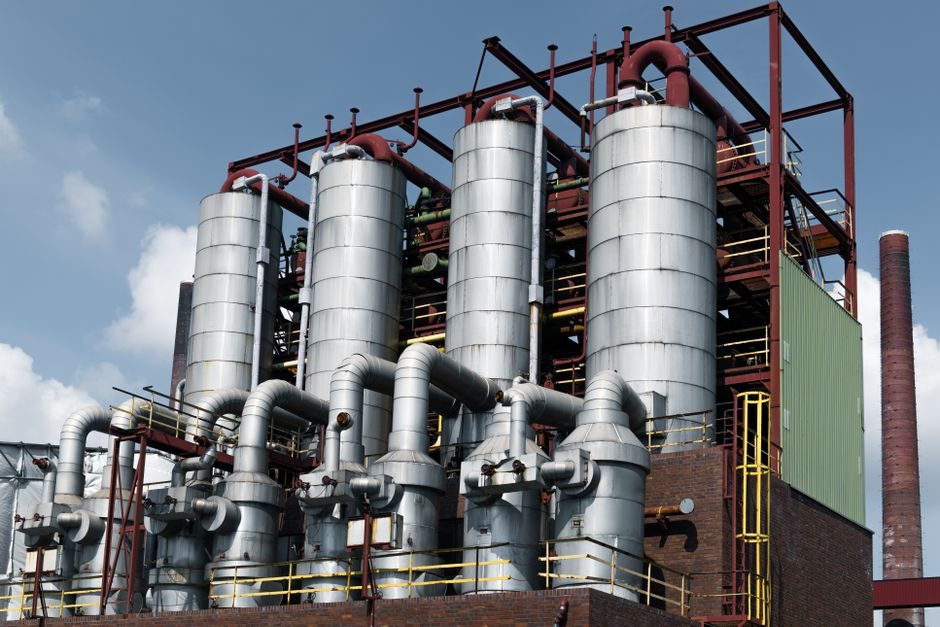
Activated carbon procurement in 2026 sits on a four-tier supplier map: Shanghai-based joint-stock producers with multi-province manufacturing (Shanxi, Ningxia, Jiangsu) for coal, pelletized, and impregnated grades [S1]; Rajkot, India powdered-carbon plants running 40+ grades with a self-reported sub-1% rejection rate [S3]; large Western water-treatment majors such as Kemira positioning carbon as part of a coagulant-plus-carbon treatment train [S6]; and high-volume B2B trading platforms (Made-in-China, Alibaba) listing 729+ cylindrical-product suppliers and price bands of US$0.55-1.10 per honeycomb piece at 10,000-piece minimum order [S2][S4].
Spec sheets rather than brand familiarity drive the 2026 buying decision, because the active-carbon market is fragmented and the dominant spec levers — raw material (coal, coconut shell, bamboo, wood, anthracite, bituminous), surface area (800-1200 m²/g), iodine number (250-950 mg/g), ash (≤3-5%), CTC (≥70% for VOC grades), and form factor (powder, granular 0.5-1 mm, pellet, honeycomb 100×100×100 mm) — are dictated by end use, not by vendor.
Raw Material and Form Factor: What the 2026 Listings Actually Ship
Coal-based activated carbon remains the default in the 2026 Chinese export channel: Made-in-China's honeycomb product feed is dominated by "Coaly Activated Carbon" with ash <5%, particle size 100×100×100 mm, and surface area 800-1000 m²/g for VOC and exhaust-gas treatment [S2]. Coconut shell grades price at a premium on the same feed (US$450-500/ton at 27-ton MOQ) for gold-industry and water-treatment decolorization, while bamboo-based activated carbon lists at US$1.49-1.53/kg with ash ≤0.05% and carbon content ≥99.5% for food and pharmaceutical end use [S7].
Impregnated and acid-washed grades are a separate spec class. Shanghai Shengjin Enterprise Co., Ltd. explicitly markets "Impregnated Activated Carbon," "Activated Carbon Fiber for multiple use," "Activated carbon for special application," and "Acid washing activated carbon" alongside coal-based pelletized grades for desulfurization and denitrification, with headquarters in Shanghai Pudong and manufacturing bases in Shanxi, Ningxia, and Jiangsu [S1]. These impregnated grades are used where target contaminants (H₂S, Hg, HCl, dioxins) require chemically-modified surface chemistry rather than pure physisorption.
Coal vs Coconut vs Bamboo vs Wood: Comparison on Four Decision Criteria
Four criteria — surface area, hardness/abrasion, pore structure, and price tier — separate the main raw-material options as of 2026. Coal-based grades ship at the lowest price band (US$0.55-1.10/piece for honeycomb, 10,000-piece MOQ [S2]) with surface area 800-1000 m²/g and predominantly mesoporous structure suited to gas-phase VOC adsorption. Coconut shell grades deliver higher microporosity and iodine number (commonly 950-1100 mg/g in gold-industry and potable-water specs), with the price premium (US$450-500/ton [S7]) tied to feedstock scarcity in Sri Lanka, Indonesia, and the Philippines.
Bamboo-based activated carbon posts ash ≤0.05% and carbon content ≥99.5% in current Chinese export listings, placing it in the food/pharmaceutical tier where low-ash residue is a regulatory requirement [S7]. Wood-based powdered grades remain the Indian specialty: Capital Carbon in Rajkot runs steam-activated and chemically-activated powder from industrial-grade wood charcoal, with 40+ grades in production and a stated sub-1% rejection policy [S3]. For buyers specifying pressure transmitters and flow meters on the same skid, the carbon form factor (powder 200-325 mesh, granular 0.5-1 mm, pellet 4 mm, honeycomb monolith) is set by the housing geometry, not the brand.
Honeycomb and Pelletized Grades: Air-Treatment Specs
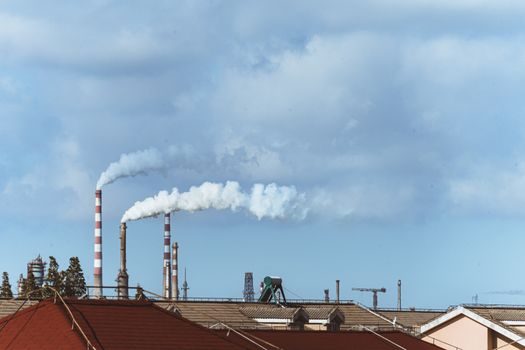
Honeycomb extruded activated carbon dominates the 2026 industrial air-treatment and VOC-abatement channel. Listings on Made-in-China specify particle size 100×100×100 mm, surface area 800-1000 m²/g, ash <5%, void density 50-300 cells/in², and volume density 0.35-0.55 g/mL for coaly honeycomb; higher-end honeycomb posts 1000-1200 m²/g at 0.5-1 mm cell size for VOCs and industrial decolorization [S2]. CTC 70% (carbon tetrachloride activity) is the standard marker for high-grade VOC honeycombs, with 100×100×100 mm blocks cited for chemical, electric power, environmental, petrochemical, food, and gold-industry service [S2].
Pelletized extruded carbon is the comparable form for fixed-bed gas treatment and solvent recovery. Shengjin offers "Pelletized activated carbon from coal for desulfurization and denitrification" alongside its granular desulfuration grade [S1]. Pellet diameters typically run 3-4 mm, and the high mechanical hardness suits continuous through-flow adsorption towers where honeycomb would suffer pressure-drop problems at elevated face velocity.
Water Treatment and Municipal Use: Standards and Vendor Tier
Municipal and industrial water treatment uses powdered, granular, and extruded carbon in adsorption towers, polishing filters, and post-chlorination contactors. Kemira positions activated carbon as part of a multi-chemical water-treatment program for contaminant removal — color, taste-and-odor compounds, organic micropollutants, and residual oxidants — alongside its coagulant portfolio [S6]. Spec sheets for water-grade carbon typically cite iodine number (target ≥600 mg/g for TOC reduction), ash (≤5%), and pH of water extract (6-8).
Granular activated carbon (GAC) and extruded carbon dominate in fixed-bed adsorbers feeding into backwash cycles. Coal-based GAC at 8×30 and 12×40 mesh remains the workhorse spec for industrial effluent, while coconut-shell GAC with iodine ≥1000 mg/g and minimum 95% hardness is the spec for potable-water and food-grade polishing. Buyers cross-referencing carbon skids with industrial valves and carbon steel pressure-vessel fabrication should pin the carbon spec to the service duty first, then validate the supplier's batch COA against the in-house test panel.
Standards, Sourcing Channels, and Quality Verification

No single global standard governs activated carbon. Buyers must reconcile ASTM (D2862 for pore volume, D2866 for surface area, D4607 for iodine number, D5742 for CTC activity), AWWA B604 for GAC, EN 12915 for European drinking-water carbon, and JIS K1474 for Japanese imports, against the supplier's published COA. Without an in-house lab panel (iodine, methylene blue, ash, pH, moisture, hardness), the spec is unenforceable — a point Capital Carbon in Rajkot underlines by stating each batch is "tested several times during intermediate stages of production and then before dispatch" [S3].
Two sourcing channels dominate the 2026 trade flow. Direct-from-factory quotations via Made-in-China, with full product feed and price-band disclosure (US$0.55-1.10/piece honeycomb, 10,000-piece MOQ; US$450-500/ton coconut shell, 27-ton MOQ [S2][S7]), are the standard procurement route for Asian-grade carbon. Alibaba's procurement index listed 729 cylindrical-carbon suppliers as of 2026-07-01, with country/region breakdown skewing heavily to China Mainland and main products spanning coal, coconut shell, and high-grade alumina-supported carbon [S4]. For Western water-utility buyers, the route runs through majors such as Kemira, which integrate carbon into a broader coagulant-and-polymer portfolio [S6].
Failure Modes and Sourcing Traps to Avoid
Four failure modes show up repeatedly in 2026 activated-carbon purchasing. First, iodine-number mismatch: suppliers publish 950-1000 mg/g figures for coconut grades, but a working specification of 850 mg/g minimum is common in industrial water service — buyers must pin the test method (ASTM D4607) on the PO. Second, ash creep: low-grade coal-based honeycomb with ash up to 5% can leach residue into high-purity water loops, defeating the spec intent; bamboo or acid-washed grades at ash ≤0.05% exist for this reason [S7]. Third, pressure drop and dusting: powdered grades below 200 mesh cause excessive pressure drop and channeling in fixed beds; granular 0.5-1 mm or pelletized 3-4 mm is the engineering default for fixed-bed service.
Fourth, impregnated-grade misrepresentation: "impregnated" is not a single spec. Potassium iodide (KI) impregnation targets mercury and radioiodine; sulfur impregnation targets mercury; amine impregnation targets acid gases; copper/silver impregnation targets phosphine and arsine. A buyer specifying impregnated carbon for, say, biogas H₂S removal should validate the impregnant class and loading, not just the marketing label. As flagged in adjacent industrial gas-handling guides such as the Welding-Operation Toxic Gas Detector Spec Map 2026, cross-checking gas-phase carbon selection against detector range and breakthrough curve prevents adsorption-bed under-design on the same skid.
Signals to Track Over the Next Two Quarters
Three signals will reshape the 2026 supplier map. (1) Coconut-shell feedstock pricing through Sri Lanka and Indonesia, which directly moves the US$450-500/ton band cited in current Chinese export listings [S7]; any sustained move above US$600/ton will shift industrial buyers toward coal and bamboo substitutes. (2) Chinese honeycomb export pricing, where the US$0.55-1.10/piece 10,000-piece MOQ band [S2] is the cleanest public benchmark for VOC-grade demand health. (3) Western utility tender activity through majors like Kemira [S6], because municipal-water carbon demand is the most price-insensitive of the four end markets and is the first place a new regulatory driver (PFAS, PFOA) shows up in revised EN 12915 or AWWA B604 limits.