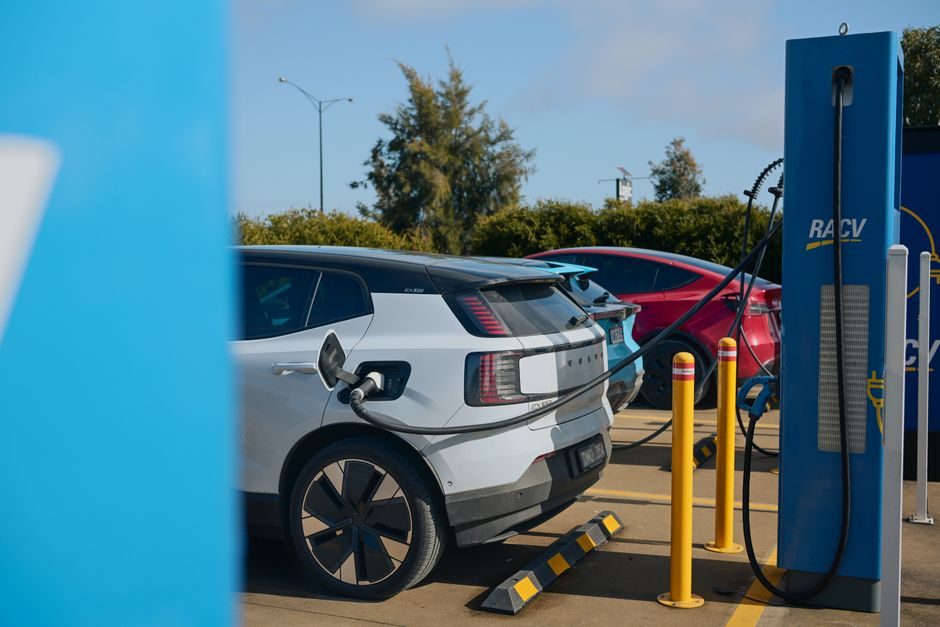
The electric-vehicle traction motor market reached $24.83 billion in 2026, up from $17.77 billion in 2025, growing at a 39.7% CAGR; Asia-Pacific held the largest regional share in 2025 while North America is the fastest-growing region [S2].
Roots Analysis lists 20+ named manufacturers including ABB, AB SKF, BorgWarner, Bharat Heavy Electricals, Continental, DENSO, Emerson Electric, General Electric, GKN Automotive, Hitachi, Hyundai Mobis, Jing-Jin Electric Technologies, Mahindra Electric Mobility, Magnetic Systems Technology, Mitsubishi Electric, Nidec, Parker-Hannifin and Regal Beloit [S7]. The Business Research Company names Siemens, ABB, Hitachi, CRRC, Robert Bosch, Parker-Hannifin, BHEL, Nidec, Kawasaki Heavy Industries, AMETEK, Mitsubishi Electric, CG Power, Toshiba, Alstom and Continental among the dominant suppliers [S2].
Power-Band Segmentation and Where Each Supplier Sits
The 200-400 kW band represents nearly 24% of the global electric traction motor market by value, the most versatile slice for mid-size passenger EVs and regional trains [S8]. Below 200 kW covers most light-duty passenger cars, 200-400 kW covers mid-size and performance EVs plus passenger rail, and above 400 kW covers heavy commercial vehicles and locomotives [S4]. Permanent-magnet synchronous motors (PMSM) still dominate passenger-EV programs, with asynchronous (induction) and switched-reluctance variants gaining share as OEMs target rare-earth-free designs [S2][S7].
Bosch's 230 kW unit (230 kW peak, 430 Nm peak torque, 0-14,000 rpm, 150-230 kW continuous) targets 800-volt fuel-cell and high-voltage battery applications and fits the 200-400 kW mid-band [S3]. Dana TM4's IPM-120 induction motor (16 kW peak, 30 Nm peak torque, 5,400 rpm) anchors the light-EV segment with high-reliability claims [S3]. The Bosch 230 and Dana IPM-120 pair shows how induction and PMSM architectures split between light-duty and mid-band duty cycles.
Heavy-Duty and Axial-Flux Specialists
ABB's AMXE250L3GLX heavy-vehicle synchronous unit delivers 436 kW peak, 1,500 Nm continuous torque at 3,150 A continuous, with peak figures of 3,330 Nm at 681 A and 1,250-3,240 rpm; mass is 490 kg, IP66 rated, with Amphenol PowerLok X-coded high-voltage connectors and M12 low-voltage signal connectors, on water-glycol coolant (40-60% mix) at 65 °C nominal [S3].
Turntide Technologies' AF430D double-stack axial-flux motor produces 190-720 kW peak, 90-201 kW continuous, with 1,938-1,948.4 Nm peak torque at 582-1,172 A and 887.4-887.6 Nm continuous at 254-512 A, on water-ethylene-glycol coolant; mass is 105 kg at 3,700 rpm [S3]. Axial-flux designs from Turntide and similar entrants trade higher torque density against smaller stack OD, a different geometry from the radial-flux Bosch, Dana and ABB units above [S3].
Low-Power and Two-Wheeler Coverage
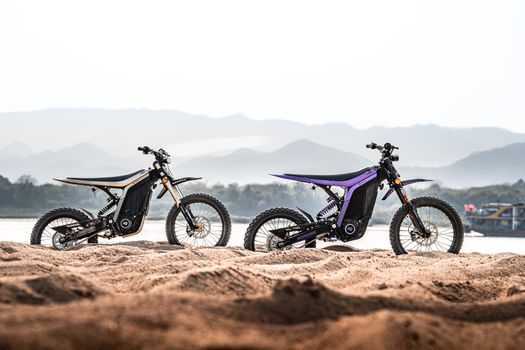
GEM Motors' G1-3 synchronous multi-phase unit delivers 2.3 kW peak, 160 Nm peak torque, 65 Nm continuous at 550 rpm in a 7 kg, 110 x 218 mm package rated IP67, targeted at bicycles, scooters, motorbikes and other 2-/3-wheelers [S3]. Johnson Electric's UBR-series synchronous unit covers 250-300 rpm micro-mobility and rotary applications with peak power 0.0002-0.00024 kW and continuous torque 0.77 Nm in a 36 x 21 mm, IP40 package [S3].
These sub-3 kW packages slot below the 200 kW band that accounts for the bulk of light-EV passenger volume [S4]. GEM and Johnson Electric represent the ecomobility slice that larger 200+ kW suppliers like Bosch and ABB do not serve, so spec-driven sourcing usually splits between the two tiers rather than overlapping them.
Supplier Comparison: Specs, Band and Architecture
Eight named suppliers line up against four decision criteria below, drawn from current product sheets [S3]:
Bosch Mobility Solutions 230 kW — Synchronous, 0-14,000 rpm, 230 kW peak / 150-230 kW continuous, 430 Nm peak, 800 V fuel-cell ready; targets mid-band light and heavy EVs. ABB AMXE250 — Synchronous, 1,250-3,240 rpm, 436 kW peak / 196 kW continuous, 3,330 Nm peak, IP66, 490 kg; targets heavy EVs. Turntide AF430D — Axial-flux synchronous, 3,700 rpm, 190-720 kW peak, 1,938-1,948.4 Nm peak, 105 kg; targets medium and heavy EVs. Dana TM4 IPM-120 — Induction, 5,400 rpm, 16 kW peak, 30 Nm peak; targets light EVs. GEM Motors G1-3 — Synchronous multi-phase, 550 rpm, 2.3 kW peak, 160 Nm, 7 kg IP67; targets 2-/3-wheelers. Johnson Electric UBR — Synchronous, 250-300 rpm, 0.0002-0.00024 kW peak, 36 x 21 mm; targets micro-mobility. Hyundai Mobis, BorgWarner, Nidec, Hitachi, Mitsubishi Electric, Continental, Jing-Jin Electric, CRRC, BHEL and GKN Automotive round out the rest of the 20-supplier long list but no per-product spec sheet was located in this research pass [S2][S7].
What an EV Traction Motor Actually Does

An EV traction motor converts electrical energy from the battery into mechanical torque that propels the vehicle past aerodynamic drag, rolling resistance and kinetic losses; some units also act as motor-generators for regenerative braking [S2]. Two architectures dominate: PMSM (high torque-to-current, high power-to-weight, used in modern variable-speed AC drives) and asynchronous induction motors (ASM) [S2]. The product map is split by voltage class (below 100 V, 100-200 V, 200-400 V, 400-800 V and above 800 V), by cooling (air-cooled, liquid-cooled, self-ventilated) and by application (BEV, PHEV, FCEV, plus rail) [S4][S6].
For cross-discipline readers sourcing rotating machinery outside EVs, the broader AC motor reference covers the asynchronous and synchronous families that underpin most traction programs. Where regenerative braking and four-quadrant control matter, the servo motor page covers the closely related permanent-magnet topology with encoder feedback. For platforms that need linear rather than rotary actuation, the linear motor entry documents the flat-pancake variants some Tier-1s are evaluating for in-wheel applications.
Limitations and Failure-Mode Watch-Points
ABB's AMXE250 shows 1,500 Nm continuous against 3,330 Nm peak (~45%), so duty-cycle planning must use the continuous number, not the marketing peak [S3]. IP66 and IP67 ratings (ABB, GEM) protect against water jets and temporary immersion but do not cover continuous submersion; Johnson Electric's IP40 micro-motor is splash-resistant only [S3].
Coolant-loop discipline is non-negotiable on liquid-cooled units: ABB specifies 40-60% water-glycol mix at 65 °C nominal, and Turntide specifies water-ethylene-glycol, so mixing coolants or starving flow derates the motor continuously [S3]. For procurement teams tracking the broader electrified drivetrain shift, EV traction motor industry trends July 2026: rare-earth-free shift, 800 V architectures maps the supply chain pressure that is pushing the synchronous-to-induction mix.
Trackable Signals for the Next Spec Cycle
Second, the 200-400 kW band's 24% share is the one to monitor for mix shift as rare-earth-free induction and switched-reluctance units eat into PMSM dominance [S8].
For readers also evaluating stationary storage that shares much of the same permanent-magnet supply chain, grid-scale battery storage suppliers in 2026 is a useful adjacent read on the same magnet and inverter bottleneck. Combined, the supplier list, the power-band split, and the coolant/voltage watch-points form a workable sourcing map for traction-motor procurement through 2026.