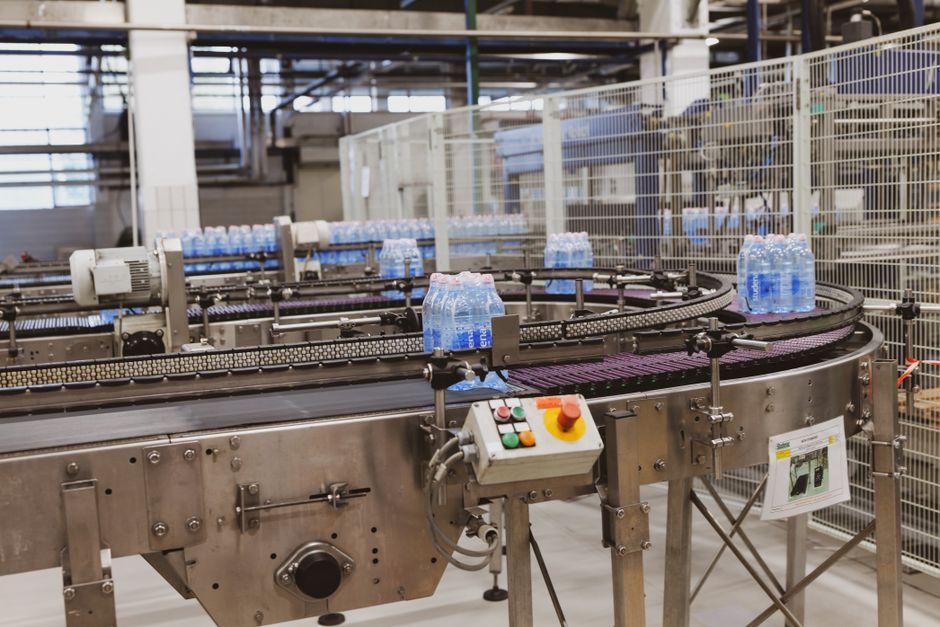
Industrial pump smart manufacturing in 2026 is no longer about bolting a VFD onto a centrifugal — it is about connecting the pump to a PROFINET or EtherNet/IP backplane, exposing the industrial smart valve positioner and seal-flush circuits as named objects, and pushing vibration, temperature, and flow telemetry into the plant historian on a defined cycle [S6]. The reference architecture visible in vendor guidance from Rockwell Automation's smart-manufacturing practice and LEAD Intelligent's line-integration work shows pumps now sit inside the same control domain as conveyors, robots, and smart cameras used for vision-guided assembly [S2][S3].
Custom US shops such as Industrial Pump Manufacturing, Inc. (founded 2015, Chico, CA — (530) 343-3050) supply fabricated water-pump skids for municipalities and water districts, while Tri-Rotor builds long-life rotary lobe units — the 200A solid head, 80BV variable volume head, and 100CX bypass head — with documented field runs on molasses, crude oil, and corn syrup running into multi-decade service life [S1][S5]. Both shop models are converging on a common spec layer: an industrial borescope-friendly bearing housing, a wired or wireless vibration pickup, and a 4-20 mA + HART or IO-Link channel to the controller [S1][S5].
Spec Levers that Define a Smart-Ready Centrifugal and Rotary Lobe Pump
A 2026 procurement spec for a smart-ready pump should anchor on five engineering values: flow (m³/h or gpm), differential head (m or ft), NPSH margin over the required NPSH3 (typically ≥ 0.5 m for centrifugal, ≥ 1.0 m for rotary positive-displacement), driver kW with 10–15 % service factor, and a stated monitoring I/O list [S1][S5]. For process-grade builds, Industrial Pump Manufacturing, Inc. documents full in-house fabrication, machining, and pump testing for industrial and commercial water-pump builds, repairs, and testing for municipalities, water districts, and commercial applications — that combined fab+test capability is the gate that lets owners demand a witnessed FAT and a documented performance curve [S1].
Tri-Rotor's published product list — the 200A solid head, 80BV variable volume head, and 100CX bypass head — covers the three operating regimes procurement typically encounters: high-pressure solids handling, variable-flow viscous service, and recirculation/bypass duty with a separate pressure relief path [S5]. The 200A solid head is shown on a continuous-duty molasses transfer in Brooklyn, NY; the 80BV is fielded on a deep-well crude-oil well in Oklahoma; the 100CX is shown on corn syrup at a Chicago plant — three reference cases that match the spec sheets procurement hands vendors [S5].
Communication Protocols: PROFINET, EtherNet/IP, and IO-Link on the Pump Skid
PROFINET is the dominant deterministic Ethernet protocol inside the 2026 pump-fabrication shop-floor stack, and PROFINET University explicitly describes it as a communications technology that helps manufacturers make things — those things may be discrete things like cars or phones, continuously produced things like gasoline or safe drinking water, or batch things like a batch of pills or potato chips [S6]. Pumps sit squarely in the "continuously produced" branch, which is why the protocol's real-time (RT) and isochronous real-time (IRT) classes matter for closed-loop pressure and flow control on a process skid [S6].
Rockwell Automation's smart-manufacturing page frames the control layer as EtherNet/IP-native across the Logix platform, with pump VFDs, smart meter-style energy meters, and condition-monitoring gateways all reachable as named CIP nodes [S3]. Allied Automation's Crevis line extends the same model with distributed I/O and PC-based control blocks, allowing a pump panel-builder to land valve positioner feedback, RTD signals, and vibration transducer outputs on the same network that hosts the line PLC [S4]. The practical engineering rule visible in these vendor pages: avoid mixing HART on a digital fieldbus segment, and keep analog 4-20 mA loops for legacy transmitters and safety shut-offs [S3][S4].
Condition Monitoring and IIoT: What to Specify vs What to Skip
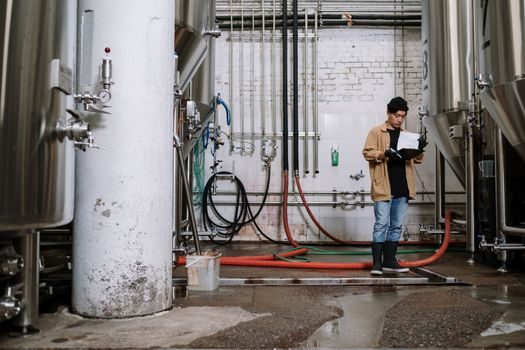
Condition monitoring is the highest-ROI IIoT layer for pumps, and the 2026 spec baseline is well-defined: two-axis (radial + axial) vibration at the drive-end and non-drive-end bearings, bearing-housing temperature (PT100 or PT1000 RTD), and a motor-side current signature — the latter useful for detecting impeller cavitation, vane-pass frequency, and coupling misalignment without mechanical sensors [S1][S5]. For viscous-service and solids-handling rotary lobe builds, casing pressure and a seal-flush flow switch are also specified because mechanical-seal life dominates maintenance cost [S5].
Allied Automation's smart-manufacturing stack treats the gateway as the deliverable, not the sensor — the integration vendor sources the world-class brand hardware (Rockwell, SMC, Aventics, IFM, Sick, Cognex) and assembles the I/O map to a customer-specific bill of materials [S4]. The same model fits pump skids: the spec should call out the brand-agnostic behaviour (cycle time, sample rate, alarm thresholds, historian push) and leave the sensor selection to the integrator, with industrial adhesive-mounted accelerometers and wireless vibration nodes allowed only where bearing-housing metallurgy and IP rating permit [S4].
Comparison: Smart Pump Integration Approaches in 2026
Four integration models are visible in the 2026 vendor mix, and the specifier choice usually tracks plant greenfield vs brownfield, plus existing control-system pedigree. Model 1 is the PROFINET-centric European path, favoured by Siemens-heavy plants and LEAD Intelligent's line integration work, with PROFIBUS PA retained on legacy instruments [S2][S6]. Model 2 is the EtherNet/IP-centric North American path via Rockwell's smart-manufacturing practice, with CIP Safety and CIP Motion available for variable-speed pump skids [S3]. Model 3 is the brand-agnostic integrator path through Allied Automation's Crevis distributed I/O, which lands a mixed vendor fleet on a single PLC and a single SCADA tag database [S4]. Model 4 is the custom-fabricator path, where a US shop such as Industrial Pump Manufacturing, Inc. or Tri-Rotor builds the hydraulic hardware, the panel, and the IIoT gateway as a single tested unit — strongest fit for water-district, food, and oilfield service where the line owner wants one phone number for the whole skid [S1][S5].
The decision criteria line up cleanly: choose Model 1 when the plant's existing controller is Siemens S7-1500/TIA Portal and the workforce is PROFINET-trained; choose Model 2 when the plant is Allen-Bradley/Rockwell and there is an existing CIP-Safety zone; choose Model 3 when the plant runs 4+ controller brands and needs to consolidate tag databases; choose Model 4 when the hydraulic package is non-standard (e.g. solids-handling, viscous, deep-well crude) and the OEM also has to own the panel and the gateway [S1][S2][S3][S4][S5][S6].
Standards, Materials, and the Failure Modes that Drive the Spec
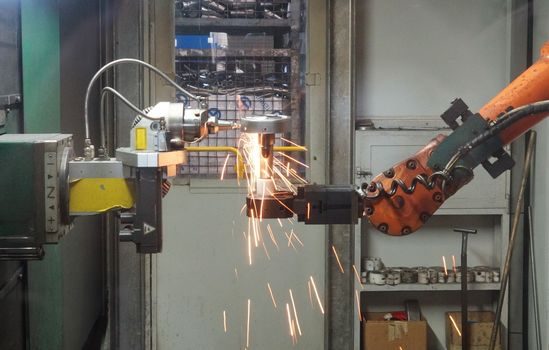
Failure modes, not features, are what separates a serious 2026 smart-pump spec from a brochure. The big four are: cavitation damage on the impeller (drive NPSH margin up, not down), mechanical-seal failure on solids-handling lobe pumps (spec a seal-flush plan and a smart valve positioner on the flush block), bearing failure on VFD-driven units (spec insulated bearings or shaft grounding rings when the drive hits ≥ 30 kW, plus a recorded dV/dt trace), and gasket/seal degradation on chemical service (spec the gasket material against the chemical resistance chart, not against the vendor's stock SKU) [S1][S3][S5].
Material defaults in this market segment are well known: ductile iron ASTM A536 casings and 316 stainless trim for water-district duty, CD4MCu or duplex 2205 for chloride-bearing chemical service, and 17-4 PH shafting on rotary lobe pumps where viscous loading and radial thrust rule out 304 stainless [S1][S5]. For process integration, the relevant code families are IEC 61131-3 for PLC programming, IEC 61784 for fieldbus conformance, and ISO 5198 for centrifugal pump testing — these are the standards that should be named on the purchase order, with the testing standard explicitly tied to the witnessed-FAT acceptance criterion [S3][S4][S6].
Use Cases, Sourcing Signals, and What's Trackable Through 2026-H2
Three use cases dominate 2026 smart-pump demand. Municipal water-district builds lean on US custom shops with full fabrication and in-house test stands — Industrial Pump Manufacturing, Inc. is a documented example with fabrication, machining, and pump testing for industrial and commercial water-pump builds, repairs, and testing for municipalities, water districts, and commercial applications [S1]. Viscous and solids-handling service in food, chemical, and oilfield leans on rotary lobe builders with multi-decade field reference cases — Tri-Rotor's 200A, 80BV, and 100CX cover this slot with named field installations in Brooklyn, Oklahoma, and Chicago [S5]. Line-integration and line-controller scope leans on smart-manufacturing vendors — LEAD Intelligent for turnkey Asian plant lines, Rockwell Automation for the Logix/EtherNet/IP backplane, Allied Automation for the brand-agnostic integrator delivery [S2][S3][S4].
Trackable signals for 2026-H2: (a) the next PROFINET University / PI (PROFIBUS & PROFINET International) release of the PROFINET over APL (Advanced Physical Layer) profile for process pumps, which would let 10 Mbit Ethernet ride over the same two-wire cable currently used for PROFIBUS PA in hazardous areas; (b) Rockwell Automation's product-configuration updates to its PumpSmart and PowerFlex 755 drive families, which set the default VFD firmware for new pump skids; and (c) US custom-shop capacity statements — whether Industrial Pump Manufacturing, Inc. and Tri-Rotor extend their lead times, since the lead time is the de facto indicator of segment demand [S3][S5][S6]. The 2026 reference set also connects cleanly to the broader site coverage on air compressor smart manufacturing, hydraulic pumping units, and rotary drilling rigs, which share the same PROFINET/EtherNet/IP integration model and the same brand-agnostic panel-builder delivery pattern [S2][S3][S4].