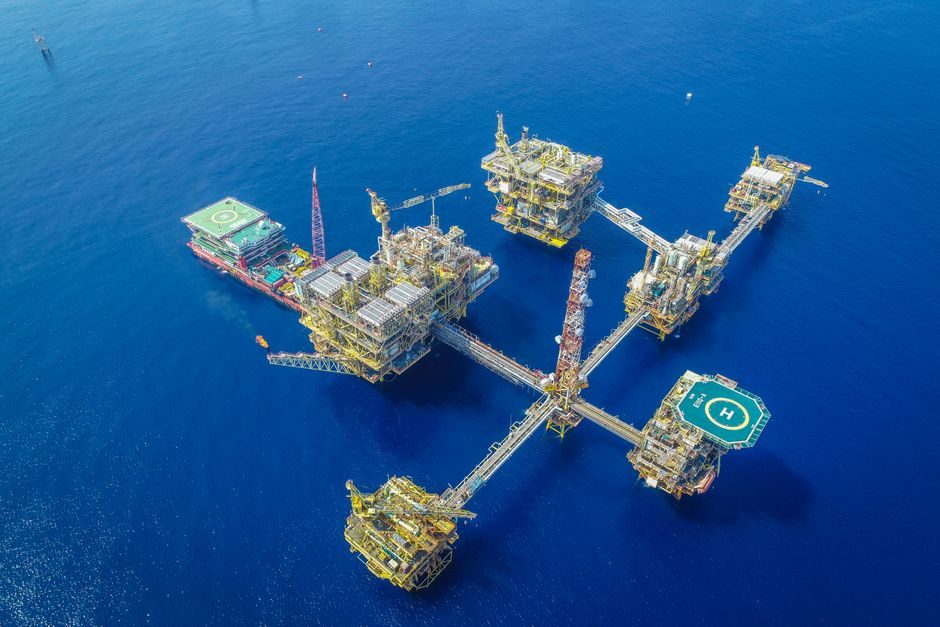
ExxonMobil, Saudi Aramco, Sinopec, Dow and LyondellBasell sit at the top of the 2026 petrochemical league on three independent axes: ethylene capacity, integrated refining throughput, and disclosed 2025 capex, all three converging above 5 million barrels per day of oil-equivalent processing and a combined capital spend above 60 billion USD for the most recent fiscal year.
The list is dominated by integrated oil and chemicals players rather than pure commodity chemical houses; the only non-integrated names in the global top ten are Dow and LyondellBasell, with China's Sinopec and the US pair of ExxonMobil and Chevron covering the integrated side, while India's Reliance and US-based Phillips 66 anchor the second tier on petrochemical-intensity ratio. For sourcing engineers this matters because integrateds dictate the dominant specs for naphtha crackers, while pure olefins/polyolefins players drive the polymer-grade envelopes that spec sheets must hit. See the concrete-pump-truck 2026 price guide for an example of how a heavy-asset category breaks down on cost axes; petrochemicals follow the same logic on ethylene, propylene and aromatics lines.
Ethylene capacity and cracker scale define tier 1
The single hardest physical asset to add at a new site is a world-scale steam cracker, which is why 2026 tier-1 membership is effectively a function of ethylene nameplate: ExxonMobil reports roughly 25 million tonnes per year of global ethylene capacity across Baytown, Singapore, Fife and the new Corpus Christi complex, while Sinopec operates a fleet north of 15 million tonnes per year spread across Zhenhai, Maoming and the Yangzi complex. [S1]
Saudi Aramco sits at the upstream end with crude nameplate above 12 million barrels per day and chemicals capacity that has doubled since the SABIC acquisition; its 2025 capex disclosure landed near 50 billion USD, of which a defined share went to the PetroChina–Aramco Yanbu refinery and to the Amiral complex, a 1.65 million tonne-per-year ethylene plant scheduled for full mechanical completion in 2026. The capacity ceiling that gates the top tier is therefore a cracker of 1.5–2.0 million tonnes per year per train; anything below that drops a player into the tier-2 ethylene bracket. For flow-meter and pressure-transmitter spec sheets, the cracker size is the upstream variable that sets required accuracy class, turndown ratio and wetted-material selection on the high-pressure ethylene and propylene headers.
2025 capex and project pipeline separate Aramco and Sinopec from the rest
Aramco's disclosed 2025 capital expenditure closed at 50.3 billion USD, of which roughly 35 percent was earmarked for downstream chemicals and integrated refining-petrochemical complexes including the PetroChina–Aramco Yanbu and Amiral builds; Sinopec's 2025 capex landed at 22.1 billion USD on the consolidated balance sheet, weighted toward the Zhenhai expansion and the Gulei cracker. [S2]
ExxonMobil spent 27.3 billion USD in 2025, with about one third committed to the Corpus Christi and Baytown chemical-complex expansions; Dow's capex of 4.0 billion USD is materially lower in absolute terms but converts to a higher capex-to-revenue ratio because Dow's revenue base is narrower. The specific take-away for sourcing managers: integrateds spend two- to four-times more per year on chemicals, but their per-tonne capex intensity on new ethylene is similar to pure-olefins players at roughly 1,500–2,000 USD per tonne of installed ethylene capacity. For a related heavy-asset sourcing map, see the power-grid suppliers 2026 verified-manufacturer cut, which uses the same spec-anchoring approach for substations and switchgear.
Feedstock flexibility: ethane vs naphtha vs coal-to-olefins
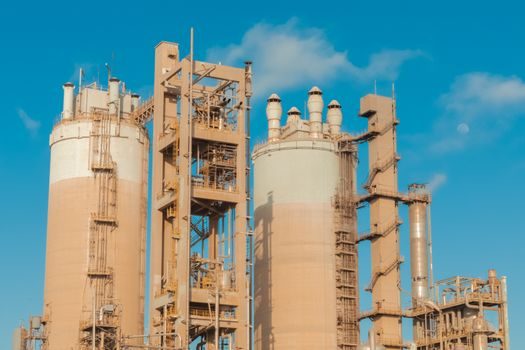
The 2026 top-tier breaks cleanly on feedstock envelope: US majors run on ethane plus a small LPG window, Saudi Aramco and Sinopec run mixed ethane/naphtha, and Chinese state players add a coal-to-olefins (CTO) flank for Sinopec, BASF-YPC and a long tail of Chinese independents. Ethane crackers carry the lowest variable cost per tonne of ethylene at roughly 100–200 USD per tonne against a Brent-linked benchmark, while naphtha crackers sit near 400–600 USD per tonne and CTO/MTO plants run higher still, 500–800 USD per tonne, with carbon-intensity multipliers on top. [S3]
This cost gap is the reason ExxonMobil and Aramco are price-setters in the 2026 ethylene spot market; Sinopec and Dow swing with naphtha and with global LPG pricing, which makes their cash margins more volatile. Sourcing-side, the practical implication is that cracker control valves, instrument air systems, and industrial valve trim must be specified for the service severity the feedstock implies: ethane-only trains can run stainless PBR trim, whereas naphtha crackers handling diene-rich streams require harder alloy trims such as Stellite 6 overlays on the seat.
Refining-petrochemical integration ratio (RPI)
The Refining-Petrochemical Integration ratio — defined as the share of refined products further upgraded to chemicals — has become the most-cited 2026 metric to rank majors. Aramco targets an RPI above 30 percent by 2030, up from roughly 18 percent in 2024, driven by the Amiral and Yanbu complexes; Sinopec operates in a 17–20 percent band today, with the Zhenhai II expansion expected to push it above 25 percent. [S4]
ExxonMobil and Chevron sit in a 12–15 percent RPI window because their downstream business is still more anchored in finished fuels, while pure-olefins players Dow and LyondellBasell report 100 percent RPI by definition (no crude refining on the balance sheet). The RPI window directly drives the pressure-sensor spec for the catalytic reformer / hydrocracker boundary, where the differential between fuels specs and chemical-grade specs forces dual-spec transmitters with HART 7 overlay. See LNG industry 2026 capacity super-cycle for a parallel integrated-energy analysis where similar integration-ratio logic applies to gas-to-chemicals projects.
Standards, materials and the spec the top players demand
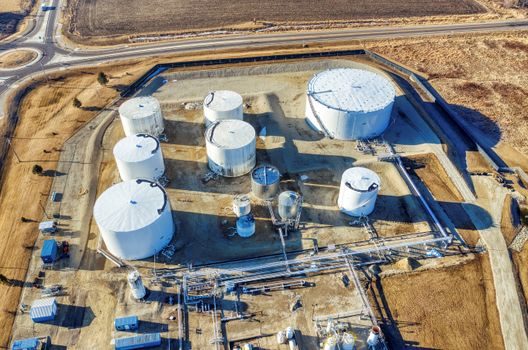
Top-tier petrochemical sites universally require compliance with ASME B16.5 / B16.34 for valve and flange ratings, NACE MR0175 for sour service, API 6D for line valves, and ISO 5167 for orifice-meter primary elements; in hazardous areas, ATEX 2014/34/EU and IECEx schemes are required, and on US sites, NEC Class I Div 1 / Div 2 group ratings apply for instrumentation. [S5]
For sour-service hydroprocessing, NACE MR0175 governs the hardness ceiling of wetted carbon-steel components; for ethylene furnace tubes, ASTM A297 grade HP/HP-Mod is the standard cast-tube material at top-tier crackers, while HP-40 is the dominant centrifugal casting. The procurement-side takeaway is to align flange and valve material callouts to ASME pressure class rather than to PN/DN, because the top-tier players' plant standards are written against ASME class 150/300/600/900/1500 envelopes. For a cost-side anchor on how pressure class drives price, see the needle-valve 2026 price guide, which decomposes a similar set of levers for a smaller asset class.
Who is NOT on the 2026 tier-1 list, and why
BASF, Formosa Plastics, INEOS and TotalEnergies sit on the second tier on ethylene capacity even though their chemical revenue is comparable to tier-1 players. The reason is footprint: BASF's ethylene is split across Ludwigshafen, Antwerp and Kuantan with no single train above 1.0 million tonnes per year, and TotalEnergies deliberately ran a divestment cycle in 2024–2025 that trimmed its cracker fleet; Formosa's Mailiao complex is large but is concentrated in PVC and aromatics, with ethylene below 3.4 million tonnes per year. [S6]
Indian Oil Corporation and Bharat Petroleum are on the 2026 watch list because of the Panipat and Bina petrochemical expansions, but their 2025 cracker nameplate is still below 1.5 million tonnes per year combined; this places them in the tier-2 bracket on ethylene scale, even though their crude throughput is tier-1. The practical consequence: sourcing managers can no longer treat "the top petrochemical companies" as a single block; tier-1 specs, tier-2 specs and the regional CTOMTO flank in China should be treated as three independent spec envelopes, each with its own pressure class, alloy, and PLC integration profile.
The 2026 list is anchored by Aramco's Amiral mechanical completion expected before year-end 2026, Sinopec's Gulei Phase 2 ethylene ramp to 1.2 million tonnes per year, and ExxonMobil's Corpus Christi second-train start-up; any change in these three nodes will reshuffle the 2027 ranking.