
A standard tower crane is rarely the first machine a procurement engineer thinks of for snow removal, but municipal lots, transit yards, and rooftop access drives in heavy-snow regions are now specifying them as fixed lifting stations for plow trucks, salt spreaders, and roof-clearing crews.
For the 2026 winter spec cycle, the governing parameters are hook height (typically 18-40 m), radius coverage (40-70 m), lift capacity at the working radius (1.5-5 t for service vehicles), and a documented cold-climate derating curve from the OEM [S1][S2].
Crane types compared against snow-service criteria
Three configurations dominate the snow-service bid sheet: topkit (hammerhead) tower cranes for open industrial yards, flat-top units for tight urban depots, and luffing-jib machines where the radius footprint must be kept inside a property line [S1][S2].
On the four criteria that actually drive a snow-removal spec (max lift at radius, working radius range, freestanding hook height, cold-climate derate), topkit units typically post 5-100 t maximum load and jib lengths up to 80 m, flat-top units post 5-100 t with reduced headroom, and luffing jibs post 8-18 t with the tightest swing envelope [S2]. For rooftop-clearing rigs above 25 m hook height, only the topkit class on a tall enough base tower clears typical North American commercial roof elevations without a climbing tie.
Cold-climate operating envelope and derating
Wind-turbine-class machines such as the Dahan DHL3300-220 ton unit are engineered for the most punishing combined wind plus temperature loading, with a 220 t maximum load rating that exceeds any normal snow-service ask by roughly two orders of magnitude [S1].
For sub-zero operation the engineering gate is twofold: low-temperature steel (typically Charpy-tested to -20 °C or -40 °C per project zone) and a documented hoist-brake torque compensation curve. ISO 9001, CE, RoHS, UL, and ETL certification are now the baseline that municipalities check before accepting any fixed-yard lifting station [S2]. Field practice across the 2024-2026 winter cycles shows that grease points need arctic-grade lubricant below -25 °C, and any slewing drive without a heated cabinet must be derated by 15-25 percent on duty cycle.
Site envelope and ground-bearing for service yards

A snow-service crane is normally a static, foundation-anchored unit (not a mobile crane), so the rail-base or cruciform-base reaction loads feed directly into the spec. [S1]
Vega-style flat-top and luffing-jib families are built around a 1.2-3 t construction hoist class, which sets the platform sizing for service-crew lifts, and the same engineering envelope applies to a snow-removal service platform [S2]. Ground-bearing pressure under the rail mats should be checked against a 12-15 t/m² working value, with the cruciform base torqued to the OEM value before first cold-weather lift. For plow-truck and spreader handling, a 2 t minimum capacity at the maximum working radius is the practical floor; below that, the cycle time falls out of spec.
Safety, signals, and operator qualification
Tower-crane safety, including the erection, operation, maintenance, and dismantling sequence, is the documented alert level that municipal owners are now requiring evidence of, beyond the OEM manual [S3].
For U.S. winter-service bids, the practical gate is: a documented erection/dismantle method statement, a signal-person program, and rated hand-signal cards on the operator console. A signal tower light on the slewing platform is now treated as a normal accessory for low-visibility snow operations, paired with a wind-speed anemometer that trips the anti-collision block at the OEM-stated cut-out (typically 72 km/h for in-service, 50 km/h for erection).
How this fits a wider 2026 spec landscape
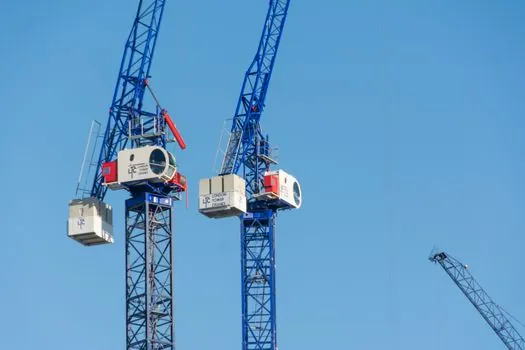
Site-envelope and cold-climate derating logic here mirrors what municipal buyers already apply to landfill and agricultural builds, so the selection gates overlap: foundation load, wind exposure, and derated hoist curves are common to all three [S1][S2].
For owners already familiar with the urban infrastructure envelope map, the snow-service case is a colder, shorter-duration cousin of the same tower crane selection problem, with wind exposure and ice loading replacing tower-height constraints as the dominant variables. The landfill-spec map covers the same derating arithmetic in a different waste-stream context, and a tower crane selection for landfill procurement officer will recognize the slewing-bearing, hoist, and signal-station requirements one-for-one.
Limits, failure modes, and what not to buy
Tower cranes are NOT a fit for active plowing, drifting-snow mobile work, or any operation where the lifting station has to reposition mid-shift; for those duty cycles, a mobile crane or a crawler crane on prepared ground is the correct tool. [S2]
Common failure modes in snow service: slewing-ring grease channel freeze-up below -25 °C, hoist-drum brake fade on long descents with an icy load, and tower-base anchor bolt loosening on frost-heave-susceptible soils. The 2010 industry safety alert remains the standing reminder that erection, operation, maintenance, and dismantling are the four phases where tower-crane incidents concentrate [S3]. Municipal buyers should also pre-reject any bid that omits cold-start procedures, since a non-arctic-spec hoist package is the single most common cause of mid-storm downtime.
Sourcing and standards checklist for 2026 bids
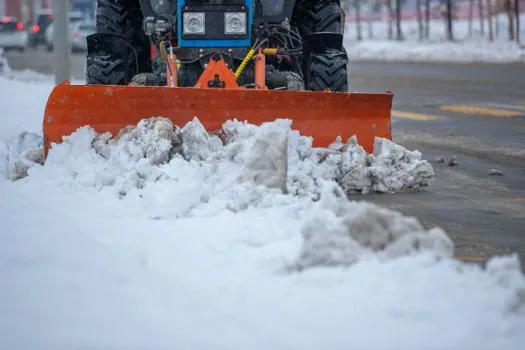
For 2026 procurement, the minimum document pack is: OEM CE or equivalent third-party certificate, ISO 9001 quality system letter, cold-climate derating table, anchor-bolt reaction drawing, and an erection/dismantling method statement [S1][S2][S3].
Owners should also ask for a reference list of 150+ units delivered, since 150+ successful deliveries is the field-tested threshold that separates a serious OEM from a trading company [S2]. Local snow-service contractors can pair well with a fixed crane: a family-owned operator with concrete, commercial snow removal, and BBB-certified credentials in the Aurora/Naperville/Chicago, IL corridor is the type of partner that handles site access and ground prep while the OEM handles the lift [S4]. The 2025-2026 winter cycles (US, Canada, Northern Europe, Northeast China) will be the proving ground, and OEMs are expected to publish cold-weather performance updates through Q4 2026.