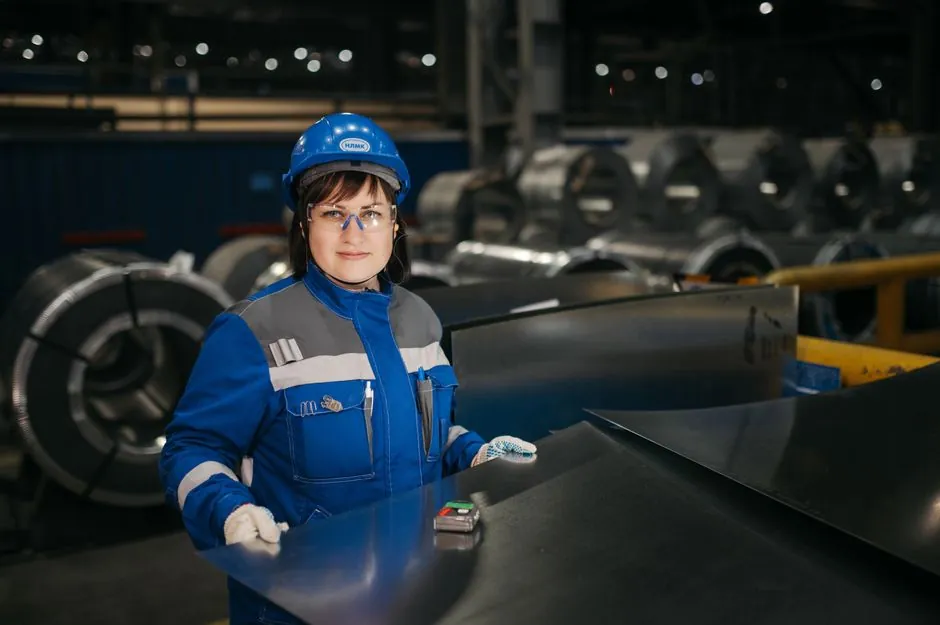
Steel-mill VFD selection centers on three hard constraints: motor duty cycle, regenerative energy handling, and harmonic compliance on a plant bus already loaded with arc-furnace and rolling-mill thyristor drives. Across the large-scale VFD market, Asia Pacific led regional revenue in 2025 while North America and Europe are forecast as the fastest-growing regions through 2035 [S5].
The large-scale VFD segment was valued at USD 2.2 billion in 2025, rising to USD 2.4 billion in 2026, and is projected to reach USD 4.0 billion by 2035 at a 6% CAGR, with ABB, Siemens, Schneider Electric, Rockwell Automation, and Yaskawa collectively holding 34% of the market in 2025 [S5]. For a steelmaker weighing capex, that concentration matters: the same five vendors supply most installed regenerative drives in hot-strip mills worldwide.
Steel-Mill Load Profiles and the Right VFD Topology
A reversing roughing stand pulls 200% rated current during a bite and regenerates 30% to 40% of that energy back to the bus on the unload, while a coiler mandrel pump demands four-quadrant torque at near-zero speed with encoder feedback [S2][S3]. Direct torque control skips the PWM modulator entirely and switches IGBTs from instantaneous torque and flux error, giving the fastest torque response of any control method and making it the default for rolling mills and crane drives [S2].
For variable-torque loads such as descaling pumps, fume-exhaust fans, and cooling-water circulators, volts-per-Hertz control remains adequate because the quadratic torque-speed curve keeps low-speed flux problems at bay, and the drive cost is roughly half of a vector unit at the same horsepower [S2]. Above 100 hp, Malloy's application guide requires inverter-duty insulation and bearing protection on any VFD-driven motor, because the PWM common-mode voltage erodes standard Class F windings and induces fluting in unprotected bearings inside 24 to 36 months [S3].
Rectifier, DC Bus, and Regenerative Braking
Modern VFDs use a six-pulse diode bridge rectifier, with 12-pulse and active front-end (AFE) topologies reserved for sites with strict harmonic limits, where the AFE stages can hold total harmonic distortion below 5% at the point of common coupling [S2]. The DC bus on a 460 V AC system sits near 650 V DC, and the bus capacitor bank is the wear component most likely to take a mill drive offline: electrolytics degrade with every thermal cycle through the regenerative spike from a mill bite [S2].
For four-quadrant duty on a roughing stand or a downcoiler, specify a regenerative active front-end or pair the drive with a regen line-side converter, since dumping that braking energy across a brake resistor wastes 30% to 40% of the bite energy as heat. Lindemann's VFD system on metal-recycling shredders handles exactly this kind of cyclic overload, with the OEM citing maximised throughput and energy efficiency from variable-speed control of the shredder rotor [S4]. The same topology transfers cleanly to a scrap-fed steel-mill shredder upstream of the melt shop.
Control Modes: V/Hz, Vector, and Direct Torque
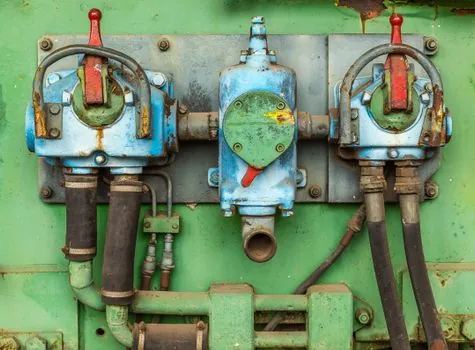
Sensorless vector control is sufficient for most pump, fan, and compressor duties on the mill utility side, while closed-loop vector with an encoder is mandatory for any drive holding torque below 5% of base speed, such as a coiler mandrel or a pinch roll in threading mode [S2]. Direct torque control remains the only practical choice for the main roughing and finishing stands, where torque-loop bandwidth above 1 kHz determines strip-gauge accuracy and the drive must respond to a load impact within 2 to 5 ms [S2].
Across all control modes, PWM switching frequency trades against IGBT losses: 2 kHz switching cuts losses roughly 30% but adds audible motor noise above 75 dB(A), while 16 kHz cuts noise below 65 dB(A) at the cost of higher junction temperature and derated output current, typically 10% to 15% at the top of the range [S2]. For a hot-strip mill finishing stand, most OEMs land at 4 to 8 kHz as the compromise between torque ripple, audible noise, and cabinet cooling cost. A practical variable speed drive selection tree for a steel mill starts with the load curve, not the motor nameplate.
Motor Side: Inverter-Duty Windings and Bearing Protection
NEMA MG1 Part 31 and the IEC 60034-25 inverter-duty standard define the voltage-withstand margin needed to survive the 1.5 to 2 kV microsecond rise-time spikes from a modern IGBT output stage, and any motor above 100 hp on a VFD should be specified to one of those standards rather than a general-purpose design [S3]. On a 500 hp main drive, the price premium for inverter-duty construction is typically 8% to 15% over a standard TEFC motor of the same rating, which is trivial against the cost of a 36-month rewinds.
Skipping both layers is the single most common root cause of premature bearing failure on VFD-driven steel-mill motors, and a failure analysis almost always shows the characteristic fluting pattern at the inner-race natural frequency. For integrated packages, the drive motor combination should be quoted as a single line item with the inverter rating matched to the motor's worst-case magnetising current, not its nameplate full-load amps.
Power Quality, Harmonics, and Bus Coordination

Industrial motor systems account for approximately 45% of global electricity consumption, so harmonics and power factor at the mill bus have a direct line to the utility bill, regardless of how efficient the drive itself is [S5]. A standard six-pulse rectifier draws current with a total harmonic distortion of 35% to 40%, which fails IEEE 519 limits at most common bus voltages and forces the utility to charge a penalty or demand filtering.
Two practical mitigations: 12-pulse rectifiers with a phase-shifting transformer cut the dominant 5th and 7th harmonics to under 7% each, and an active front-end drives total harmonic distortion below 5% while also allowing the drive to regenerate cleanly back to the grid during a mill unload [S2]. For greenfield melt-shop projects, the VFD specification should be written around the AFE topology from day one, because retrofits into an existing six-pulse drive base typically cost three to five times the incremental hardware price once bus studies and protection coordination are redone.
Selection Criteria Comparison for Mill Drives
For a steel-mill project team weighing topologies, the four criteria that actually drive cost and risk are control bandwidth, harmonic compliance, regenerative capability, and motor-side insulation. On bandwidth, V/Hz control delivers around 10 Hz loop response, sensorless vector around 50 Hz, and direct torque control above 1 kHz, so any drive above 100 hp on a reversing stand must move past V/Hz to handle the load impact without tripping [S2].
On harmonics, six-pulse is acceptable only behind an isolation transformer on a stiff utility feed, 12-pulse meets most IEEE 519 sites with a passive trap, and AFE is the only option for weak grids or where the mill already runs close to its harmonic budget from arc-furnace rectifiers [S2][S5]. On regeneration, brake resistors work for low-duty cycle auxiliary drives but waste 30% to 40% of braking energy, while a regen line-side converter or AFE returns that energy to the bus for use by other drives. On motor insulation, general-purpose Class F fails above 100 hp on a VFD, while NEMA MG1 Part 31 or IEC 60034-25 inverter-duty designs survive the 1.5 to 2 kV spike environment for a normal 15 to 20 year motor life [S3].
What VFD Selection Is Not For in a Steel Mill
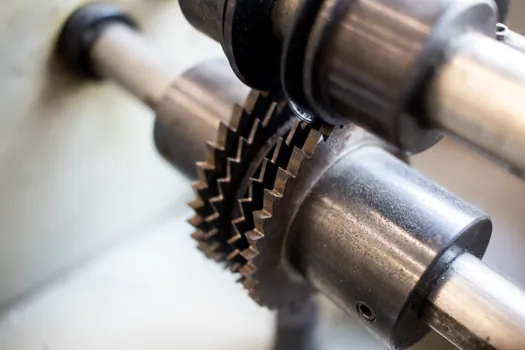
A VFD is the wrong tool for a single-speed, infrequently-started pump or compressor, where a soft starter or even a direct-on-line starter with a contactor and overload relay handles the duty for one third to one half the capital cost, and the inrush current of 6 to 12 times full-load current is acceptable to the upstream transformer [S1]. It is also wrong for any application where the motor sits idle for long stretches, because the DC bus capacitors degrade faster when continuously energised than when cycled, and the parasitic losses of the rectifier and cooling fans typically run 3% to 5% of the drive rating even at zero speed [S2].
Specifying a servo drive in place of an induction-motor VFD is another common error, since servo drives are tuned for short-stroke dynamic positioning on a permanent-magnet motor, not for the multi-megawatt, four-quadrant duty of a mill main drive. The economics of a 500 hp induction VFD on a rolling-mill stand and a 5 kW servo on a coiler hydraulic pilot valve are not comparable, and the procurement team should keep the two specification paths separate. For a deeper dive on the mining-side counterpart of these same selection decisions, the article on VSD selection for mining: voltage class, motor duty, hazardous area covers hazardous-area classification and voltage-class choices that overlap directly with steel-mill coal-handling and sintering drives.
Specification Gate and Sourcing Signals
Three signals to watch in late 2026: first, the pace of NEMA Premium and IE3 replacement programs, which mandate VFD-ready motors under the same efficiency rules; second, IEEE 519 enforcement at the utility meter, which is pushing the retrofit market from six-pulse to 12-pulse and AFE on existing mill drives; third, the price spread between regenerative and non-regenerative drives, which is narrowing as AFE IGBT modules reach cost parity with diode bridges at the 500 kW level [S5]. The next specification node worth tracking is the publication of the next IEC 60034-25 amendment, which governs inverter-duty motor insulation margins.