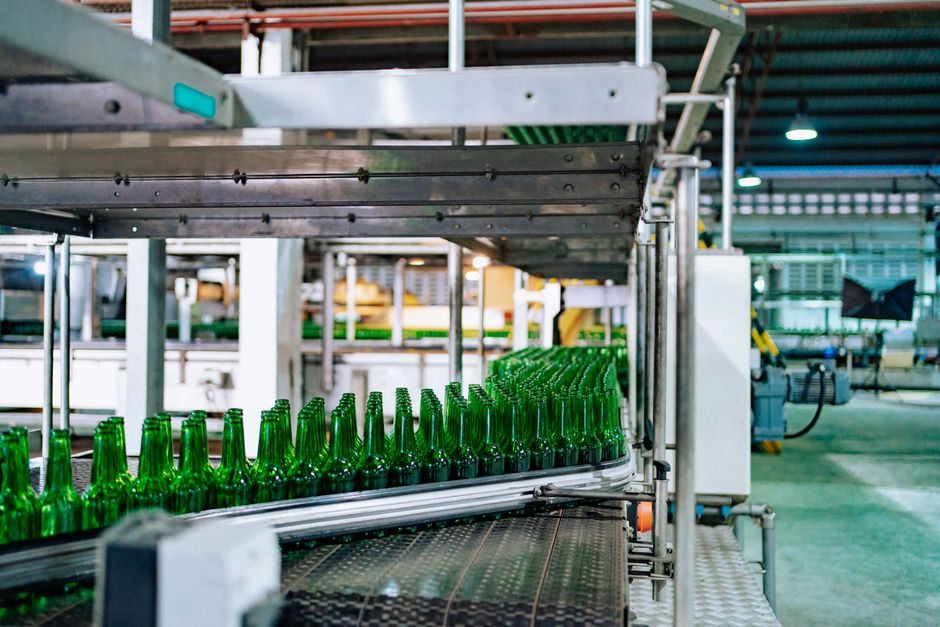
A mesh-belt conveyor from Steinhaus in series 1300 spans widths up to 1,500 mm (59.06 in) in stainless, nickel, chrome or mild galvanized steel for cooling and drying duty [S2]; the wider 1000-series honeycomb belt pushes to 5,000 mm (196.85 in) for food-industry washing and cooling [S5]. A natural-frequency conveyor from Vibra Schultheis (RR series) is documented at conveying distances of 40 m or more in a horizontal two-mass layout with twin vibrator or eccentric drives [S4]. The two architectures answer the same question (move bulk, parts or product horizontally) with completely different physics, and that gap is where most specification errors sit.
This article lines the two technologies against each other on drive, envelope, hygiene, temperature, contamination, length and energy, using only manufacturer-published product data from 2026-Q2 listings. Where the sources do not give a number, the comparison stays qualitative — a guessed ratio on a safety-relevant reference is worse than no number at all.
Drive Architecture and Mechanical Principle
Mesh-belt conveyors are positive-drive systems: a woven or spiral metal belt rides on terminal drums or sprockets, with the drive torque transmitted directly through the belt and any positive sprocket engagement. The flat-wire variant is described as "easily washed," with smooth surface and stable running provided by positive sprocket drive on stainless steel wire mesh. For context on the broader conveyor family, see the belt-conveyor reference: the woven steel mesh version is one of several belt types differing mainly in surface and tension behaviour. [S1]
Vibrating conveyors are resonance or natural-frequency systems, not positive-drive. The RR-series two-mass layout from Vibra Schultheis uses twin vibrating motors or eccentric drives tuned to the system natural frequency, and is offered as modular construction for long-distance, high-capacity horizontal transport at 40 m and beyond [S4]. The AViTEQ helical parts conveyor is another branch of the same family, applying vibration to orient and feed small parts item-by-item to a magazine or assembly station [S1]. For a deeper look at the variant, the vibrating-conveyor entry covers the design space.
Length, Capacity and Envelope Limits
Long horizontal runs above ~30 m are where natural-frequency conveyors start to win on capital cost per meter: the RR series is explicitly engineered for conveying distances of 40 m or more [S4]. Two-mass systems recycle energy between the spring-mounted trough and the counter-mass frame, so the drive only tops up losses, and long runs do not need proportional drive-power growth in the same way a friction-driven belt does.
Mesh-belt conveyors are bounded by belt width and pull strength. The Steinhaus 1300 single-spiral belt is published at 1,500 mm (59.06 in) width with a heat-resistant build [S2], and the 1000 honeycomb food-industry belt is published at 5,000 mm (196.85 in) width, but those are the working widths, not the lengths. The woven construction absorbs pull at the carryway and returnway, and the practical run is limited by belt tensile rating and the drum-shaft layout. For a belt-only system, the steel-mesh reference summarises why the mesh itself, not the frame, is usually the bottleneck.
Temperature, Contamination and Cleaning

Mesh belts tolerate what vibrating troughs usually do not. Both Steinhaus entries are explicitly tagged "heat-resistant" / "high temperature-resistant" for cooling systems, drying, washing and food applications [S2][S5]. Stainless, nickel and chrome steel grades are listed as the standard material options, with mild steel and galvanized as alternatives where corrosion is not the binding constraint [S2][S5]. The mesh is described as "easily washed," which is a process-engineering claim worth taking literally: open-area flat-wire and honeycomb weaves drain, CIP-fluid penetrates, and residue does not pool in a flexing trough.
Vibrating conveyors carry product in a closed or troughed pan that flexes with the resonance stroke, so the contact surface is solid, not open. Cleaning is mechanically possible but the resonant trough does not drain the way an open weave does, and high-temperature duty is constrained by the spring, liner and drive-isolation elastomers. Material and conveyor selection for food or chemical lines therefore usually defaults to mesh-belt for hot/wet/cleaning-intensive duty and to vibrating for dry, abrasive, dusty or hot-pan duty where the product is not contamination-sensitive.
Product Form Factor: Bulk vs Oriented Parts
Vibrating conveyors split into two distinct use cases that buyers often conflate. The RR series and similar trough-style units are built for bulk transport — ore, foundry sand, grain, hot aggregates, dry chemicals — and are framed by General Kinematics and Vibra Schultheis as long-distance, high-capacity material-handling lines [S3][S4]. The General Kinematics VIBRA-BELT is a hybrid: a flexible trough carried on a vibrating frame, blending the closed-pan containment of a vibrating conveyor with a belt surface for material stability, and is targeted at metallurgical-industry material handling [S3].
Helical / spiral-bowl vibrating conveyors from AViTEQ are a different machine class: they orient and singulate small mass-produced parts, item-by-item, into a downstream magazine or assembly cell [S1]. The "conveyed product" is not bulk, it is discrete components. Comparing those units to a 5,000 mm honeycomb food belt on the same axis is a category error.
Comparison Matrix: Four Decision Criteria
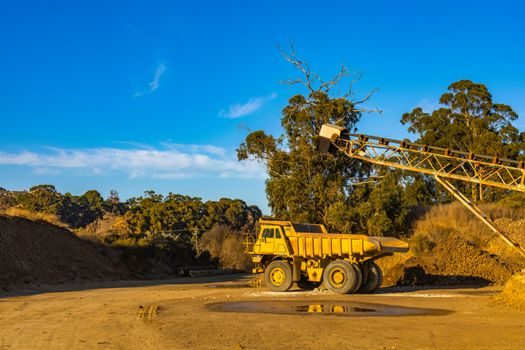
On four practical criteria, the two technologies split cleanly. Drive: mesh-belt is positive (sprocket/drum, controlled by belt-tensioner and pulley ratio); vibrating is resonant (eccentric or vibrating-motor drive tuned to natural frequency) [S4]. Maximum published working width / length envelope: 1,500 mm width on 1300-series spiral belt and 5,000 mm width on 1000-series honeycomb belt, with run length limited by belt tensile [S2][S5]; 40 m+ run length on RR-series natural-frequency conveyor, with width set by the trough pan [S4]. Hygiene / cleaning: mesh-belt is open-weave, easily washed, food-grade stainless standard [S5]; vibrating trough is closed-pan, harder to CIP, better for dry/dusty product. Temperature: mesh-belt in heat-resistant stainless / chrome / nickel-steel explicitly listed [S2][S5]; vibrating conveyor limited by spring and elastomer selection. Product form: mesh-belt handles bulk and discrete items on a flat or honeycomb surface; vibrating handles either bulk (long trough) or oriented discrete parts (helical bowl) [S1][S3][S4].
Failure Modes and Sourcing Signals
The most common mesh-belt failure is belt stretch, fatigue at the cross-rod / spiral joint, and edge wire unravelling on mis-tracked installations; sourcing risk is largely around weave consistency and stainless grade certification. Flat-wire and honeycomb products are widely listed on Chinese B2B directories at sub-$50/m entry points for light polyester and stainless mesh, while engineered stainless conveyor mesh from established fabricators (Shuke, YIYI) carries the spec data and export history needed for OEM and food-grade procurement [S6]. The flat-belt reference covers why the wire-straightness and cross-rod tolerance matter for tracking life.
Vibrating conveyor failures concentrate at the springs (fatigue, set), the drive bearings (eccentric / vibrator-motor service life), and the trough welds (crack initiation at the nodal points). Sourcing risk is around tuning — a two-mass system that is not tuned to its natural frequency in the field will draw 2–5× its nameplate current and stall within minutes, and that risk is much harder to mitigate by buying a different brand. Specifying by published natural-frequency and stroke numbers, and asking for a witnessed no-load power check at commissioning, is the most reliable guard.
Procurement and Application Fit
Use a mesh-belt conveyor when the product is food, hot, wet, requires CIP, needs a positive-drive indexing surface, or runs at moderate length with a width that fits a standard 1,500 mm or 5,000 mm belt family [S2][S5]. Use a vibrating conveyor when the product is dry, abrasive, hot-but-not-CIP, dusty, or when the run is over ~30 m and a long trough is more economic than a tensioned belt [S3][S4]. Use a helical vibrating bowl feeder when the goal is parts orientation and singulation, not bulk transport [S1].
For a wider conveyor-economics view that complements this comparison, see the analysis of Pneumatic Conveying System Cost 2026: Bands, Levers and Sourcing Reality and the selection logic in Pneumatic Conveying Selection: Six Criteria That Decide Dilute vs Dense, Vacuum vs Pressure; both share the "transport mechanism vs product" decision tree this article is built on.
Trackable signals to watch over the next quarter: new Steinhaus or equivalent width releases above 1,500 mm in the 1300 spiral family, and any new natural-frequency two-mass OEM data above the 40 m RR-series benchmark [S2][S4]. A new entry at the long-run end of the vibrating-conveyor envelope, or a new weave family on the mesh-belt side, would shift the crossover point on bulk lines above 30 m and is the most concrete variable to monitor for future spec revisions.