Pulp and paper mills typically split drive selection into four functional blocks: pulp mill (de-barking, refiners, pumps, log carriage), wet end (forming, press), dryer section (group-driven cylinders), and finishing (calender, reel, slitter, winder), each with distinct torque and speed demands that drive variable speed drive architecture choice [S1][S9].
Across all four blocks, the dominant shift since the early 2000s is from DC adjustable-voltage drives to AC flux-vector drives, with multi-drive low-voltage systems (e.g. 400V/690V) now standard for new lines and 660–690V becoming common for higher-power refiner and dryer sections [S5][S8][S9].
Drive topology comparison: AC vector vs DC vs servo
AC vector drives replaced earlier V/f inverters on paper machines once flux-vector control delivered full torque at zero speed, matching the constant-torque-over-wide-speed-range requirement that previously made DC drives the only viable choice on forming, press, and dryer sections [S5]. A vector-controlled AC motor supplies full torque at absolute zero speed without relying on back-EMF, removing the historical gap to DC on low-speed heavy-torque duties [S5]. For precision finishing (calender, reel, slitter/winder), servo drives add the position-loop and tension-loop bandwidth that vector AC cannot match, but at a price and panel-space penalty that limits them to narrow web-span and high-accuracy cells rather than the full line [S4].
Selection between these three is largely a torque-bandwidth trade, not a technology preference. The economic anchor is concrete: an AC vector drive system historically costs 20–30% more than a comparable DC system, with the same 20–30% differential carrying over to spare parts inventory, while DC retains an advantage in existing retrofit cases where DC motors can be reused with new solid-state DC drives such as the DC590+ series [S1][S5].
Voltage class, power range, and enclosure rating
Paper-mill VFDs are typically deployed at 400V (low-power auxiliaries, 1.5–75 kW), 660V/690V (main refiner and dryer-section drives, typically 75–800 kW), and medium-voltage classes above 1000V for very large integrated mills; 660–690V low-voltage multi-drive architectures are increasingly specified for paper-machine lines because they allow higher motor power without jumping to MV infrastructure [S7][S8]. Concrete OEM-published ranges anchor the spec window: Parker SSD's AC890/AC890PX series covers up to 2000 HP at up to 690 VAC input, while the Z4-series DC motor range used for retrofits spans 1.5–600 kW at 160V/440V with frame sizes 100–450 and IP23 protection as the typical mill-duty enclosure [S1][S2].
For pulp-mill auxiliaries (de-barking, chipper, conveyor, fan, pump), the same multi-drive product family handles the full voltage span, and conformal coating plus integrated line reactors are specified to survive the high-humidity, dust-laden, temperature-cycling environment that the Z4 DC motor IP23 rating is also designed to tolerate [S1][S2][S7].
Section-by-section drive duty
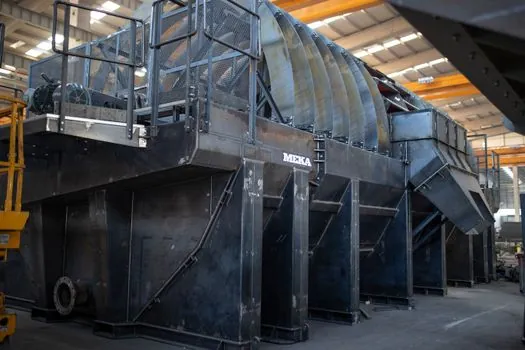
Pulp-mill auxiliaries (electric hoists, cranes, de-barking drums, log carriage, pumps, ventilation) are dominated by regenerative four-quadrant AC drives that can brake the log carriage on descents and return energy to the bus, with Parker SSD's regenerative log-carriage drive cited as a representative architecture [S1]. Refiner motors are typically 400–2500 kW high-inertia loads run on AC vector drives with high momentary overload margin and direct torque control for shock-load survival [S9].
Wet end and press section drives run as a coordinated section drive group, with speed ratios between forming, press, and dryer sections set by the draw profile and the moisture target of the sheet [S9]. Dryer sections use group drives where multiple cylinders share one controlled group rather than being individually driven, with small inter-group speed deltas (typically on the order of a fraction of a percent) to absorb web shrinkage as moisture drops without inducing excess tension or slack [S9]. Calender, reel, slitter, and rewinder drives step back to individual high-bandwidth vector or servo control because tension accuracy here directly controls roll hardness and winding quality [S4][S9].
Energy, maintenance, and process-control criteria
Throttling or bypass control on pumps and fans in pulp mills wastes the energy that a VFD recovers by matching motor speed to process demand, which is the single largest operational saving argument for retrofit [S3]. Modern brushless DC motor designs used as 20 HP class paper-mill drives can exceed 90% efficiency at the design point because brush friction is removed, and they extend service intervals well beyond brushed units, which is the maintenance lever that retrofits must quantify to justify the 20–30% AC premium [S2][S5].
Process-control criteria separate a workable spec from a reliable one: the drive must hold speed regulation under the rapid load transients that thick-stock and reel-up produce, document faults as they occur so maintenance time shifts from diagnosis to replacement, and provide encoder feedback to the drive so the rotor position relative to stator flux can be calculated into torque and flux-producing current components [S5]. A multi-drive low-voltage system with a decentralized electric transmission architecture (one rectifier bus feeding multiple inverter modules) is the dominant topology in modern paper mills because it reduces cabling, simplifies spare-parts holdings, and lets one rectifier feed a whole section's motors [S7].
Selection criteria: who VSD retrofit is for, and who should leave the DC alone
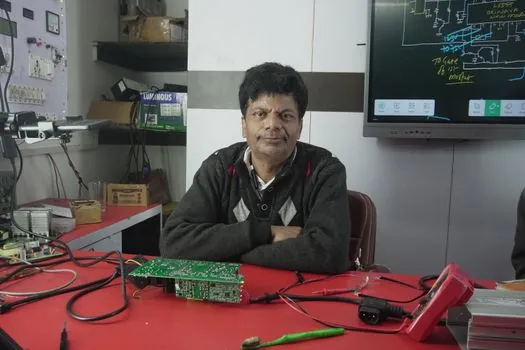
Retrofit to AC vector drives pays back fastest on machines with high annual running hours, high energy cost, and limited DC spares availability; a mill with a stable DC motor population, working commutators, and tight capital may be better off replacing the DC drive electronics alone (e.g. DC590+ series on existing DC motors) and deferring motor swap [S1][S5]. Mills producing tissue, coated, or other specialty grades at low basis weight need the tighter tension control of servo or vector AC on finishing drives, while high-volume standard-grade paper lines (newsprint, linerboard) can run cost-effectively on vector AC throughout, including on the dryer group drives [S4][S9].
The price differential is real but not dispositive: AC vector systems historically cost 20–30% more than DC systems, and that same gap carries to the spare-parts inventory; the offsetting gains are automatic setup and tuning (eliminating manual tweaking), built-in fault documentation, safety interlocks, and watchdog circuits that older DC systems built before current codes simply do not have [S5]. The other practical limit is panel space: an AC vector-drive electronics package is generally larger and consumes more panel space than a DC drive, which matters in retrofits where the existing drive control room footprint is fixed [S5].
Standards, sourcing, and audit trail
DC mill motors such as the Z4 series are commonly specified to GB/T 755 (Basic Technical Requirements for Rotating Electrical Machines) and aligned with the German VDE 0530 framework, with SKF, NSK, or FAG bearings swappable to user preference and IP23 enclosure typical for paper-mill ambient conditions [S2]. Compliance with the construction-machinery and equipment safety baseline for installed drives, plus the broader lighting equipment and electric lamps and auxiliary-supply ecosystems in the mill, is handled at the plant level rather than at the drive module [S2].
For drives that interface with the wider construction machinery and equipment on the mill floor, including hoists, cranes, and conveyors, the same Parker-style regenerative AC product line covers both pulp mill and downstream needs, simplifying the spares pool across the site [S1]. Buyers comparing a 690V drive on a paper mill against generic industrial VFDs should verify that the OEM has published a paper-mill reference list and a conformal-coating option, because that is the single best leading indicator of mean-time-between-failure in a humid, dust-laden paper-machine room [S1][S9].
Limitations and known failure modes
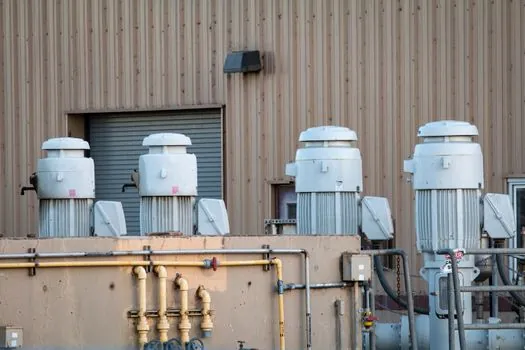
Vector-controlled AC drives are sensitive to encoder quality: a contaminated or misaligned encoder on a paper-machine motor collapses torque control at low speed, and because flux-vector control relies on knowing rotor position relative to stator flux, encoder failure is not a graceful degradation but a hard torque loss [S5]. Dryer-section group drives that are not tuned for sheet shrinkage will either stretch the sheet (excess tension) or bag it (slack), and both failure modes are visible in reel hardness variation before they are visible in drive alarms [S9].
DC drives in pulp and paper still suffer from brush and commutator wear regardless of how new the drive electronics are, which is the maintenance liability that retrofit economics must price in alongside the 20–30% AC premium; conversely, AC drives bring their own failure modes in the form of IGBT module stress from regen events and from the harmonic environment that a multi-drive bus creates, so line reactors and proper DC-bus capacitance sizing are not optional accessories [S1][S5]. For more on how multi-section drives are coordinated against other process instruments, see the smart valve positioner accuracy and diagnostics trade-offs reference for the related tension and pressure control loops.
Trackable signals for the next planning cycle: published multi-drive reference lists at 660–690V for refiner and dryer-section retrofits; OEM updates to the AC890-class 2000 HP / 690 VAC envelope; and any move by major mills to standardize on one of the three competing DC-retrofit paths (DC590+ on existing DC motors, full AC vector swap, or hybrid AC vector with retained DC on legacy sections).