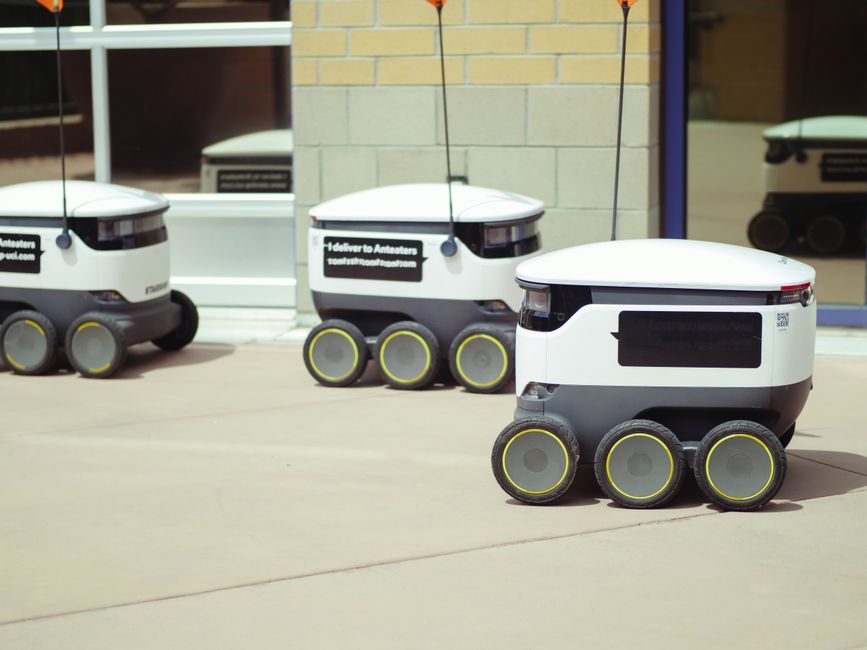
AMR-based picking and sorting systems now ship as turnkey WMS/WES-integrated packages, with vendors such as Liftians claiming 99.99% order-pick accuracy, 2-3x labor replacement ratios, and 400% pick-capacity uplift on brownfield retrofits [S2].
Onward Robotics demonstrated a fulfillment orchestration platform at MODEX 2026 that targets 2-3x throughput without additional labor, infrastructure, or complexity, framing the platform as a coordination layer above people, robots, and workflows [S3]. Systemex Automation markets fully modular robot cells (EZ-CELL SORT-MATE, EZ-CELL PACK-MATE, MIX PAL-MATE) for reconfigurable lines alongside autonomous mobile transport for in-plant load movement [S1].
AMR vs ASRS vs Fixed Robot Cell: Picking Architecture Decision
Autonomous mobile robots (AMRs) such as the Liftians TALON, TITAN, TUSK and TITAN-Lite families are specified for order picking in narrow-aisle, multi-floor, brownfield and greenfield DC environments, with the vendor stating they surpass industry-standard moving, turning and processing speeds by up to 25% [S2].
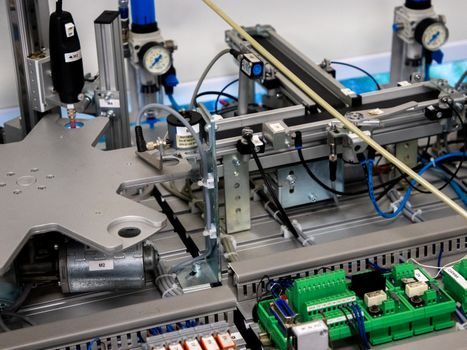
Modular robotic cells sit at the opposite end of the architecture spectrum: Systemex positions EZ-CELL SORT-MATE, EZ-CELL PACK-MATE and MIX PAL-MATE as reprogrammable stations that combine mechanical and electrical design, robotics, machine vision, PLC/DCS/HMI programming, and SCADA/MES layers for fixed-path tasks [S1].
Comparing the three across four decision criteria: (1) Deployment lead-time — AMRs deploy fastest in existing brownfield DCs; modular cells require 8-16 weeks of mechanical integration; fixed ASRS is the longest civil-works path. (2) Footprint — AMRs retrofit into existing aisles; modular cells need a defined cell envelope; ASRS dictates rack geometry. (3) Throughput ceiling — modular cells hit the highest per-station pick rate, but AMR fleets scale horizontally by adding units. (4) Software burden — AMR vendors (Liftians, Onward) ship WMS/WES; cell vendors (Systemex, FH Automation) typically integrate to existing MES/SCADA stacks [S1][S2][S3][S5].
Vendor Capability Map: Systemex, Liftians, Onward, FH Automation, ASUS IoT
Systemex Automation positions itself as a designer of fully modular robot cells, a custom robotic-systems integrator, and an AMR-based warehouse-automation supplier, with PLC, DCS, HMI, SCADA and MES competencies in-house [S1].
Liftians markets TALON/TITAN-class picking AMRs, modular sorting robots with detachable top plates (Conveyor, Incline, Flat, High Plate variants), and an in-house WMS/WES with API integration, machine learning, inventory tracking, and predictive maintenance modules [S2].
Onward Robotics markets a fulfillment orchestration platform that "increases throughput by 2-3x without additional labor, infrastructure, or complexity," positioning the product as a coordination layer rather than a fleet hardware vendor [S3].
FH Automation, in operation for more than 70 years, supplies automated welding systems, automated assembly systems, and robotics integration to North American manufacturers, with custom tooling and end-of-arm design as core competencies [S5].
ASUS IoT pitches edge-AI hardware for smart manufacturing, advertising industrial-certification compliance, wide-temperature operation, and on-device AI inference to reduce cloud round-trips on the plant floor [S6].
Spec Thresholds Buyers Should Anchor RFQs To
Pick accuracy of 99.99% and labor replacement ratios of 2-3x per AMR unit are now the headline performance claims cited by Liftians for picking AMRs, with sorting fleets claiming 3-4x throughput and 50-75% labor-cost reduction against manual sortation [S2].
Onward Robotics states its orchestration platform delivers 2-3x throughput gains over uncoordinated workflows, with the platform's value framed as real-time task coordination rather than per-unit hardware productivity [S3].
Systemex frames its modular cell line as Industry-4.0-ready, integrating robotics, machine vision for defect identification, PLC/DCS/HMI control, and SCADA/MES software layers into a single reprogrammable envelope [S1].
EMQ's 2025 smart-manufacturing reference defines the broader category as the integration of IoT, AI, big-data analytics, and cloud computing across every layer of the manufacturing process, blending industrial automation and information technology (2025-08) [S4].
Software Stack: WMS, WES, and Edge AI as the Real Differentiator
Liftians' in-house WMS and WES packages include inventory tracking, predictive maintenance, custom workflows, inventory management, API integration, actionable analytics, machine-learning modules, an admin toolset, and a user-friendly interface, with the WES explicitly designed to coordinate with third-party and in-house-built systems [S2].
Onward Robotics' orchestration platform is presented as a single coordinated system that aligns decisions, movement and execution in real time, with the MODEX 2026 showcase framed around replacing disconnected work with "real-time coordination" so "tasks happen at the right time and in the right place" [S3].
ASUS IoT positions edge AI as the bridge between on-floor sensors and MES/SCADA, advertising industrial-certification compliance and best-in-class quality for harsh environments, with extensive integrated AI at the edge to reduce latency-sensitive control loops (2025-08) [S6].
EMQ characterises smart-manufacturing software as the layering of networked sensors, analytics, and prediction onto physical machinery to monitor, analyze and optimise production in real time, an architecture that maps cleanly onto AMR fleet telemetry and robotic-cell vision feedback (2025-08) [S4].
Limitations, Failure Modes and Buying Risks
AMR throughput claims of 2-3x and 99.99% pick accuracy are vendor-stated marketing figures, not independently audited benchmarks, and buyers should require site-specific simulation — Liftians offers this as a free service using the customer's data [S2].
Modular cell reconfigurability is real but bounded: Systemex's EZ-CELL line is "easily reconfigurable and reprogrammable for multiple applications" within the same mechanical envelope, but radical product changes still require mechanical re-tooling [S1].
Onward Robotics' 2-3x throughput claim is conditional on the orchestration platform being the coordination layer of record; brownfield sites with entrenched WMS/WCS stacks may see integration drag offset some of that gain [S3].
Edge-AI hardware from ASUS IoT is qualified to industrial certifications, but specific certification numbers (e.g. IEC 60079-x, UL listings) are not enumerated in the public material, and spec sheets should be requested before hazardous-area deployment [S6].
Standards, Research Signal and 2026 Procurement Trackers
The WRSM 2013 workshop proceedings (Communications in Computer and Information Science, volume 371, Springer) remain a citable academic anchor for robotics-in-smart-manufacturing research, with 57k accesses logged on the publisher page (2025-08) [S8].
Open-source implementations of warehouse-robotics navigation using Deep Q-Networks (DQN), PyTorch, replay buffers, target networks, and multi-agent extensions are catalogued under the GitHub "warehouse-robotics" topic, alongside Covariant Brain foundation-model references for fleet AI [S7].
EMQ's 2025 smart-manufacturing reference frames the standards landscape around IoT, AI, big-data analytics, and cloud integration layers, with no single dominant protocol mandated across the vendor set surveyed (2025-08) [S4].
Trackable procurement signals for the rest of 2026: MODEX 2026 platform announcements (Onward Robotics already public [S3]); ProMat 2027 vendor disclosures expected in late 2026; and quarterly WMS/WES release notes from Liftians, Onward and Systemex as the software-differentiator battleground matures [S1][S2][S3].
For a deeper look at the camera and imaging stack that ties AMR vision, robotic-cell defect ID and SCADA-side inspection together, see the Machine Vision in Smart Manufacturing camera-stack guide.
For the human-collaborative side of the same automation stack — including ISO/TS 15066 power-and-force limiting thresholds and collaborative-cell safety specs — the Cobots in Smart Manufacturing cell-stack reference covers the 2026 vendor map.
For semiconductor-side automation context where cleanroom AMRs and litho-handling robotics follow similar orchestration patterns, the HBM smart manufacturing TSV/CoWoS 2026 stack is a useful adjacent reference. For process engineers mapping the same Industry-4.0 software layers onto instrumented factory assets, the smart meter smart manufacturing data-platform write-up closes the loop on closed-loop control.
For component-level specifications, see additive manufacturing material, smart camera, and smart meter.